South Sudan: Public Health Emergency in Nyal Panyijiar County Amplified by Flooding and Insecurity BODY: Khartoum, Sudan – In Unity State, South Sudan, the situation in Nyal Panyijiar County has reached critical levels, with a public health emergency declared by humanitarian organizations.
The crisis, exacerbated by recurrent flooding since 2023, has led to a severe increase in mortality rates and a heavy disease burden.
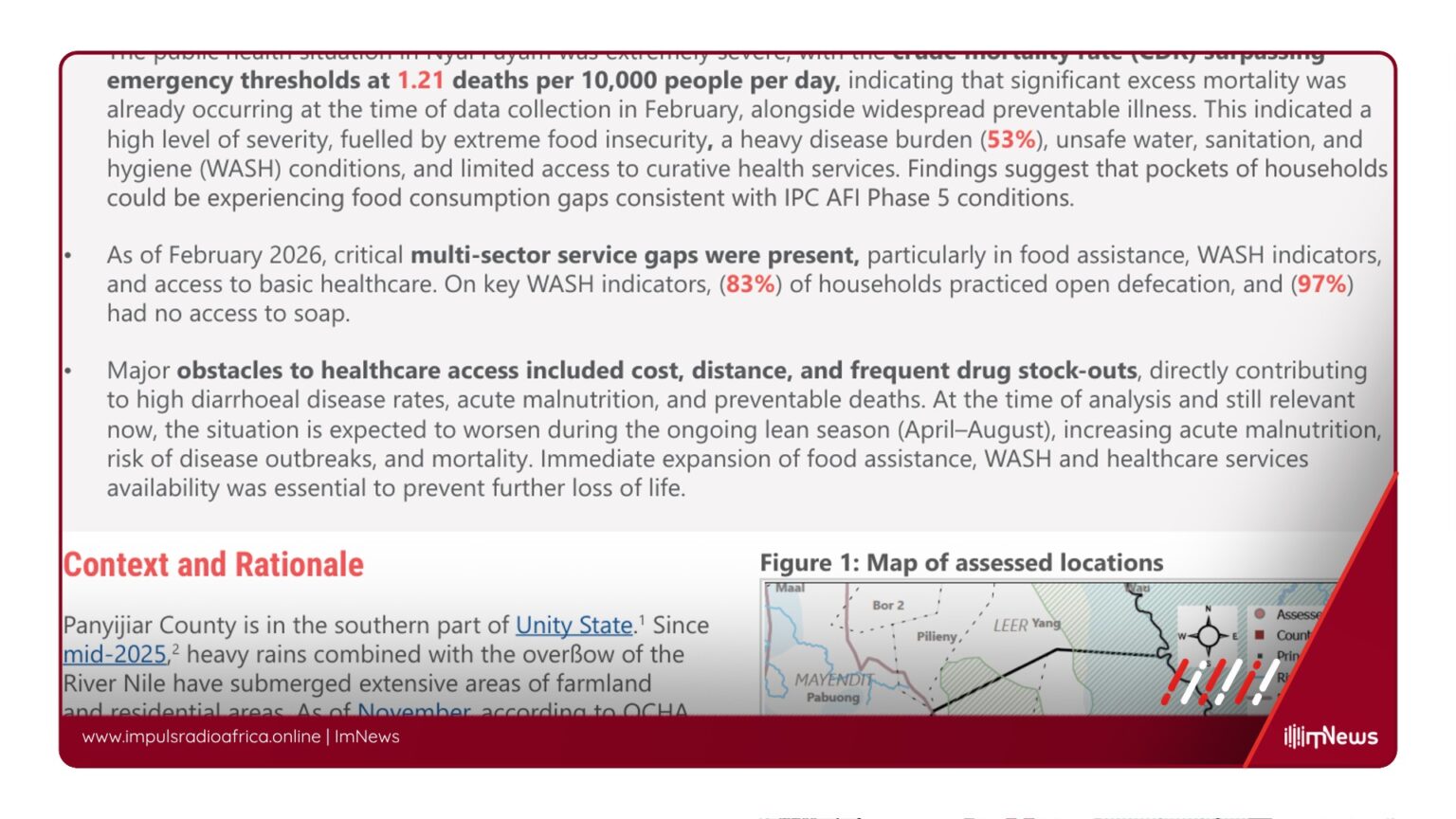
The REACH Initiative’s Integrated Public Health Rapid Assessment reveals a crude mortality rate (CDR) of 1. 21 deaths per 10,000 people per day in Nyal Payam, surpassing emergency thresholds. This situation is fueled by extreme food insecurity, a disease burden of 53%, unsafe water, sanitation, and hygiene conditions, and limited access to curative health services.
The recurrent flooding has destroyed critical infrastructure, displacing communities and limiting access to essential services.
As of February 2026, 83% of households practiced open defecation, and 97% had no access to soap, indicating the urgency of multi-sectoral support. Major obstacles to healthcare access include cost, distance, and frequent drug stock-outs, contributing to high diarrhoeal disease rates, acute malnutrition, and preventable deaths.
The lean season (April–August) is expected to worsen the situation, increasing acute malnutrition and mortality risks.
The Unity State Ministry of Health is working to resume health services following high — level consultations with United Nations agencies, a move aimed at restoring essential medical care to thousands.
The African Union Peace and Security Council and the UN Security Council are set to brief on the situation, emphasizing the need for international support and sustainable solutions to the ongoing humanitarian emergencies in South Sudan. This crisis underscores the challenges faced by South Sudan in providing essential services, particularly in the context of ongoing conflicts and climate-related disasters.
*Additional reporting by ImNews | Sources consulted: 5*
—
This original article was produced by the ImNews editorial team
Source: reliefweb
Source: REACH Initiative