Kinshasa, DRC — Ongoing armed conflicts in the Democratic Republic of Congo’s (DRC) Nord-Kivu province have exacerbated the humanitarian crisis, with recent reports indicating a significant increase in internal displacements and the threat of a new Ebola epidemic.
As of June 2026, over 1. 83 million people have been internally displaced within Nord-Kivu, a figure that has risen sharply following new displacements recorded in January 2026.
The situation in Nord — Kivu, which includes territories of Masisi, Rutshuru, Walikale, and Beni, has been marked by ongoing violence and attacks.
The United Nations Office for the Coordination of Humanitarian Affairs (OCHA) in DRC has reported that the armed conflicts are causing further displacement and exacerbating the already dire humanitarian needs in the region.
In addition to the conflict — induced displacements, the province is facing a separate crisis with the outbreak of the Bundibugyo virus, which has caused an Ebola epidemic.
The situation is particularly dire in the territories of Beni and Lubero, where the humanitarian needs are compounded by the risk of disease outbreaks.
According to OCHA, the humanitarian response in DRC is focused on assisting displaced persons and responding to the needs of the population affected by both the conflicts and natural disasters.
However, the scale of the crisis remains a significant challenge for humanitarian organizations.
The situation in Nord — Kivu is not isolated; it is part of a broader pattern of instability and conflict in the eastern provinces of the DRC.
The region has been affected by various armed groups and militia, leading to widespread displacement and suffering among the civilian population.
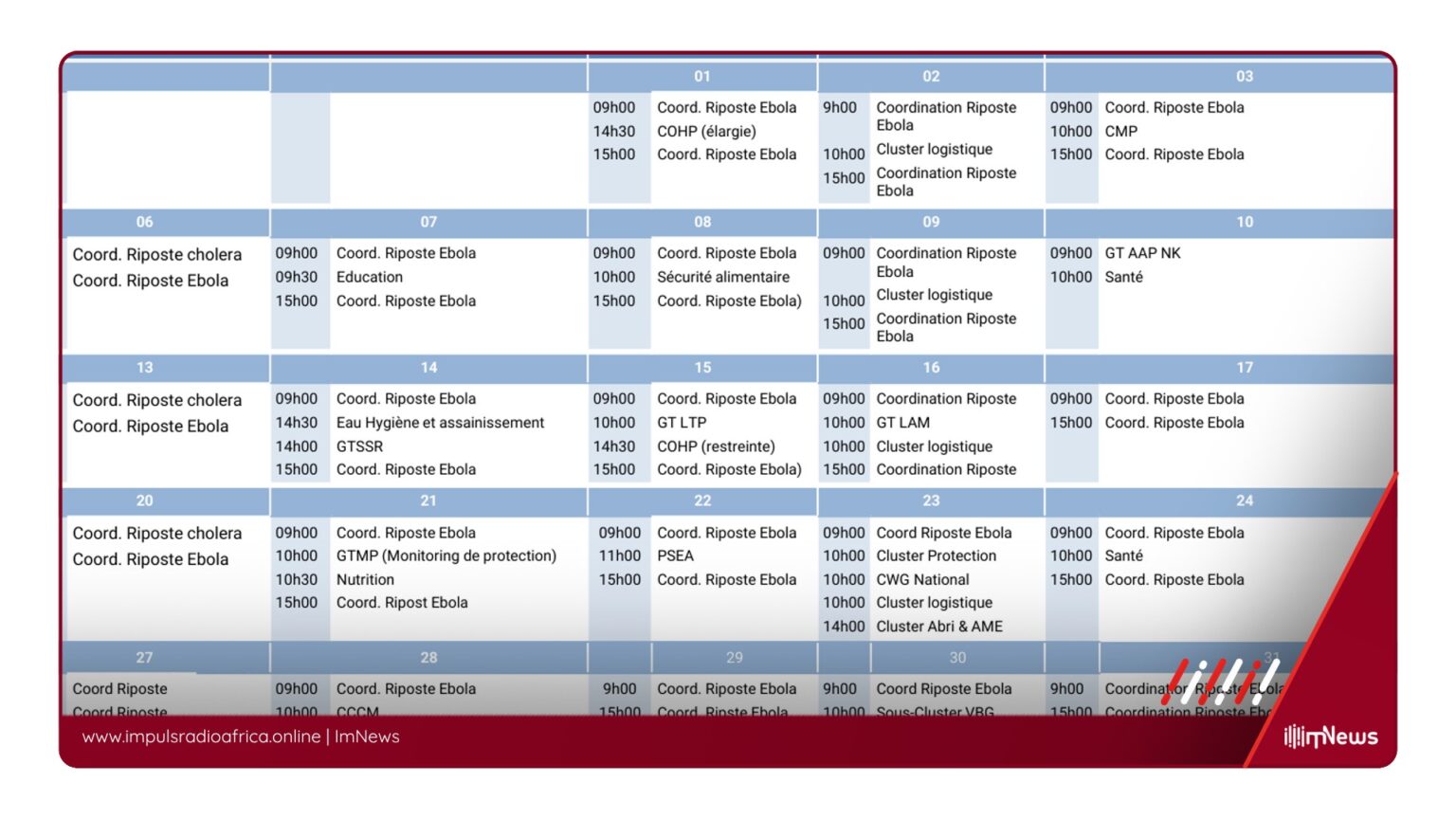
In a separate development, a series of meetings are scheduled to take place in Goma, Nord — Kivu, in July 2026.
These meetings aim to address the ongoing humanitarian crisis and discuss strategies for peace and stability in the region.
The agenda includes discussions on the provision of essential services to displaced populations, the coordination of humanitarian assistance, and the need for a comprehensive peace process.
The upcoming meetings come at a critical time, as the humanitarian situation in Nord — Kivu continues to deteriorate.
The challenges faced by the region require a coordinated and comprehensive approach from both local and international actors.
As the situation in Nord — Kivu remains volatile, the need for a sustainable and effective response to the humanitarian crisis is more pressing than ever.
The upcoming meetings in Goma provide an opportunity for stakeholders to come together and discuss potential solutions to the region’s multifaceted challenges.
The international community, including the African Union and the United Nations, must continue to support efforts to address the humanitarian crisis in Nord — Kivu. This support should include not only immediate relief efforts but also long-term initiatives aimed at promoting peace, stability, and sustainable development in the region.
As the situation evolves, ImNews will continue to provide updates and analysis on the humanitarian crisis in Nord — Kivu, highlighting the challenges faced by the affected populations and the efforts being made to address them.
*Additional reporting by ImNews | Sources consulted: 4*
—
This original article was produced by the ImNews editorial team
Source: reliefweb
Source: UN Office for the Coordination of Humanitarian Affairs