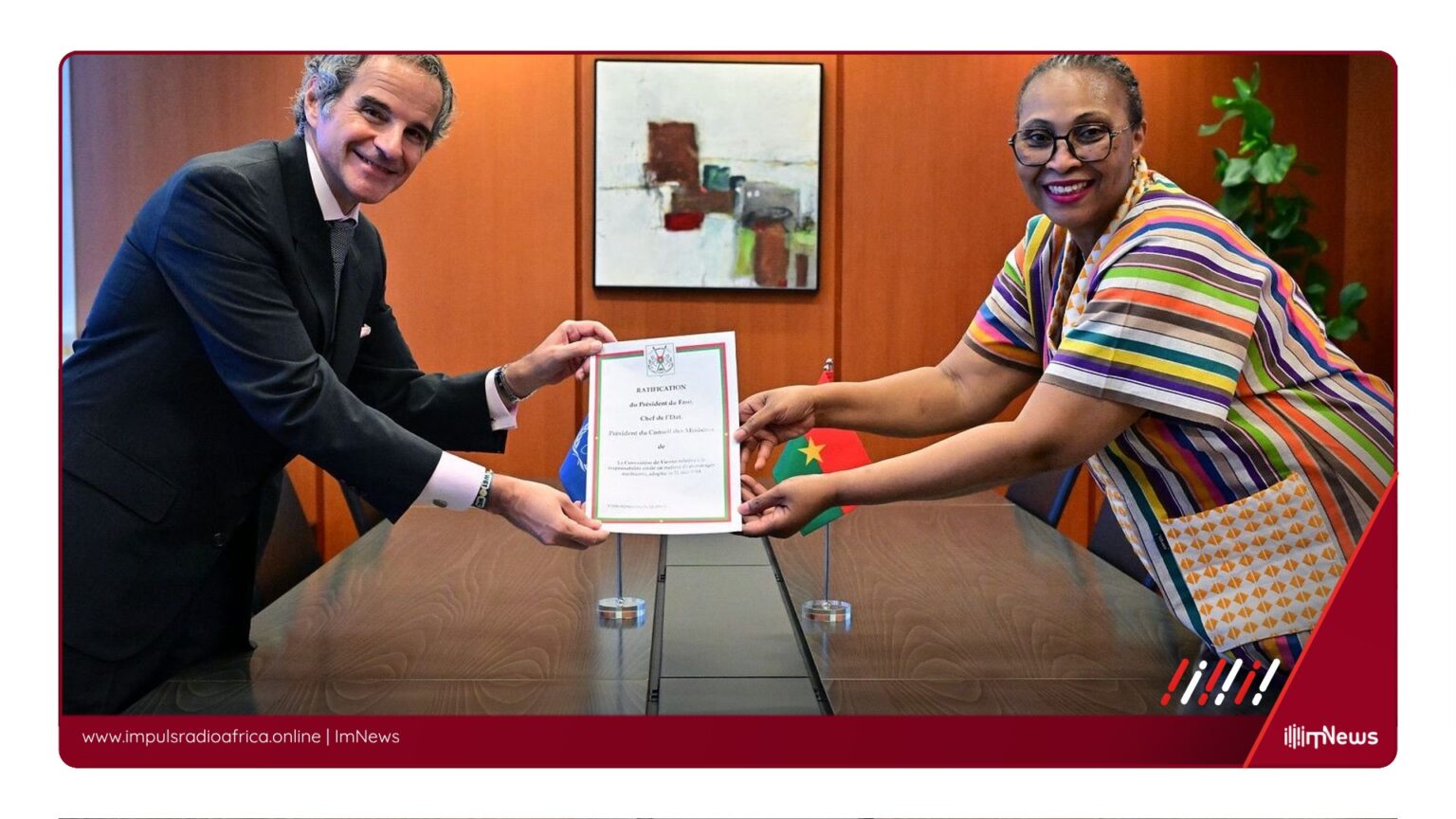
CITY, Burkina Faso — Burkina Faso has officially joined the international legal regime governing civil liability for nuclear damage, marking a significant step in the country’s pursuit of nuclear power generation.
The International Atomic Energy Agency (IAEA) welcomed the country’s Instrument of Accession, which was deposited with the IAEA, the treaty’s depositary. IAEA Director General Rafael Mariano Grossi commended Burkina Faso on its commitment to nuclear safety.
The Vienna Convention, which Burkina Faso has now acceded to, establishes internationally recognized rules on liability and compensation in the event of a nuclear accident arising from peaceful use of nuclear energy. This legal framework is considered essential for countries embarking on civilian nuclear programs, offering certainty to governments, investors, and international partners.
The move comes as Burkina Faso advances its medium — term nuclear power program, which aims to tackle chronic electricity shortages and support long-term economic growth. Russia has emerged as the country’s primary partner in these ambitions, signing a roadmap for cooperation on the peaceful use of nuclear energy during the Russia-Africa Summit in St. Petersburg in October 2023.
The agreement covers nuclear infrastructure development, workforce training, nuclear medicine, radiation technologies, and potential construction of a nuclear power plant. Discussions between Burkina Faso and Russia’s state-owned nuclear corporation, Rosatom, have been ongoing, with both sides emphasizing nuclear energy as a long-term solution to the country’s energy deficit. While no timeline has been announced for the construction of a nuclear power plant, the completion of Burkina Faso’s accession to the Vienna Convention represents a critical legal milestone.
It also underscores Russia’s growing involvement in Africa’s civilian nuclear sector, having signed cooperation agreements with numerous African countries, including the construction of Egypt’s first nuclear power plant at El Dabaa.
As Burkina Faso aligns its regulatory framework with global standards, the partnership with Russia raises questions about the potential for increased economic leverage and strategic influence.
The world will be watching to see how this partnership unfolds and its implications for Africa’s energy landscape and its relationship with Russia.
*Additional reporting by ImNews | Sources consulted: 5*
—
This original article was produced by the ImNews editorial team
Source: Africa.businessinsider
Source: Solomon Ekanem