Somalia’s Cabinet Approves Constitution Implementation Plan Amidst Ongoing Challenges DATELINE: Mogadishu, Somalia – LEAD The Federal Government of Somalia’s Council of Ministers recently reviewed and approved a comprehensive plan for the implementation of the country’s constitution, marking a significant step towards stabilizing the nation’s political and institutional framework.
The plan, which spans from 2026 to 2029, aims to ensure the full implementation of all constitutional provisions within the stipulated timeframe. NUT GRAF: The approval of the constitutional implementation plan comes amidst ongoing political fragmentation and challenges within Somalia’s federal system.
The country has faced difficulties in implementing its constitution, leading to tensions between different regions and the Federal Government of Somalia (FGS).
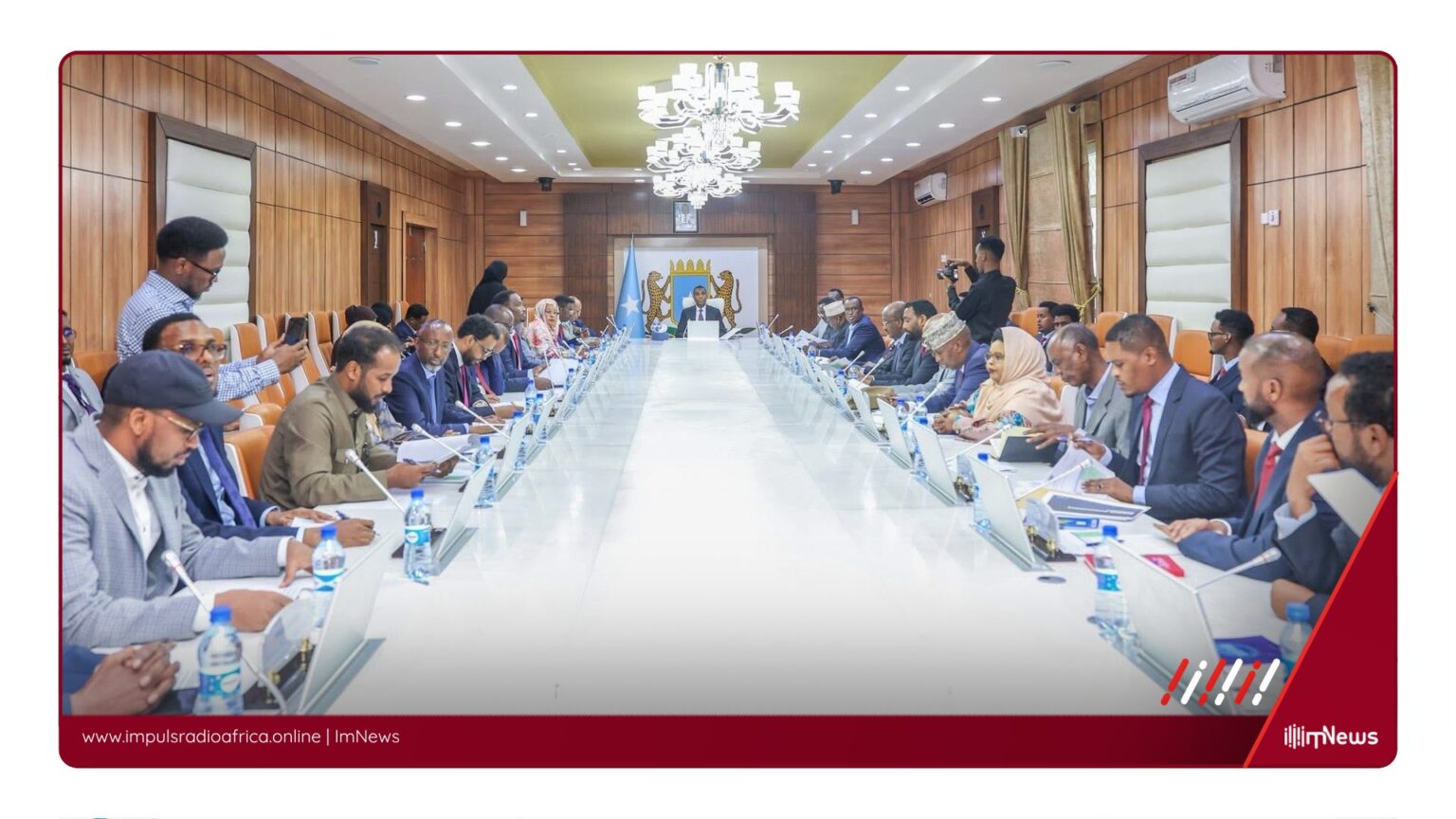
The plan’s approval is seen as a critical step towards addressing these issues and fostering national unity. Mogadishu, Somalia – The Federal Government of Somalia’s Council of Ministers held a crucial meeting on Sunday, where they reviewed and approved the implementation plan for the country’s constitution.
The timeline for the implementation covers the period between 2026 and 2029, with a focus on ensuring all constitutional provisions are implemented within this timeframe. Prime Minister Hamza Abdi Barre chaired the cabinet meeting, where the implementation framework, timeline, and technical procedures for enforcing the Constitution of the Federal Republic of Somalia were presented.
The plan is intended to ensure that all constitutional provisions are fully implemented within the constitutional timeframe running from 2026 to 2029, according to the Ministry of Justice and Constitutional Affairs.
The Independent Constitutional Review and Implementation Commission (ICRIC) has also ordered cabinet members who also sit in parliament to relinquish one of their roles, affecting about 15 of the 25 ministers. This move is aimed at ensuring a clear separation of powers between the executive and legislative branches, as stipulated in the new federal constitution.
The BTI Project’s Somalia Country Report 2026 indicates that Somalia’s governance, political transformation, and economic transformation are among the lowest on their scale, highlighting the country’s challenges.
Abdirashid Fidow, writing for LSE’s Africa@LSE blog, suggests that Somalia is about to enter a constitutional crisis, pointing to recurring patterns of principled opposition followed by the abandonment of those principles.
The approval of the constitutional implementation plan is seen as a positive step towards addressing these challenges.
However, KICKER: As Somalia moves forward with the implementation of its constitution, the challenges ahead are significant.
The country’s ability to effectively implement the plan and address the underlying issues of political fragmentation and institutional weaknesses will be crucial in determining its future stability and development.
*Additional reporting by ImNews | Sources consulted: 5*
—
This original article was produced by the ImNews editorial team
Source: sonna.so
Source: Khadarow