Somalia’s Acute Malnutrition Crisis: Over Two Million Face Extreme Hunger Mogadishu, Somalia – Over two million Somalis are at the brink of extreme hunger, with the country facing a severe acute malnutrition crisis, according to the Food Security and Nutrition Analysis Unit (FSNAU).
The situation has been exacerbated by persistent drought, ongoing conflict, and soaring food prices, pushing the number of people facing acute food insecurity to nearly 6. 5 million since last year.
The IPC food security monitoring platform, in collaboration with the FAO, OCHA, UNICEF, and WFP, has warned of a rapidly intensifying hunger emergency in Somalia. Among them, 1. 9 million children are at risk of severe acute malnutrition, with 493,000 facing the highest risk of death.
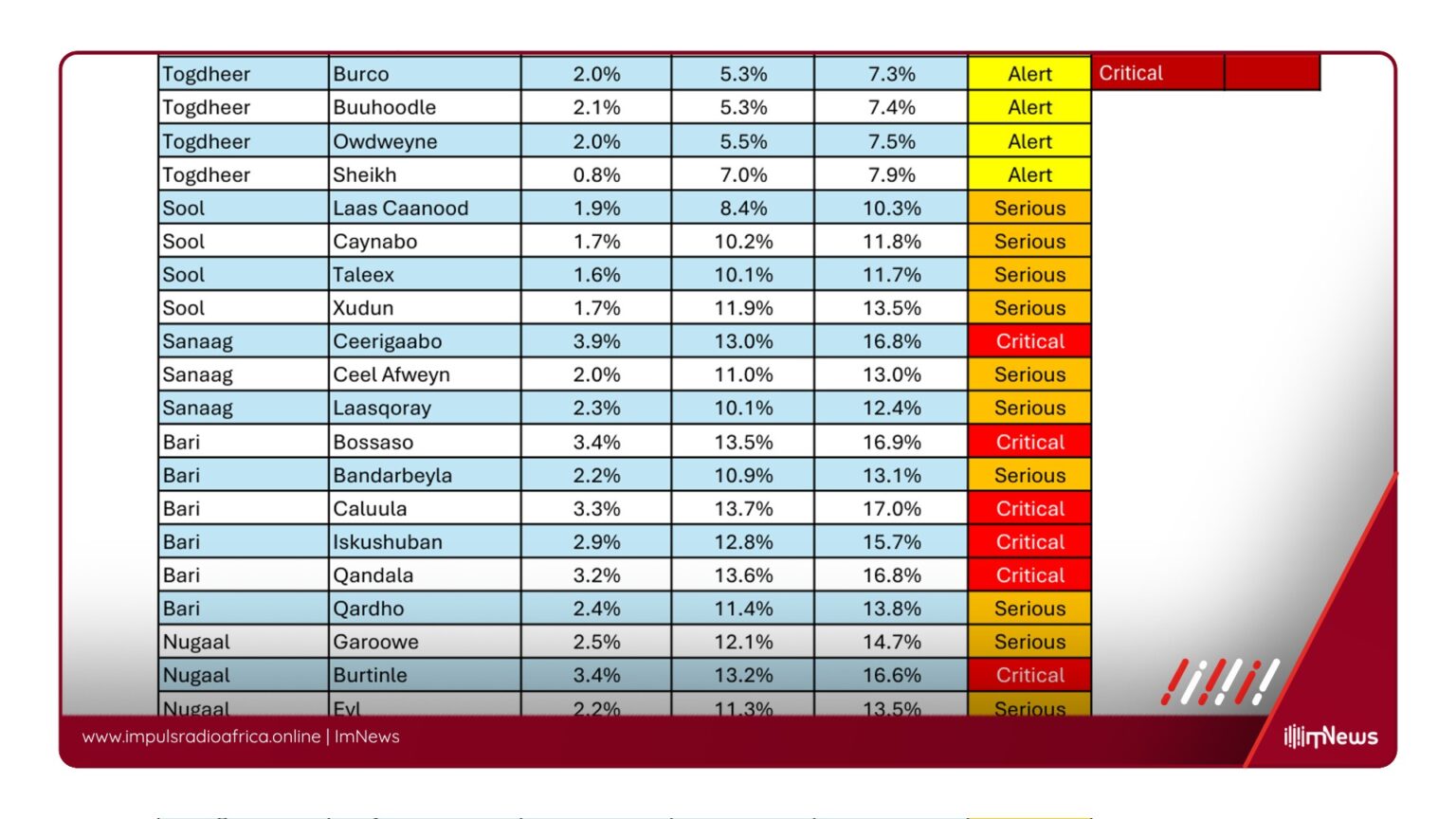
FSNAU’s district-level estimates of acute malnutrition prevalence highlight the severity of the situation across Somalia.
The data underscores the urgent need for targeted interventions to combat the crisis. Over 1.
84 million children aged 6-59 months are suffering or expected to suffer from acute malnutrition, with 483,000 experiencing severe acute malnutrition.
The situation is particularly dire in Burhakaba District, where the IPC AMN Phase 5 (Extremely Critical) has been reached, posing a risk of famine under a plausible worst-case scenario.
The combination of drought and displacement has disrupted livelihoods, access to markets, and the availability of food, leaving families in dire need.
Despite the overwhelming scale of the crisis, the response from both the Somali government and international organizations has been constrained by limited resources and the ongoing conflict. Humanitarian aid has been a lifeline for many, but it is struggling to keep pace with the growing needs.
The soaring food prices have further complicated the situation, with the cost of basic necessities skyrocketing beyond the reach of many.
This has had a devastating impact on the most vulnerable populations, including poor farmers, pastoralists, and internally displaced people.
As the crisis deepens, questions remain about the specific measures being taken by the government and international organizations to address the acute food insecurity and malnutrition crisis.
The need for a coordinated and comprehensive response is more pressing than ever.
The recent droughts and conflicts have also taken a toll on agricultural production and food availability, further straining the situation. It is crucial for all stakeholders to come together and prioritize the well-being of the Somali population.
The international community must also continue to support Somalia’s efforts to rebuild and stabilize the country, ensuring that humanitarian aid reaches those most in need.
The situation in Somalia serves as a stark reminder of the devastating impact of chronic food insecurity and malnutrition, and the urgent need for a sustainable solution. FSNAU’s detailed district-level data on acute malnutrition prevalence is a crucial tool for targeted interventions, but it is not enough on its own.
The situation in Somalia requires a coordinated and comprehensive approach from all stakeholders, including the government, international organizations, and the international community.
The crisis in Somalia is a call to action for the world to recognize the urgency of the situation and take immediate steps to support the Somali population. Without intervention, the situation could deteriorate further, leading to more suffering and loss of life.
*Additional reporting by ImNews | Sources consulted: 5*
—
This original article was produced by the ImNews editorial team
Source: reliefweb
Source: Food Security and Nutrition Analysis Unit – Somalia