Mogadishu, Somalia — The country is addressing a severe humanitarian crisis, as over 4. 8 million Somalis are in dire need of assistance, according to the UN Office for the Coordination of Humanitarian Affairs (OCHA).
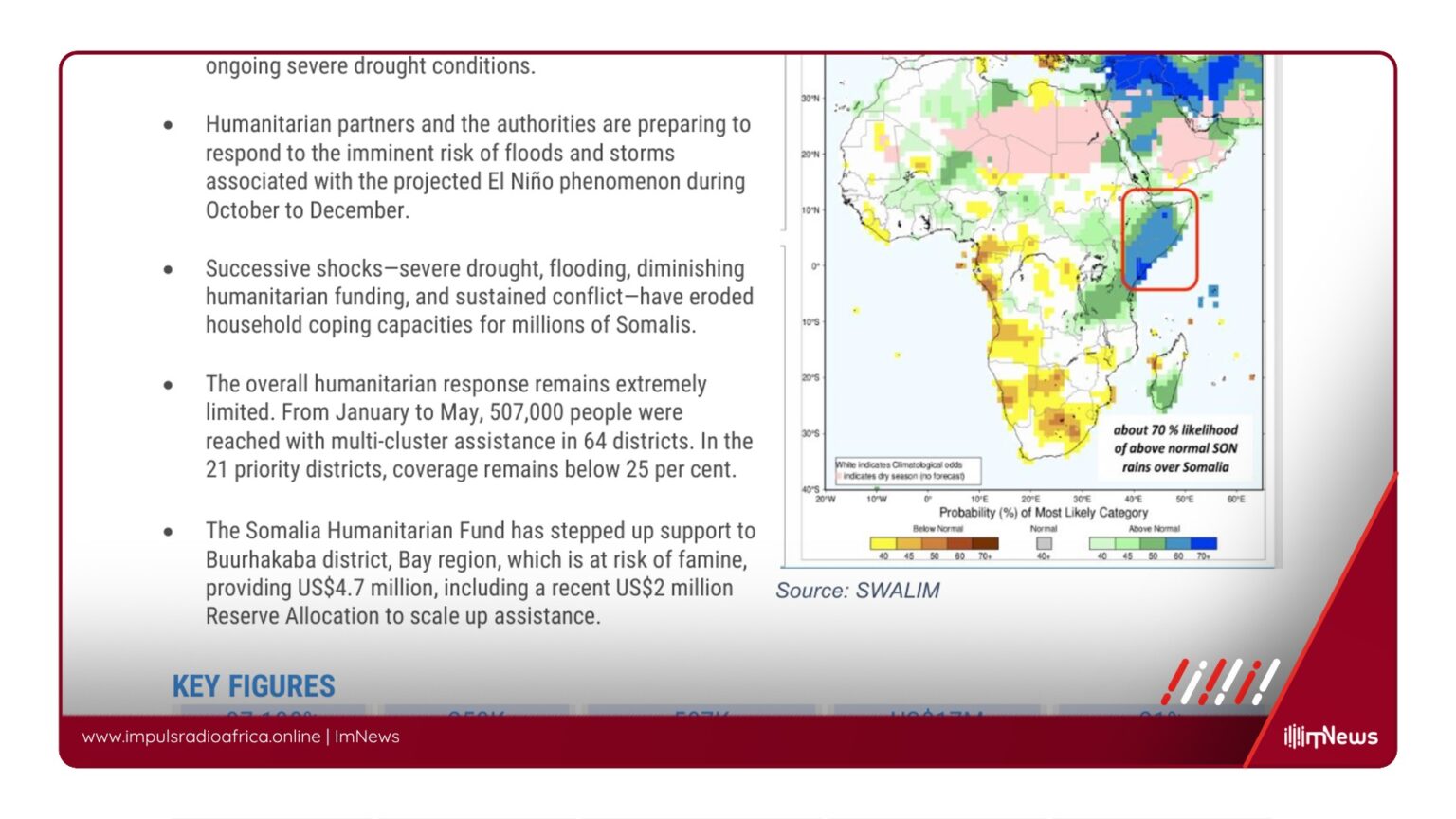
The crisis is exacerbated by a prolonged drought, armed conflict, and diminishing humanitarian funding. This has led to significant food insecurity and water scarcity, compelling pastoralists to migrate in search of resources. Despite efforts by the United Nations to combat malnutrition, including hospital screenings and home follow-ups, the crisis is intensifying.
There is a growing risk of famine, with officials warning of the dire situation.
The Somalia Crisis Response Plan 2025-2026, supported by the International Organization for Migration (IOM), aims to provide safe and dignified living conditions for those displaced by disasters and conflict.
However, the plan faces significant challenges due to the complexity of the crisis.
The Global Humanitarian Overview 2026 highlights the need for a multi-faceted approach to address the root causes of the crisis, including climate change, conflict, and disease outbreaks. Somalia is also dealing with the consequences of armed conflict, with grave violations against children reported.
In regions such as Hirshabelle and South West, localized improvements have been observed, with instances of good rainfall.
However, the overall humanitarian situation remains dire, and the international community is urged to support efforts to address the root causes of the crisis and provide urgent humanitarian aid to the most vulnerable.
*Additional reporting by ImNews | Sources consulted: 5*
—
This original article was produced by the ImNews editorial team
Source: reliefweb
Source: UN Office for the Coordination of Humanitarian Affairs