Somalia’s Drought Crisis: 4. 8 Million in Need Amidst Worsening Conditions Mogadishu, Somalia – The prolonged drought in Somalia has escalated into a critical emergency, prompting the country’s Federal Government to declare a state of drought emergency in November 2025.
The declaration followed consecutive failed rainy seasons, including the 2025 Karan and Deyr rains, which have exacerbated an already dire humanitarian situation.
According to the Somalia Humanitarian Needs and Response Plan 2026, despite a 20% reduction in the number of people estimated to require humanitarian assistance from the previous year, the current figure stands at 4. 8 million, an alarmingly high number.
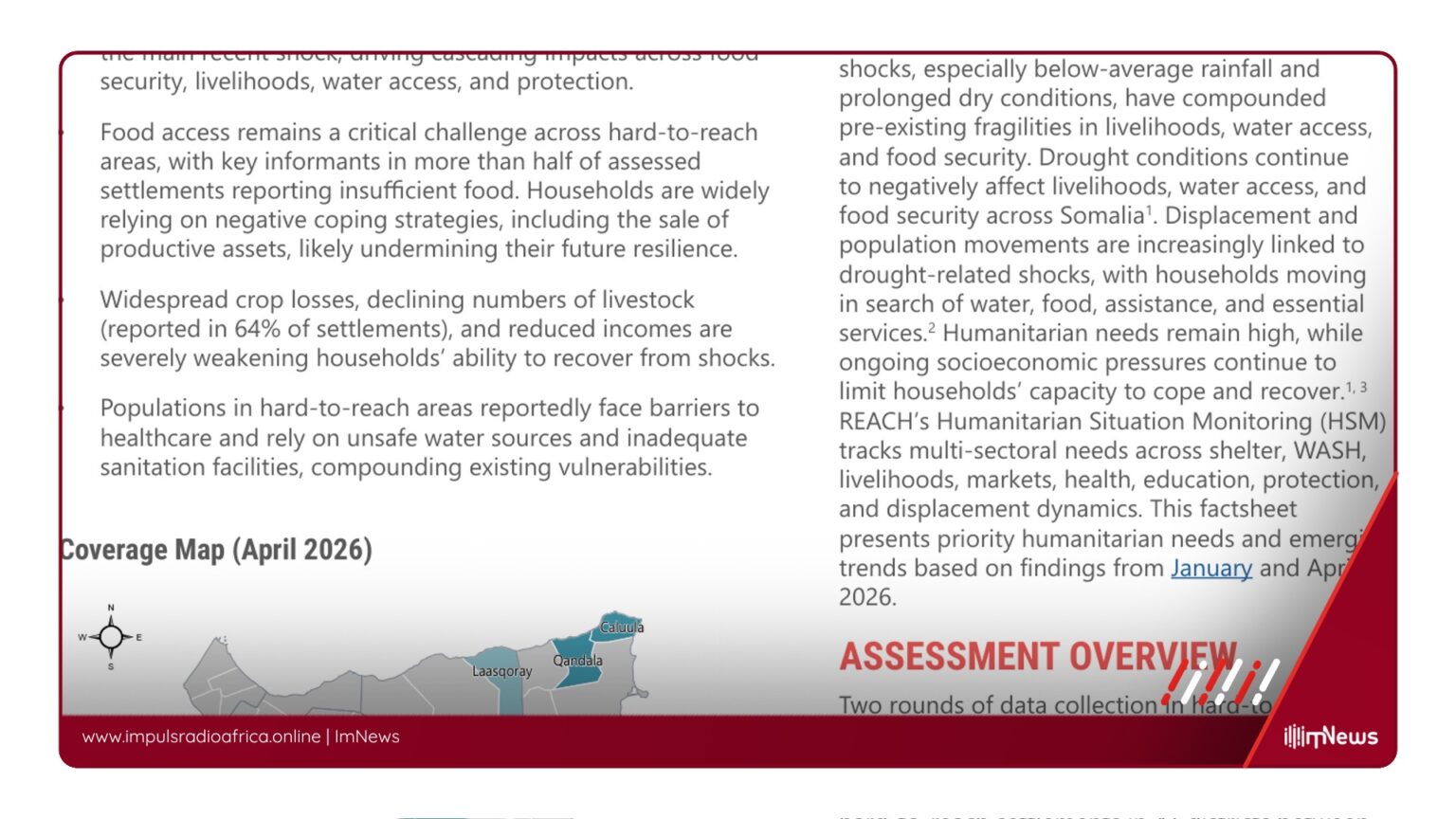
The REACH Initiative reports that the humanitarian crisis is driven by climate shocks, conflict, and disease outbreaks.
The Global Humanitarian Overview 2026 underscores the severity of the situation, with $852 million in requirements to effectively address the crisis.
The impact of the drought is most severe in the northern regions, where consecutive failed rainy seasons have led to severe water scarcity, lack of pasture, and increased migration of pastoralists.
The situation has been further compounded by the spread of disease outbreaks and the general instability in the region, making it difficult for humanitarian organizations to reach those in need.
However, the scale of the crisis necessitates a more significant and sustained international response. While the situation is dire, there are signs of hope.
The Somali government, alongside international partners, is working to address the crisis through initiatives aimed at improving water access, providing food assistance, and supporting the health sector to combat disease outbreaks.
The Somalia Humanitarian Needs and Response Plan 2026 suggests that the decline in the number of people affected is due to stricter scope-setting rather than improved conditions on the ground. This highlights the need for a comprehensive and sustained approach to address the root causes of the crisis, including climate change adaptation, conflict resolution, and long-term development.
As the situation continues to evolve, it is crucial for the international community to remain vigilant and support Somalia in its efforts to mitigate the impact of the drought and other humanitarian crises.
The future of millions of Somalis depends on the collective effort of governments, organizations, and individuals to respond effectively to this urgent situation.
*Additional reporting by ImNews | Sources consulted: 5*
—
This original article was produced by the ImNews editorial team
Source: reliefweb
Source: REACH Initiative