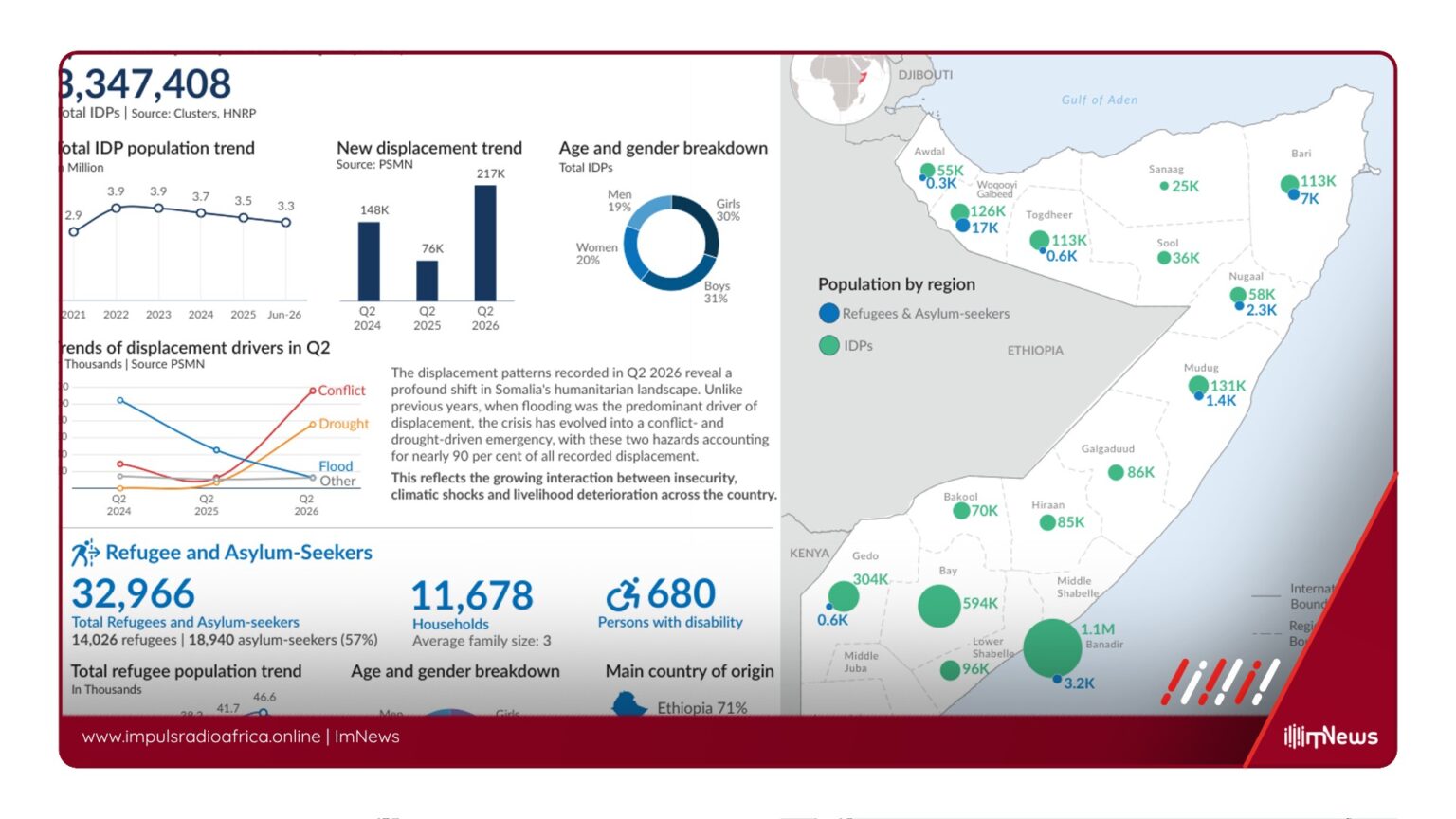
Mogadishu, Somalia — The humanitarian crisis in Somalia continues to deepen, with the number of internally displaced persons (IDPs) reaching alarming levels.
As of June 30, 2026, there were 1,109,273 IDPs in the Banadir region alone, accounting for 33. 1% of the total IDP population in the country.
This figure is part of a broader displacement crisis that has seen an estimated 3,300,000 IDPs across Somalia, according to the International Organization for Migration (IOM).
The situation has been exacerbated by a severe drought in 2025, which affected over 4. 6 million people, nearly one in four of the population.
The drought, caused by the failure of rains, has led to widespread food insecurity and has been compounded by ongoing internal conflict. Between July 2025 and July 2026, organizations such as World Vision have been providing critical support to families uprooted by drought and conflict. This includes mobile cash transfers and clean water at health centers, which are essential for the survival of those displaced.
The UN High Commissioner for Refugees has provided regional breakdowns of IDP populations, highlighting the severity of displacement across different regions of Somalia.
The IOM’s data indicates the total number of IDPs, suggesting the scale of the displacement crisis. UNOCHreports on the humanitarian situation, including the impact of climate shocks and internal conflict on displacement, while ReliefWeb reports on specific programs and responses, such as those provided by World Vision.
Despite the efforts of humanitarian organizations, the causes of displacement in each region of Somalia remain complex.
While the drought has been a significant factor, the long — standing instability and conflict have also played a crucial role.
The current state of the peace process in Somalia is closely linked to the displacement crisis, as any progress in peace negotiations could potentially reduce the need for humanitarian assistance and facilitate the return of displaced persons.
The international community’s response to the displacement crisis in Somalia is multifaceted. Aid programs are being implemented to address immediate needs, but long-term solutions are also being considered. These solutions include efforts to improve governance, strengthen the rule of law, and enhance resilience to climate shocks.
The Banadir region, where the majority of IDPs are located, faces unique challenges.
The rapid rural — to-urban migration has strained already fragile urban infrastructure and basic services. This has led to increased tensions over scarce resources, land, and social inclusion.
As the situation in Somalia evolves, it is crucial to monitor the impact of humanitarian assistance and the effectiveness of peace negotiations.
The success of these efforts will be key in determining the future of the displaced populations and the overall stability of the country. What remains unclear is the sustainability of the current aid efforts and the potential for the displacement crisis to worsen.
The international community must continue to support Somalia’s efforts to address the root causes of displacement and to ensure that the rights and well-being of IDPs are protected.
*Additional reporting by ImNews | Sources consulted: 5*
—
This original article was produced by the ImNews editorial team
Source: reliefweb
Source: UN High Commissioner for Refugees