Baidoa, Somalia, 27 July 2026 – In Baidoa’s Elbeti 1 camp, the lives of displaced families hang in the balance as they struggle against a severe water crisis exacerbated by prolonged drought and conflict. With the city serving as the interim capital of Somalia’s Southwest State, it now harbors an estimated 1. 6 million residents, half of whom are displaced persons seeking refuge from drought and conflict in Bakool, Bay, Lower Shabelle, and other areas.
Drought has not only depleted water sources but has also left families destitute of their means of sustenance, highlighting the severity of water, sanitation, and hygiene (WASH) needs. Nationally, the Humanitarian Needs and Response Plan of 2026 reports that nearly one in five households lacks reliable water access, a reality that is acutely felt in Baidoa. Displaced families spend significant sums—ranging from $1.
50 to $2. 50—on 200-litre drums of trucked water, an expense that is beyond the reach of many.
The situation is further compounded by the nation — wide report of two-thirds of households sharing unimproved latrines and one in five women and girls avoiding them due to safety concerns.
On November 18, 2025, Southwest State authorities declared a drought emergency.
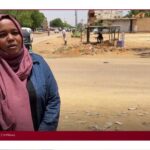
However, conditions have only worsened, with funding cuts forcing humanitarian organizations to curtail services, leaving displaced persons without the support they need. Among those affected is Muna Ibrahim, a mother of two children with autism. She recounts, “Life is very hard for us.
I couldn’t care for my daughter properly in the camp, with no one to depend on. “.
In response, Médecins Sans Frontières/Doctors Without Borders (MSF) has increased efforts in water trucking and sanitation support. Between December 2025 and June 2026, MSF delivered over 47 million liters of safe water to 17 distribution sites, reaching 3,775 households.
The organization has also constructed 150 solar-lit, permanent latrines with disability-friendly design and desludged 26 latrines across five sites. MSF is now urging donors and humanitarian actors to bolster services in Baidoa and across Southwest State.
As Ibrahim notes, “Since I arrived, MSF is the only organisation I have seen here providing us with water. Now we receive four jerrycans in the morning and four in the evening. “.
The gap between the assistance required and that provided is a choice, as MSF underscores, and each passing month pushes more families into crisis. For more information, contact cece. Leadon@london.
Msf. Org or +44 (0) 207 067 4236.
*Additional reporting by ImNews | Sources consulted: 5*
—
This original article was produced by the ImNews editorial team
Source: reliefweb
Source: Médecins Sans Frontières