



JUBA, South Sudan — the Humanitarian Situation in South Sudan Has Reached Critical Levels, With Ongoing Conflict Exacerbating an Already Dire Crisis.
In July 2026, the country faced a multitude of challenges, including climatic shocks, food insecurity, disease outbreaks, economic hardship, and the influx of refugees and returnees from Sudan.
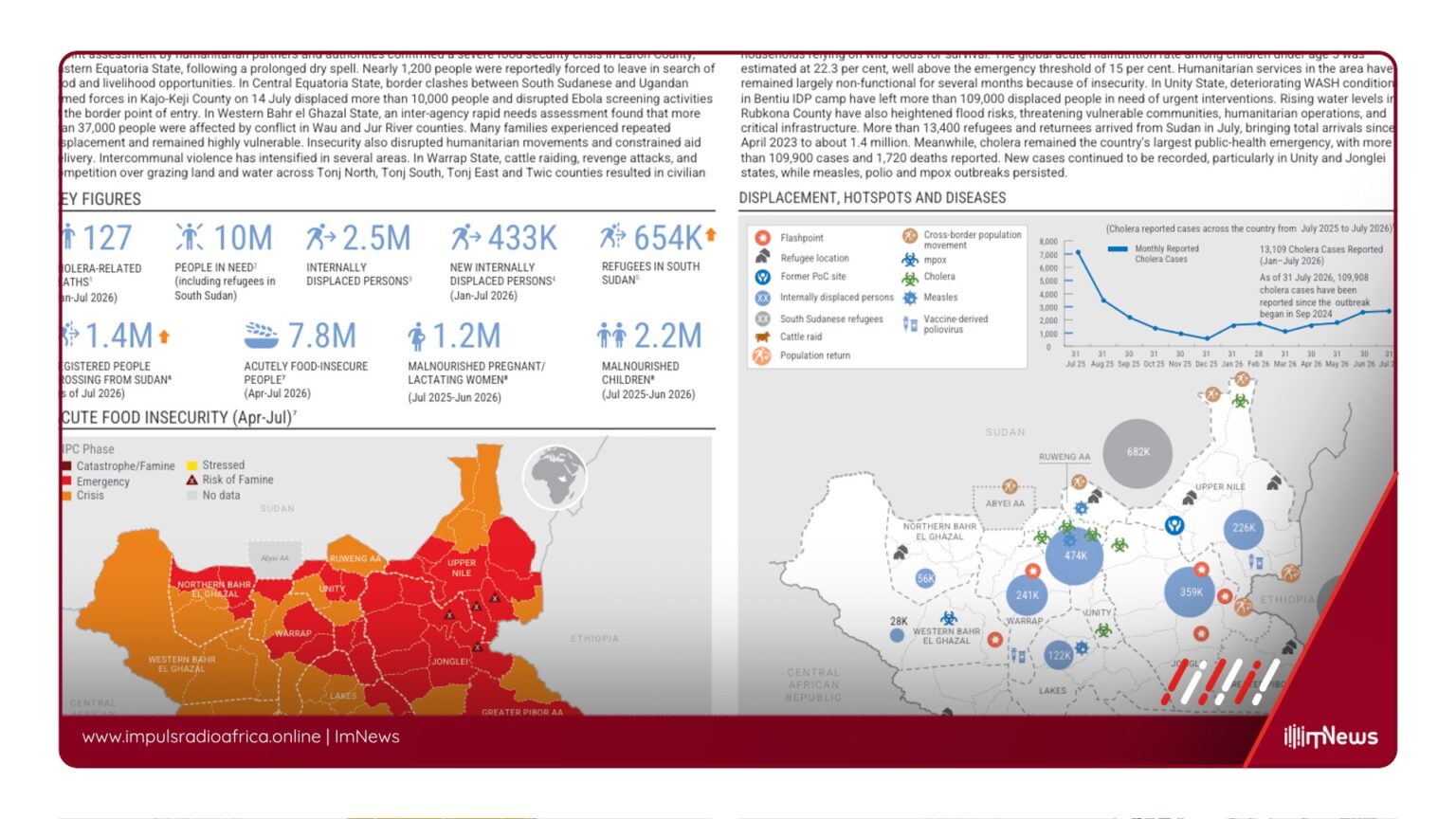
A joint assessment by humanitarian partners and authorities confirmed a severe food security crisis in Lafon County, Eastern Equatoria State, following a prolonged dry spell.
The situation has forced nearly 1,200 people to leave their homes in search of food and livelihood opportunities.
In Central Equatoria State, border clashes between South Sudanese and Ugandan armed forces displaced over 10,000 people and disrupted Ebola screening activities.
In Western Bahr el Ghazal State, conflict affected more than 37,000 people in Wau and Jur River counties, leading to repeated displacement and vulnerability. Intercommunal violence has intensified in several areas, including Warrap State, where cattle raiding and revenge attacks have resulted in civilian casualties and displacement.
The humanitarian needs and access challenges have been further compounded by these incidents.
In Jonglei State, a needs assessment found worsening food insecurity, with many households relying on wild foods for survival.
The global acute malnutrition rate among children under age 5 was estimated at 22. 3 per cent, well above the emergency threshold.
The UN Office for the Coordination of Humanitarian Affairs (OCHA) reported that more than 13,400 refugees and returnees arrived from Sudan in July, bringing the total arrivals since April 2023 to about 1. 4 million. Cholera remains the country’s largest public-health emergency, with over 109,900 cases and 1,720 deaths reported.
Outbreaks of measles, polio, and mpox have also persisted.
As the situation worsens, the international community remains concerned about the humanitarian crisis in South Sudan.
The UN Mission in South Sudan (UNMISS) is expected to brief the Security Council on the ongoing situation, calling for increased support for the affected populations and urging all parties to the conflict to engage in peace talks.
*Additional reporting by ImNews | Sources consulted: 5*
—
This original article was produced by the ImNews editorial team
Source: reliefweb
Source: UN Office for the Coordination of Humanitarian Affairs


