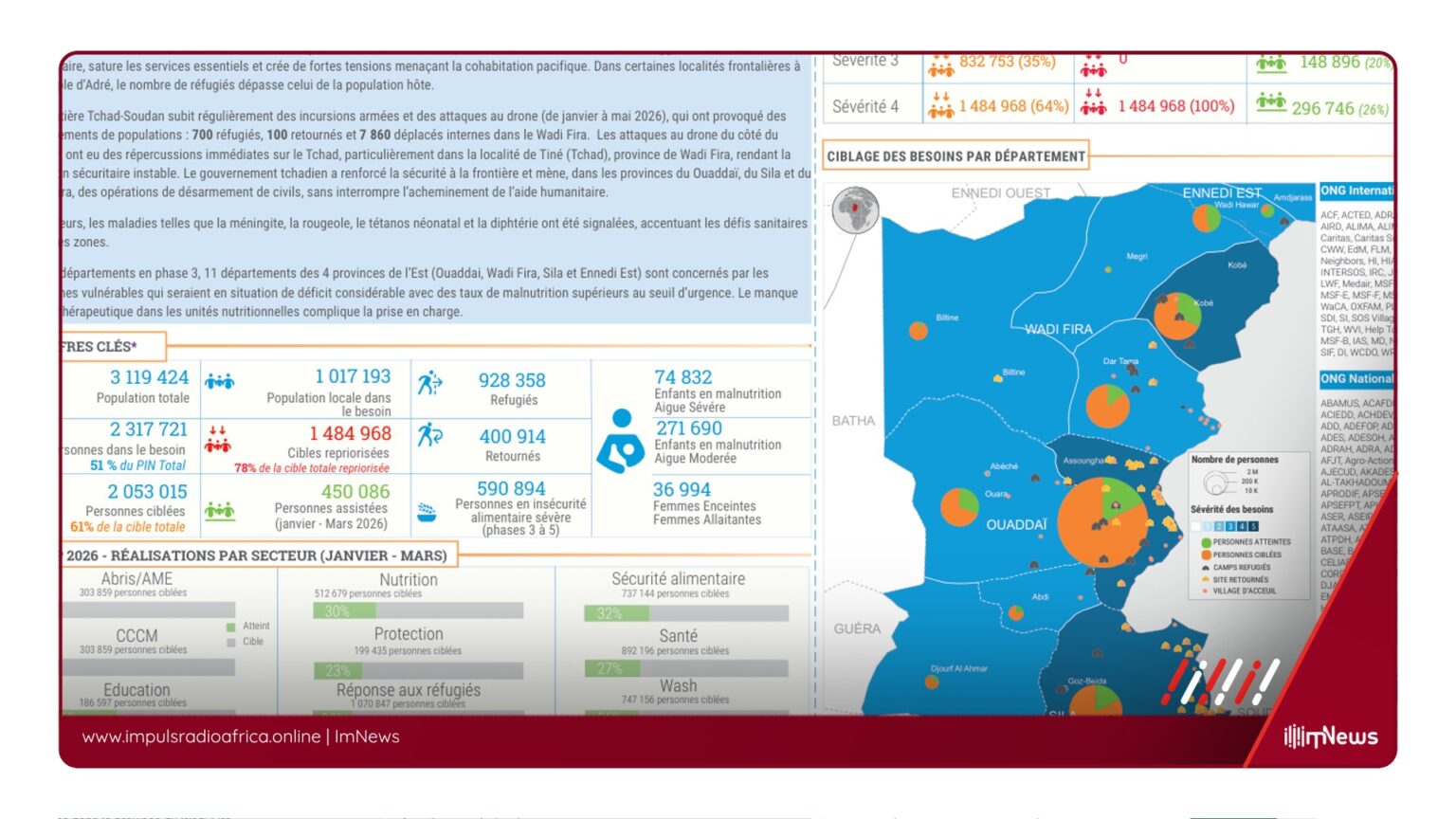
Officials commented on the matter. Since the conflict in Sudan began in April 2023, the region has witnessed a massive influx of populations, with nearly 400,000 returnees and displaced persons adding to the existing burden on local resources. ### NUT GRAF: The situation is dire, with estimates indicating that 4.
5 million people are in need of humanitarian assistance in Chad, with 3. 4 million targeted for assistance and $986. 1 million required to meet these needs.
The Chad Humanitarian Needs and Response Plan (HNRP) 2026 highlights that approximately 22% of Chad’s population, or nearly 4. 6 million people, require urgent humanitarian assistance. ### BODY: Khartoum, Sudan – The humanitarian crisis in Chad is a complex interplay of regional violence, climate shocks, and recurrent health emergencies.
The influx of people from Sudan has exacerbated the situation, putting immense pressure on local resources and services.
According to the Global Humanitarian Overview 2026, while the number of people in need has decreased from 7 million in 2025 to 4 million in 2026, this does not reflect an improvement in the situation.
The decrease is attributed to changes in the way needs are calculated, not a reduction in the actual number of affected individuals.
The Chad HNRP 2026 underscores the impact of climate change, regional conflicts, mass population displacements, and the chronic fragility of basic social services on the humanitarian crisis.
The airstrike carried out by the Israeli army on an aid facility has further compounded the challenges, resulting in at least four deaths and 127 injuries, including hospital staff.
The crisis is not just a matter of numbers; it is about the human impact.
The UN Office for the Coordination of Humanitarian Affairs (OCHA) reports that the influx of people has exerted pressure on local resources, exacerbated food insecurity, overwhelmed essential services, and created tensions that threaten peaceful coexistence.
In certain localities, such as Adré, the number of refugees has surpassed that of the host population. This demographic shift has significant implications for the social fabric of the region, with potential long-term effects on the local economy and social services.
The situation calls for a coordinated and comprehensive response from the international community.
The need for funding is urgent, and the international community must recognize the severity of the crisis in Chad.
The crisis is not just a local issue but has regional and global implications, particularly given the region’s strategic importance and its role in the broader Sahel region.
As the crisis unfolds, it is crucial that the international community remains vigilant and responsive.
The needs of the affected populations must be prioritized, and efforts must be made to ensure that humanitarian assistance reaches those most in need.
The situation in eastern Chad is a stark reminder of the human cost of conflict and the challenges of providing aid in volatile and insecure environments.
It is a test of the international community’s commitment to humanitarian principles and its ability to respond effectively to complex crises. ### KICKER: The humanitarian crisis in eastern Chad is a multifaceted challenge that requires a coordinated and sustained response.
As the situation continues to evolve, the international community must remain committed to supporting the affected populations and addressing the root causes of the crisis.
*Additional reporting by ImNews | Sources consulted: 5*
—
This original article was produced by the ImNews editorial team
Source: reliefweb
Source: UN Office for the Coordination of Humanitarian Affairs