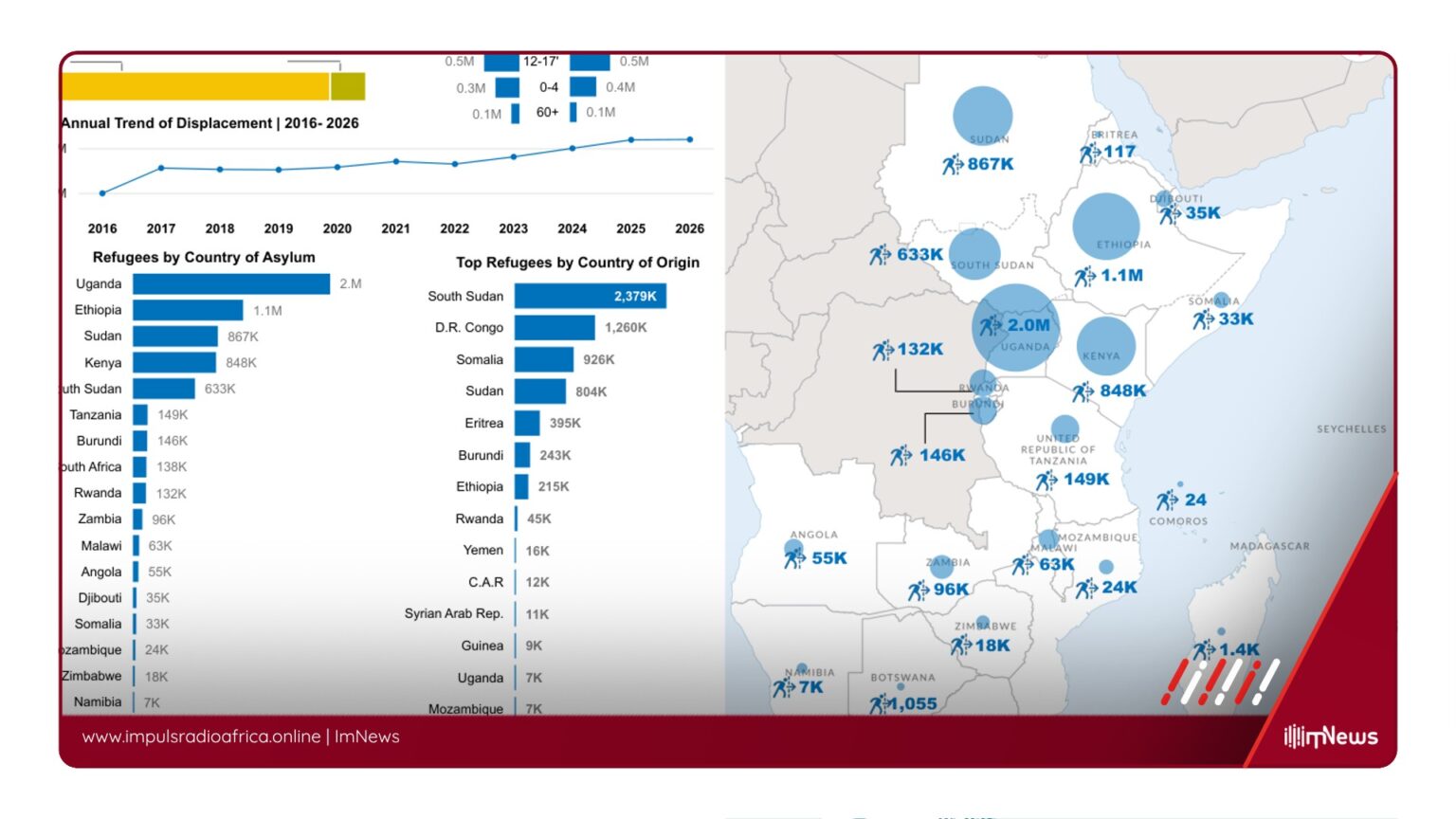
Kampala, Uganda — Uganda Hosts Over 2 Million Refugees Amidst Ebola Outbreak Kampala, Uganda – As of 30 April 2026, Uganda hosts a staggering total of 2,011,234 refugees and asylum-seekers, according to data from the Office of the Prime Minister and the United Nations High Commissioner for Refugees (UNHCR). This figure highlights the country’s ongoing challenge of managing one of the largest refugee populations in the region.
The Democratic Republic of the Congo (DRC) has recently declared its 17th Ebola outbreak in 50 years, with the Bundibugyo virus in Ituri Province.
By 19 May 2026, there were over 500 suspected cases and 131 deaths. This outbreak has added a new layer of public health concern for Uganda, which has already been addressing the challenges of managing large populations of refugees and asylum-seekers.
Uganda has confirmed 12 cases of Ebola by 19 May 2026, including two imported cases.
One American missionary doctor, affected by the virus, was evacuated to Germany for treatment.
The presence of Ebola in the country raises concerns about the potential spread of the virus to the refugee population and the broader community.
The UNHCR provides data on refugees and asylum — seekers in Uganda and the Eastern and Southern Africa region, indicating the scale of the issue and the regional distribution of refugees.
The Centers for Disease Control and Prevention (CDC) in the United States has also provided information on the Ebola outbreak, highlighting the measures taken to prevent the disease from spreading to the U. S.
The ongoing Ebola outbreak in the DRC and Uganda underscores the importance of effective refugee management and public health response.
As Uganda continues to host a large number of refugees, it must also ensure that adequate measures are in place to prevent the spread of the virus and protect both the refugee population and the host community.
The country’s comprehensive response to the Ebola outbreak will require a coordinated effort from government agencies, international organizations, and local communities. This includes implementing robust infection prevention and control measures, ensuring access to healthcare services, and providing psychosocial support to affected individuals and communities.
The situation in Uganda serves as a reminder of the complex challenges faced by countries hosting large refugee populations, particularly in times of health emergencies.
As the global community works together to combat the Ebola outbreak, it is crucial to prioritize the well — being and safety of all individuals involved, including refugees and asylum-seekers. ### Kampala, Uganda – Uganda’s Struggle to Manage Large Refugee Population Amidst Ebola Outbreak Kampala, Uganda – Uganda’s role as a major host country for refugees from neighboring countries such as South Sudan, the DRC, and Somalia has been well-documented.
The country’s ability to manage large populations of refugees and asylum-seekers has been a testament to its resilience and humanitarian spirit.
However, the recent Ebola outbreak in the DRC and Uganda has added a new layer of complexity to the existing challenges of refugee management.
The presence of the Bundibugyo virus in the DRC and the confirmed cases in Uganda necessitate a robust public health response to prevent the spread of the virus within the refugee population and the host community.
The Office of the Prime Minister and the UNHCR have provided data on the total number of refugees and asylum — seekers in Uganda, highlighting the scale of the issue.
The Centers for Disease Control and Prevention (CDC) has also provided information on the Ebola outbreak, emphasizing the importance of infection prevention and control measures.
As Uganda continues to face the dual challenges of managing a large refugee population and responding to the Ebola outbreak, it is crucial for the government, international organizations, and local communities to work together to ensure the well — being and safety of all individuals involved.
This situation underscores the need for a comprehensive approach to refugee management and public health response, particularly in times of health emergencies.
As the global community works to combat the Ebola outbreak, it is essential to prioritize the protection and support of refugees and asylum — seekers, ensuring their rights and dignity are upheld. ### Kampala, Uganda – Uganda’s Response to Ebola Outbreak and Large Refugee Population Poses Significant Challenges Kampala, Uganda – Uganda’s response to the Ebola outbreak and its management of a large refugee population pose significant challenges.
As of 30 April 2026, the country hosts over 2 million refugees and asylum-seekers, according to data from the Office of the Prime Minister and the UNHCR. This figure underscores the scale of the issue and the complexities involved in managing such a large population.
The recent Ebola outbreak in the DRC and Uganda has further complicated the situation.
The presence of the Bundibugyo virus in the DRC and the confirmed cases in Uganda necessitate a robust public health response to prevent the spread of the virus within the refugee population and the host community.
The UNHCR has provided data on the total number of refugees and asylum — seekers in Uganda, highlighting the scale of the issue.
The CDC has also provided information on the Ebola outbreak, emphasizing the importance of infection prevention and control measures.
As Uganda continues to face the dual challenges of managing a large refugee population and responding to the Ebola outbreak, it is crucial for the government, international organizations, and local communities to work together to ensure the well — being and safety of all individuals involved.
The situation in Uganda serves as a reminder of the complex challenges faced by countries hosting large refugee populations, particularly in times of health emergencies.
As the global community works together to combat the Ebola outbreak, it is essential to prioritize the protection and support of refugees and asylum — seekers, ensuring their rights and dignity are upheld.
### Kampala, Uganda – Uganda’s Efforts to Manage Ebola Outbreak and Large Refugee Population Require Coordinated Response Kampala, Uganda – Uganda’s efforts to manage the Ebola outbreak and its large refugee population require a coordinated response from government agencies, international organizations, and local communities.
As of 30 April 2026, the country hosts over 2 million refugees and asylum-seekers, according to data from the Office of the Prime Minister and the UNHCR.
The recent Ebola outbreak in the DRC and Uganda has added a new layer of complexity to the existing challenges of refugee management.
The presence of the Bundibugyo virus in the DRC and the confirmed cases in Uganda necessitate a robust public health response to prevent the spread of the virus within the refugee population and the host community.
The UNHCR has provided data on the total number of refugees and asylum — seekers in Uganda, highlighting the scale of the issue.
The CDC has also provided information on the Ebola outbreak, emphasizing the importance of infection prevention and control measures.
As Uganda continues to face the dual challenges of managing a large refugee population and responding to the Ebola outbreak, it is crucial for the government, international organizations, and local communities to work together to ensure the well — being and safety of all individuals involved.
*Additional reporting by ImNews | Sources consulted: 5*
—
This original article was produced by the ImNews editorial team
Source: reliefweb
Source: UN High Commissioner for Refugees