Kampala, Uganda — The Ugandan government has successfully secured over 2.1 trillion Shillings (USD 540 million) in funding from the World Bank to enhance the management of cities and municipalities across the country. This significant financial injection is part of a broader initiative aimed at improving urban management, expanding climate-smart infrastructure, and generating employment opportunities for both residents and refugees in ten cities, 26 municipalities, and 13 refugee-hosting districts.
The six — year Uganda Cities and Municipalities Infrastructure Development (UCMID) programme builds upon the successes of its predecessor, the USMID, which focused on sustainable urban development and economic growth. The UCMID programme is designed to extend access to climate-smart infrastructure, services, and jobs for urban residents and displaced populations in areas hosting refugees.
The funding breakdown includes USD 429 million in the form of an IDA Credit, USD 80 million as an IDA grant, and the remaining USD 31 million as an IDA shorter maturity loan. The appraisal of the programme highlights that most urban areas in Uganda rely on “basic “plans that are not integrated with spatial or economic development strategies. It notes that unplanned urban sprawl has led to increased infrastructure costs, environmental degradation, pollution, and flooding, emphasizing the importance of strategic planning.
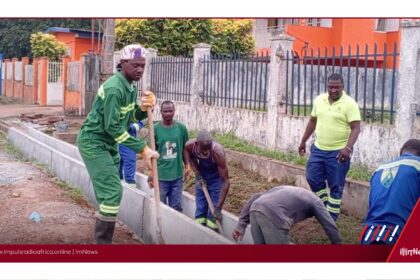
With the World Bank’s International Development Association (IDA) financing, the UCMID is expected to provide improved access to essential urban infrastructure and services, such as all-weather roads, stormwater drainage, street lighting, public markets, and other urban amenities. These investments are anticipated to enhance mobility, reduce flood risks, and improve public safety, while also stimulating local economic activity.
Francisca Ayodeji (Ayo) Akala, World Bank Country Manager for Uganda, emphasized the need for productive jobs for Uganda’s youthful labor force as the urban population is projected to more than double in the next two decades. She highlighted that UCMID is designed to support local governments in delivering climate-smart infrastructure that reduces flooding, improves mobility, and creates opportunities for youth and women.
The programme is also expected to strengthen services and livelihoods in refugee — hosting areas, ensuring that refugees and their hosts can benefit from safer and more productive towns and cities. It is anticipated to create at least 40,000 direct jobs, including 20,000 permanent positions in operations and services, and an equal number through short-term work during construction. Improved infrastructure and local economic development are expected to catalyze additional private sector employment in the future.
UCMID is a successor to the Programme for Results Uganda Support to Municipal Infrastructure Development (USMID) Program, which concluded in 2024. The Ministry of Lands, Housing and Urban Development is leading the coordination and implementation of UCMID, with involvement from the Ministry of Local Government. The USMID, launched in 2013, aimed to support Uganda in achieving sustainable urbanization in line with the National Development Plans and targeted 14 municipalities and 11 refugee-hosting districts for the construction of urban infrastructure.
Isaac Mutenyo, the programme national coordinator for the USMID programme, described its performance as successful across all projects in the four regions. He highlighted the benefits felt by Ugandans from Arua in the far west to Busia in the far east, with over 215km of all-weather roads constructed, 1,800 street lights erected, and over 40km of cycling, bus, and parking infrastructure installed. A community satisfaction survey in 2021 returned a 94 percent satisfaction rate.
UCMID will add another 15 municipal governments to those that benefited from USMID, including Bugiri, Bushenyi-Ishaka, Ibanda, Iganga, Kapchorwa, Kisoro, Kotido, Koboko, Kumi, Masindi, Mityana, Nebbi, Njeru, Rukungiri, and Sheema. The 13 Refugee-Hosting Districts of Adjumani, Arua, Isingiro, Kamwenge, Kikuube, Kiryandongo, Kyegegwa, Lamwo, Madi-Okollo, Moyo, Obongi, Terego, and Yumbe will also benefit. The ten cities involved are Arua, Fort Portal, Gulu, Hoima, Jinja, Lira, Mbale, Mbarara, Masaka, and Soroti.