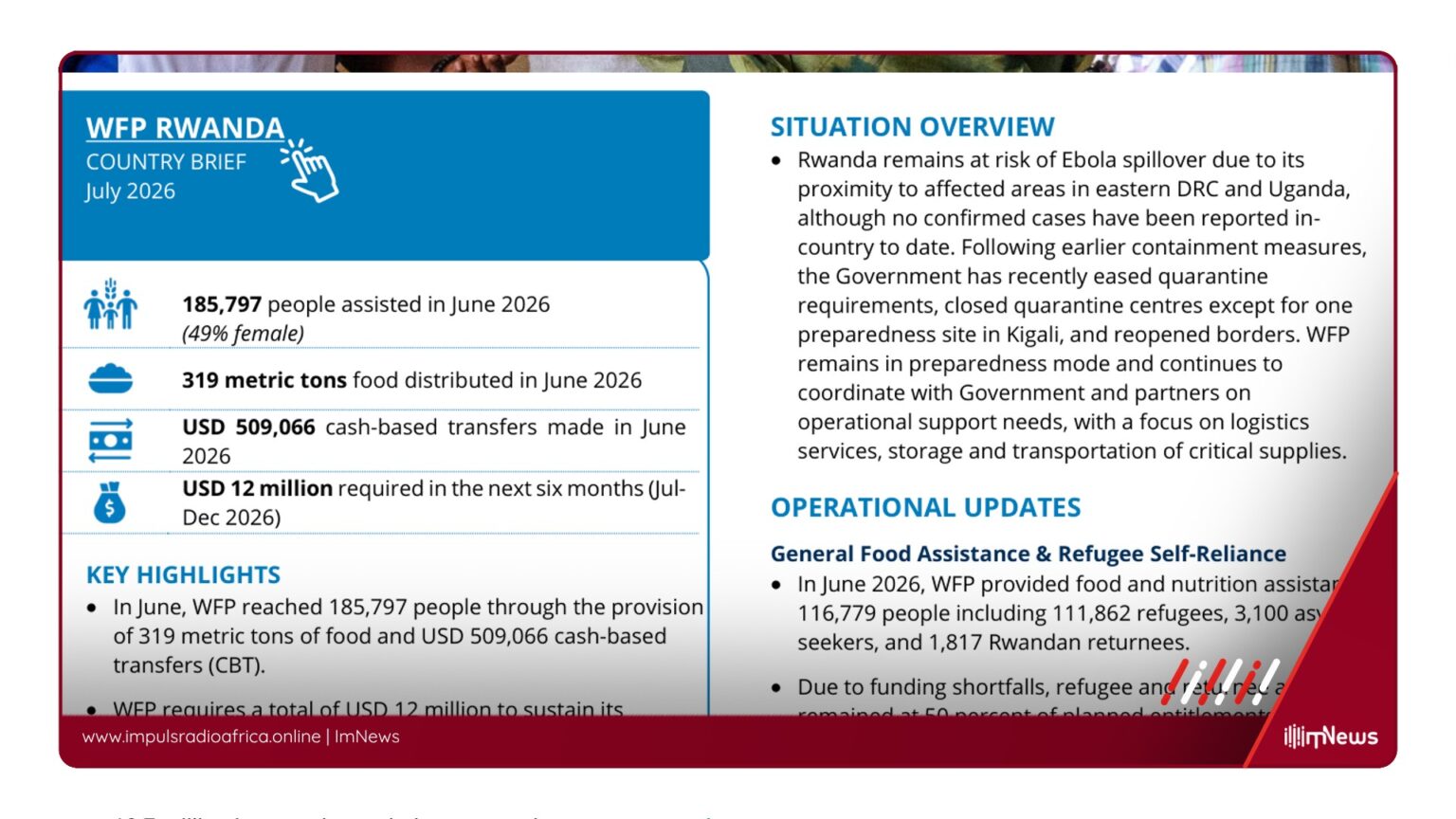
WFP Assists Over 185,000 in Rwanda Amidst Food Insecurity Crisis BODY: Kigali, Rwanda – In June 2026, the World Food Programme (WFP) provided critical support to over 185,797 individuals in Rwanda through the distribution of 319 metric tons of food and USD 509,066 in cash-based transfers (CBT).
The WFP’s operations are part of a broader strategy to address the nation’s food insecurity, which has been exacerbated by irregular rainfall, drought, floods, pests, and diseases affecting the agricultural sector.
The WFP currently requires USD 12 million to maintain its operations from July through December 2026, with USD 10. 7 million designated for immediate food assistance to targeted refugees, asylum seekers, and returnees. This funding gap underscores the ongoing need for international support to combat the food security crisis in Rwanda.
The Rwandan government has been proactive in its efforts to tackle food insecurity, implementing initiatives under the National Strategy for Transformation (NST1 and NST2) to enhance agricultural productivity, climate resilience, and sustainable food security.
The country’s reliance on subsistence agriculture, coupled with its landlocked status, makes it particularly vulnerable to external shocks and food shortages.
The WFP’s interventions in Rwanda go beyond immediate relief, aiming to foster long-term solutions through partnerships with the government, local communities, and other stakeholders. These efforts include improving agricultural practices, expanding market access, and promoting sustainable livelihoods.
As Rwanda progresses towards its economic growth and development goals, the continued support of the international community will be crucial in ensuring inclusive and sustainable progress for all Rwandans.
The WFP’s role in the country is a testament to the importance of international cooperation in addressing global challenges like food insecurity.
*Additional reporting by ImNews | Sources consulted: 5*
—
This original article was produced by the ImNews editorial team
Source: reliefweb
Source: World Food Programme