
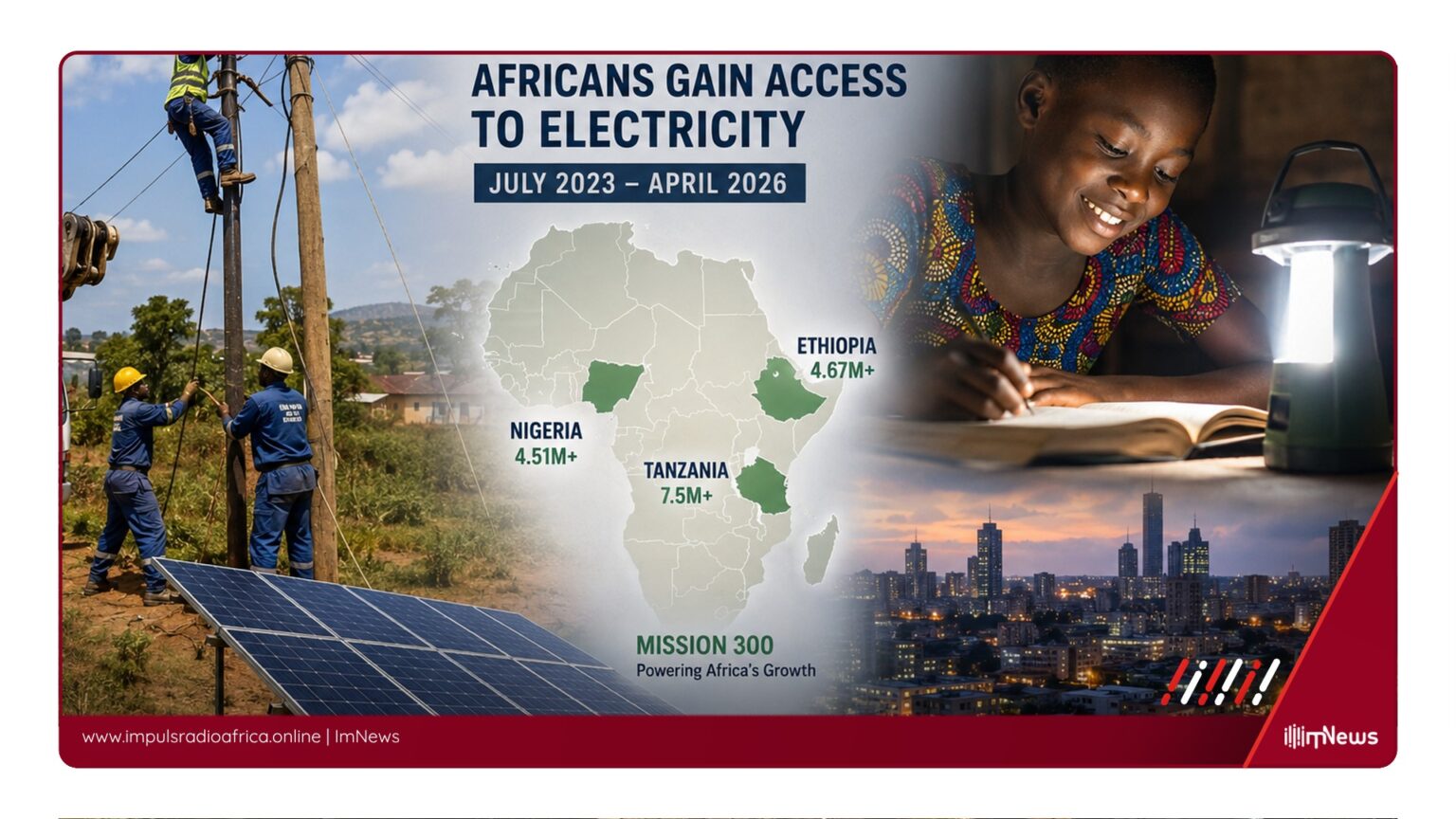
Tanzania, Ethiopia, Nigeria Spearhead Africa’s Electrification Push Amidst Continent-Wide Energy Gap BODY: Nairobi, Kenya – In a remarkable surge of electrification, over 50 million people in Africa have gained access to electricity within the span of less than three years, driven by a collective effort to bridge the continent’s vast energy gap. Tanzania, Ethiopia, and Nigeria have taken the lead in this initiative, significantly boosting connectivity across the region.
The Mission 300 initiative, backed by the World Bank Group, aims to connect 300 million Africans to electricity by 2030, through a combination of grid expansion, mini-grids, and off-grid renewable energy solutions.
The initiative’s progress is a testament to the collaborative efforts of the World Bank Group, which is committed to connecting 250 million people, alongside the African Development Bank Group’s goal to add another 50 million. Despite this progress, nearly 600 million people in Sub-Saharan Africa still lack electricity, a challenge that has long impeded economic development, health, and education on the continent.
The World Bank emphasizes the transformative power of electricity access, underlining its importance for health, education, dignity, jobs, and overall quality of life. Tanzania has been at the forefront of electrification, investing in off-grid renewable energy projects and accelerating its pace nearly five-fold compared to the years prior to Mission 300. Ethiopia has focused on expanding its grid infrastructure and mini-grids, while Nigeria, with its vast population, has made significant strides through various electrification initiatives.
The Africa Business Insider reports that Nigeria’s Distributed Access through Renewable Energy Scale-up (DARES) project has been particularly effective, accounting for nearly 80% of the country’s new electricity connections during the reporting period. This, combined with the Nigeria Electrification Project and the Distribution Sector Recovery Programme, has significantly boosted access.
The report also highlights the growing role of renewable energy and decentralised electricity systems in reaching underserved communities. Mini-grids and standalone solar systems have become crucial in areas where extending the national grid remains costly and technically challenging. While the Mission 300 initiative has delivered electricity access at nearly double the pace of its launch, the report also notes that the reliability or quality of electricity supplied remains a concern for many African countries, including Nigeria.
Eight countries, including Angola, Cabo Verde, the Republic of Congo, Guinea — Bissau, Mauritania, Senegal, South Sudan, and Sudan, have yet to record a single electricity connection under Mission 300-tracked World Bank operations, indicating that the journey towards universal electricity access is far from over.
As Africa continues to advance its electrification efforts, sustained investment in infrastructure, innovative solutions, and stakeholder engagement in the energy sector will be crucial to ensure that the remaining 600 million people gain access to electricity. This push is not merely about providing power; it is a pivotal step towards sustainable development and improved quality of life for millions.
*Additional reporting by ImNews | Sources consulted: 5*
—
This original article was produced by the ImNews editorial team
Source: Africa.businessinsider
Source: Ayodeji Adegboyega