
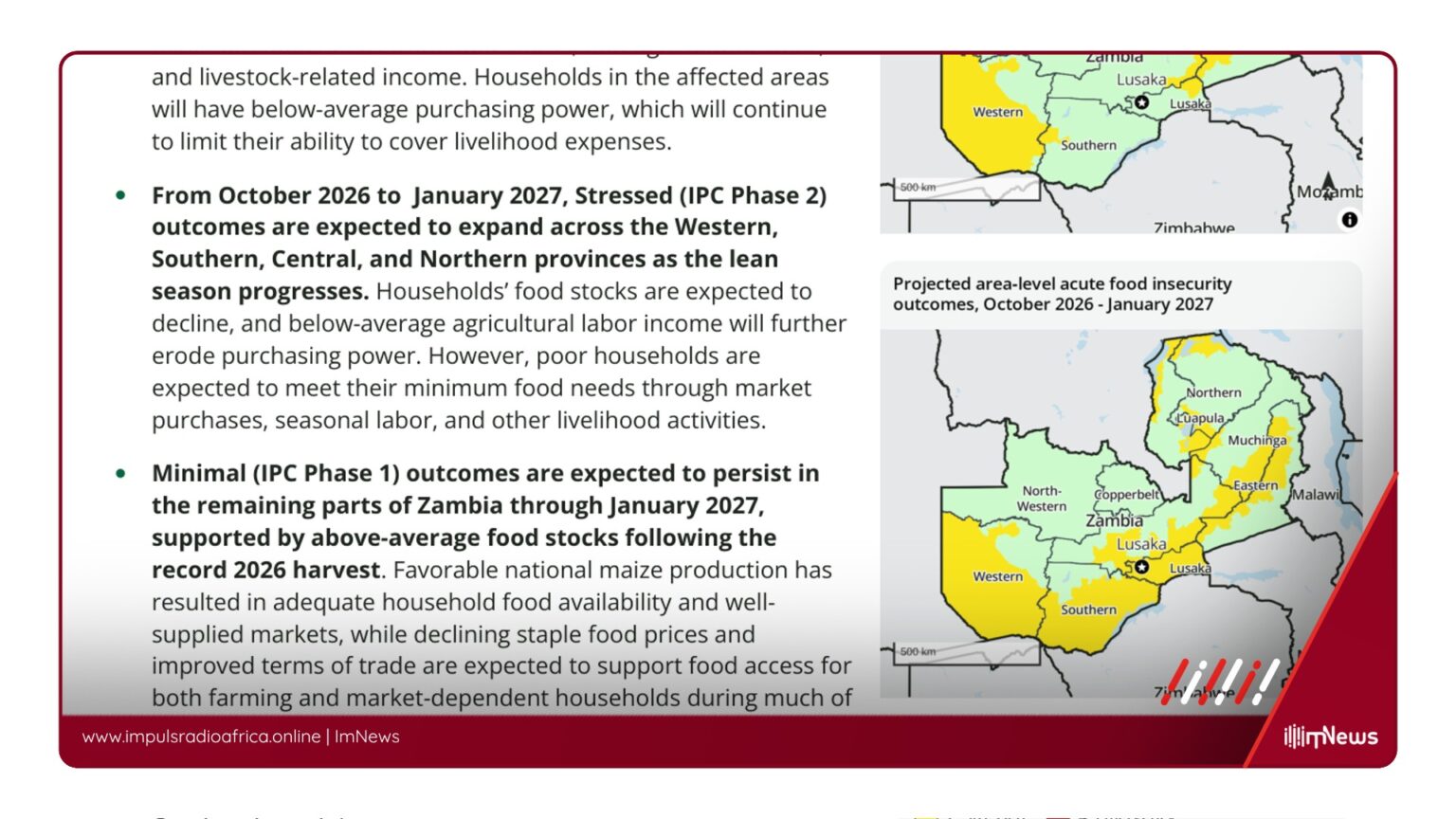
Lusaka, Zambia — The Famine Early Warning System Network (FEWS NET) has projected that Stressed (IPC Phase 2) food security conditions will persist in Zambia’s Western and Southern provinces from July 2026 through January 2027. This forecast is attributed to a mix of factors including below-average harvests, April flooding, localized production losses, prolonged dry spells, and livestock movement restrictions due to Foot and Mouth Disease (FMD). Despite a record maize harvest of approximately 5 million metric tons, which is expected to bolster household food stocks and purchasing power in areas with minimal (IPC Phase 1) outcomes, the overall food security situation remains precarious.
Most households in the affected regions are anticipated to rely on food stocks, non — agricultural labor, and livestock-related income to meet their minimum food needs.
The Zambia Statistics Agency (ZAMSTAT) has reported that staple food prices have continued to decline seasonally following the main harvest, with the national average retail price of maize grain dropping by 12. 5 percent between May and June 2026.
However, this reduction is not expected to fully offset the challenges faced by households, particularly as the lean season progresses and food stocks are expected to decline.
The Food Reserve Agency (FRA) is planning to procure at least 500,000 metric tons of maize to support producers and ensure market supplies.
Additionally, fuel prices have seen a decline, which may help lower transport and distribution costs, though this is expected to have limited impact in remote and structurally deficit markets.
The Zambian government has implemented measures to address the situation, including border closures to South African livestock to combat the FMD outbreak.
However, experts caution that these measures may not be sufficient to alleviate the food security crisis in the affected areas.
As the situation evolves, it is crucial for the government, international organizations, and other stakeholders to collaborate on effective interventions to address the food security challenges in Zambia’s Western and Southern provinces.
*Additional reporting by ImNews | Sources consulted: 5*
—
This original article was produced by the ImNews editorial team
Source: reliefweb
Source: Famine Early Warning System Network