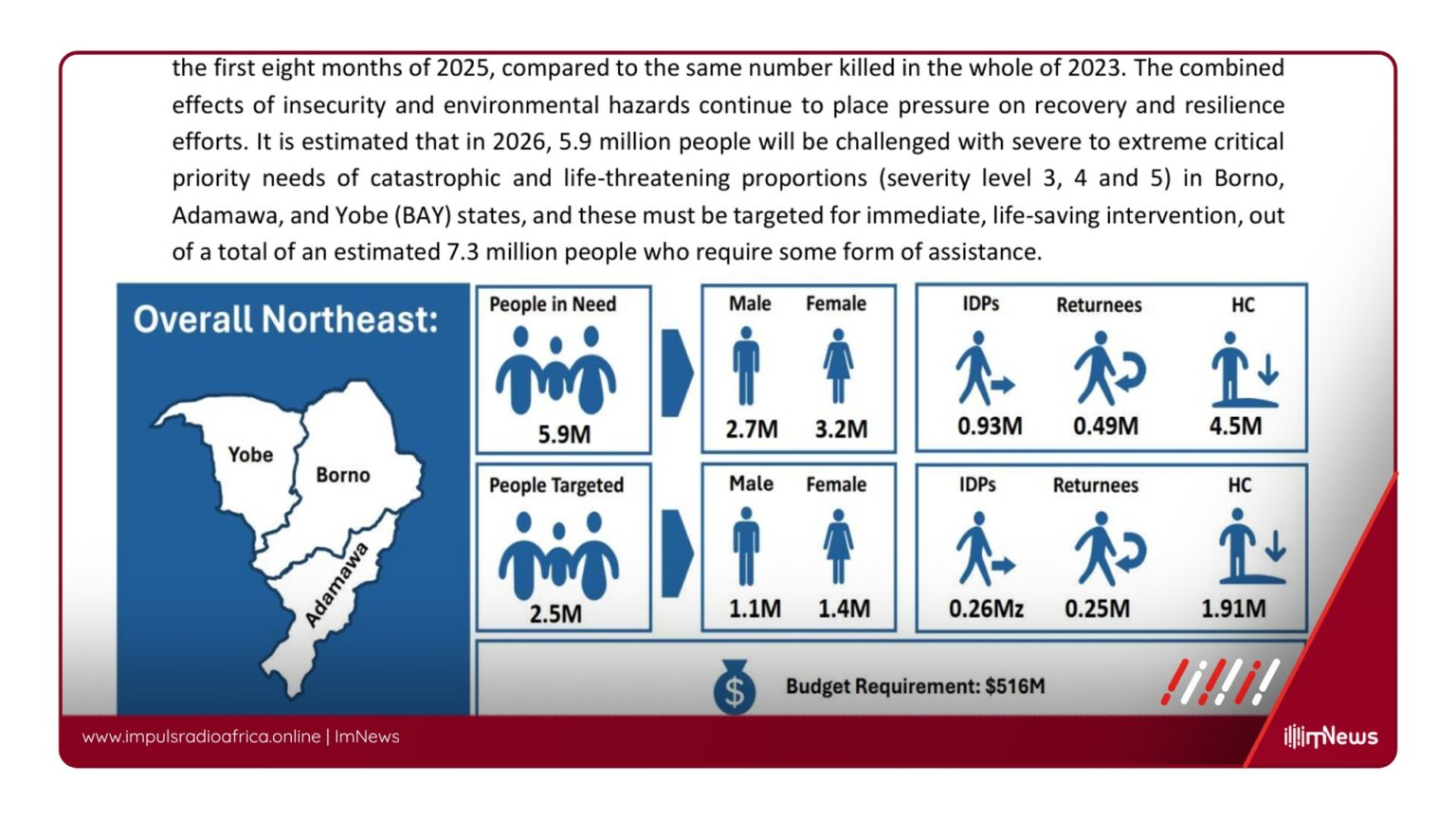
Nigeria’s Northeast Crisis: 5. 9 Million in Critical Need Amidst Conflict and Climate Disasters BODY: Lagos, Nigeria – A humanitarian crisis of catastrophic proportions is unfolding in Nigeria’s northeastern states of Borno, Adamawa, and Yobe (BAY), with an estimated 5. 9 million people facing severe to extreme critical needs in 2026.
This figure represents nearly two — thirds of the total population requiring some form of assistance, as outlined in the Humanitarian Needs and Response Plan (HNRP) 2026.
The situation is dire, exacerbated by a protracted conflict that has raged for sixteen years, along with devastating flooding, disease outbreaks, and the lack of access to basic services.
The crisis has been further compounded by the rise of non — state armed groups (NSAGs) targeting civilians, resulting in a sharp increase in civilian casualties.
In the first eight months of 2025 alone, 4,000 civilians were killed, a figure that far exceeds the total number of civilian deaths in 2023.
The HNRP 2026, developed by humanitarian organizations and UN agencies, identifies food insecurity and malnutrition as endemic issues within the region.
The plan, which serves as a comprehensive roadmap for addressing the crisis, underscores the critical nature of the situation, noting that the needs of the BAY states are of the highest priority. Despite the urgency, funding gaps persist.
The Cluster Requirements within the HNRP 2026 indicate that coordination, thematics, and system support are priority areas for humanitarian assistance, yet only 54. 2% of the required funding for these efforts has been secured.
The crisis in Nigeria’s northeast is not only a local concern but also has broader implications for the region and the global community. It serves as a stark reminder of the challenges that arise from protracted conflicts and their impact on vulnerable populations.
As the situation continues to worsen, there is a pressing need for increased international support to meet the critical needs of the affected population.
The HNRP 2026 offers a roadmap for action, but it requires significant funding and coordinated efforts from the global community to be effective.
*Additional reporting by ImNews | Sources consulted: 5*
—
This original article was produced by the ImNews editorial team
Source: reliefweb
Source: Call to Action on Protection from Gender-Based Violence in Emergencies