Khartoum, Sudan — Protection Challenges for Sudanese Returnees in Chad In a region already addressing the repercussions of conflict and displacement, a new wave of protection challenges has emerged in Chad, as thousands of Sudanese refugees return to their areas of origin following a reduction in conflict within Sudan. Over the course of 2025, more than 2. 2 million individuals returned to Khartoum and Aj Jazirah, areas previously affected by intense fighting.
However, the journey back home has been fraught with complexities, as evidenced by recent findings from interviews conducted between February 27 and March 5, 2026, at entry points and transit sites in Chad.
According to the United Nations High Commissioner for Refugees (UNHCR), 71% of those crossing borders into neighboring countries are Sudanese nationals, with the remaining 29% being non-Sudanese. This influx has placed a significant strain on Chad’s resources and infrastructure, leading to concerns about the protection situation of new arrivals.
The UNHCR reports a significant reduction in conflict in Khartoum and Aj Jazirah, which has allowed for the return of 2. 2 million people.
However, the experiences of those who have returned are far from uniform.
Upon arrival in Chad, many face a complex situation that reflects both the trauma of fleeing and the relief of having crossed the border.
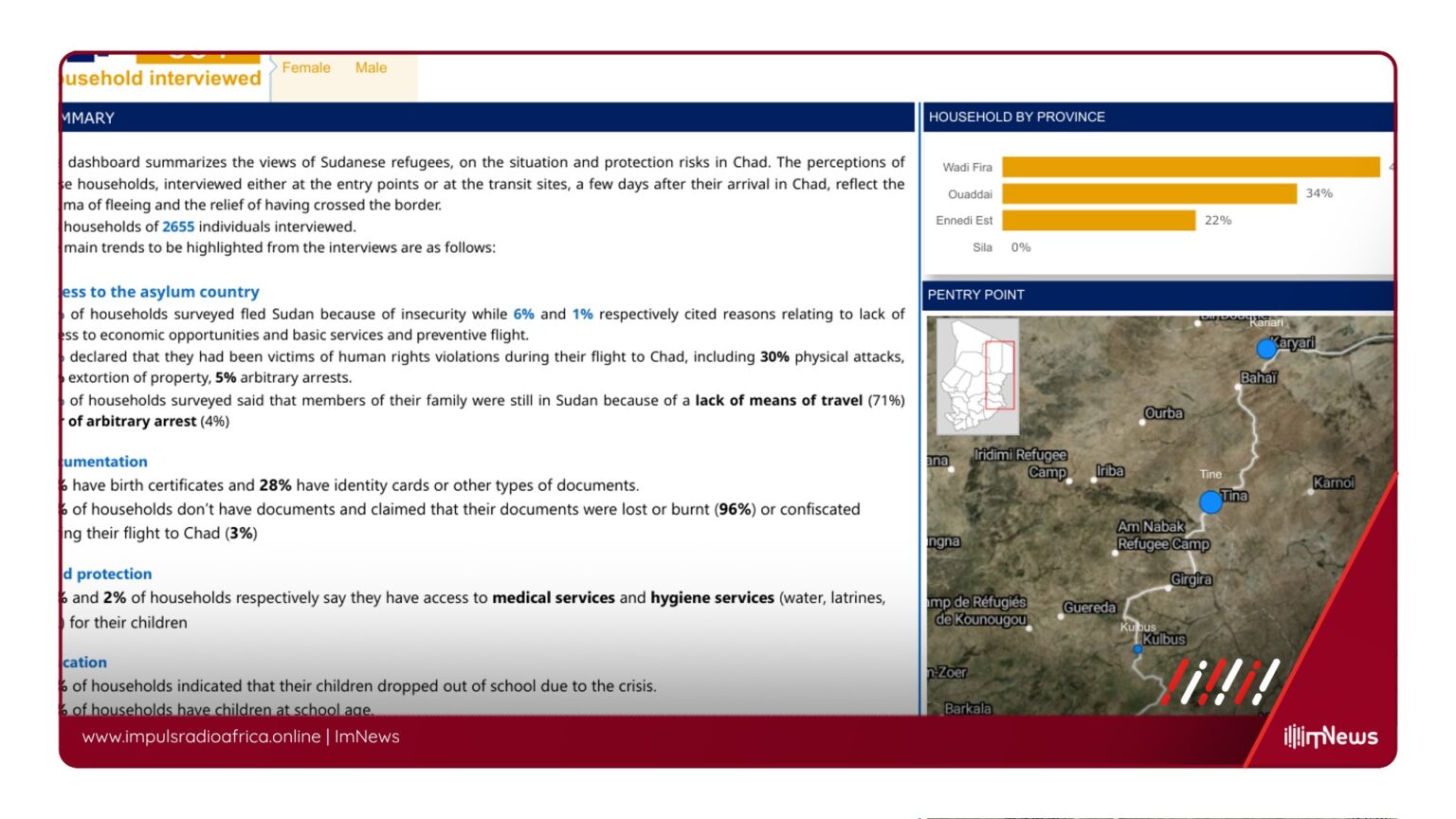
A recent dashboard by Project 21, a monitoring and reporting mechanism for Chad, provides insights into the perceptions of Sudanese refugees in Chad.
The report, based on interviews with 360 households of 785 individuals, indicates that while the relief of having escaped the conflict is palpable, the protection risks and challenges upon arrival in Chad are also significant.
Officials commented on the matter. “
The protection of these individuals is of paramount importance, and we are working closely with the government of Chad to address these concerns. “
The interviews conducted at entry points and transit sites revealed a range of concerns, including access to basic services, protection from violence, and the need for livelihood opportunities.
The report indicates that many returnees are in need of shelter, food, water, and healthcare. “
The government of Chad is committed to ensuring the protection and well — being of these individuals, but additional support is needed to meet the growing needs. “
The situation in Chad highlights the complexities of returning to areas affected by conflict.
While the reduction in conflict in Sudan is a positive development, it has also led to a surge in returnees, placing a strain on resources in neighboring countries.
The protection situation of new arrivals is a critical concern, and it will require a coordinated effort from the government of Chad, the UNHCR, and other humanitarian organizations to address the challenges effectively.
As the situation evolves, One thing is clear, however: the protection of these individuals is a priority, and efforts must be made to ensure their safety and well-being as they rebuild their lives.
*Additional reporting by ImNews | Sources consulted: 5*
—
This original article was produced by the ImNews editorial team
Source: reliefweb
Source: UN High Commissioner for Refugees