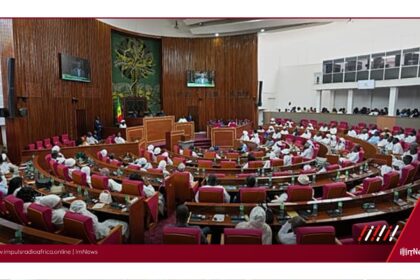
The government of Cameroon has presented a bill to the nation’s Parliament, seeking to reform the Constitution and introduce the post of Vice President. The bill, which falls under the authority of President Paul Biya, aims to strengthen the State’s efficiency and continuity. It targets amendments to the Constitution of 2 June 1972 and subsequent laws, including those of 18 January 1996 and 14 April 2008.
The draft law was in line with President Biya’s statement during his November 6, 2025, swearing-in ceremony, where he highlighted the necessity of adapting state institutions to meet national and global demands. The creation of the Vice President position is intended to modernize governance and enhance executive stability.
The bill revises several constitutional provisions, including Articles 5, 6, 7, 10, 53, and 66, to outline the status, powers, and responsibilities of the new role. The President of the Republic will have the authority to appoint and dismiss the Vice President, who will operate under delegated authority and have a term tied to the presidential mandate.
A key reform aspect is the redefinition of presidential succession, with the Vice President assuming office in the event of a vacancy caused by death, resignation, or permanent incapacity. This contrasts with the current system, where interim arrangements are managed by the legislative branch.
The bill also stipulates fresh presidential elections in the event that both the President and Vice President are unable to serve, with the President of the Senate acting as Head of State in the interim. The proposed Vice President will be subject to strict accountability measures, including asset declaration and oversight by the Court of Impeachment.
Government officials argue that the reform will bring benefits such as improved efficiency in state affairs management, enhanced international representation, and reduced election costs in cases of presidential vacancy. The bill’s adoption would necessitate amendments to existing laws, including the Electoral Code and legislation governing the Constitutional Council.
The proposal could reshape Cameroon’s political landscape by strengthening the executive branch and reducing reliance on transitional arrangements managed by Parliament. However, it is expected to generate debate among political actors and civil society, particularly regarding the concentration of appointment powers in the presidency and the implications for democratic governance. The reform also reinforces provisions on transparency and accountability, with Article 66 extending asset declaration requirements to the Vice President and other senior officials. The bill is expected to pass without significant hurdles, as the ruling Cameroon Peoples Democratic Movement, CPDM, holds a majority in both houses of Parliament.
Source: Panafricanvisions