WHO Declares Bundibugyo Ebola Outbreak in DRC and Uganda a PHEIC BODY: Kampala, Uganda – The World Health Organization (WHO) has declared the Ebola outbreak in the Democratic Republic of the Congo (DRC) and Uganda a Public Health Emergency of International Concern (PHEIC), marking the first such declaration for an Ebola outbreak caused by the Bundibugyo virus.
The announcement, made on May 16, 2026, highlights the severity of the situation and the potential for the virus to spread beyond the two countries.
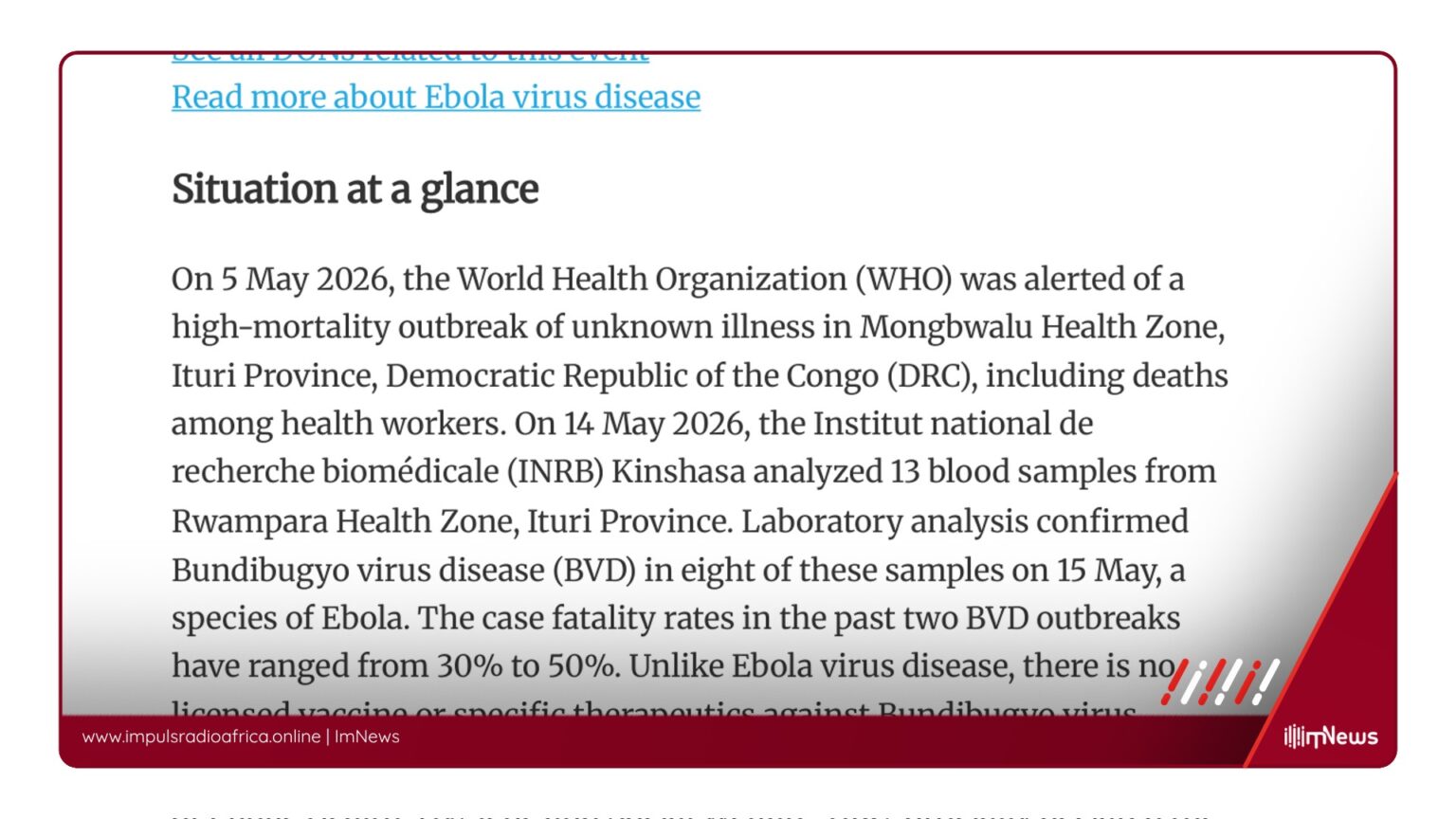
The outbreak, which originated in Mongbwalu Health Zone, Ituri Province, DRC, on May 5, 2026, has already resulted in eight laboratory-confirmed cases, 246 suspected cases, and 80 suspected deaths as of May 16.
The Bundibugyo virus, a rare species of Ebola, has historically carried a case fatality rate ranging from 30% to 50%.
The WHO’s determination that the outbreak does not meet the criteria for a pandemic emergency does not mitigate the urgency of the situation.
The organization has expressed concern over the high risk of further spread to neighboring countries, emphasizing the need for increased vigilance and preparedness measures.
The WHO Director — General expressed gratitude to the leadership of DRC and Uganda for their commitment to controlling the outbreak and their transparency in assessing the risk to other States Parties.
The situation in the DRC is particularly concerning, with cases reported across at least three health zones, including Bunia, Rwampara, and Mongbwalu.
The spread of the virus to the capital, Kinshasa, and across the border into Uganda, where two infected individuals were admitted to intensive care, has heightened alarm.
The absence of a licensed vaccine or specific therapeutics against the Bundibugyo virus adds to the challenge of controlling the outbreak. Early supportive care is the primary treatment, though it is lifesaving.
The WHO has called for increased research and development efforts to address the gap in treatment options.
As the situation unfolds, health authorities are working to identify and isolate cases, trace contacts, and implement infection prevention and control measures.
The WHO and other international health organizations are providing support to the affected countries, including the deployment of experts and the supply of medical supplies.
The declaration of a PHEIC is a clear indication of the seriousness of the Ebola outbreak in the DRC and Uganda. While the immediate threat to the global population remains low, the potential for the virus to spread is a matter of grave concern.
The international community must remain vigilant and supportive as efforts to contain the outbreak continue.
The outbreak serves as a stark reminder of the ongoing threat posed by Ebola and the importance of robust public health systems and international cooperation in the face of such crises.
As the situation evolves, the world watches closely, hoping for a swift and effective response to this latest Ebola emergency.
*Additional reporting by ImNews | Sources consulted: 5*
—
This original article was produced by the ImNews editorial team
Source: reliefweb
Source: World Health Organization