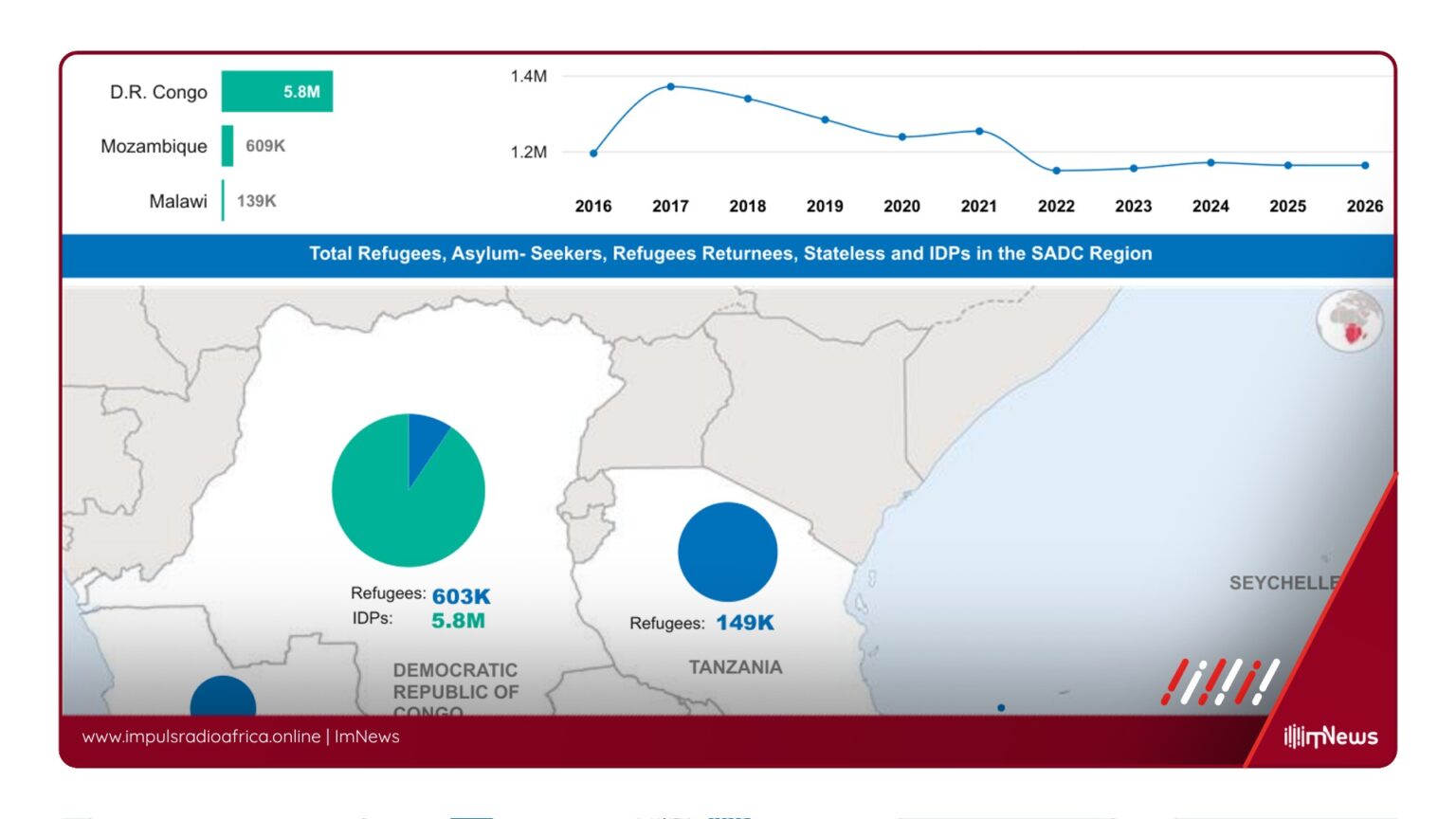
Refugee Crisis in SADC Region: UNHCR Reports 6. 3 Million People in Need BODY: Lusaka, Zambia – As of 30 April 2026, the Southern African Development Community (SADC) region faces a significant refugee and asylum-seeker crisis, with an estimated 6,265,136 individuals in need of assistance, according to data from the UN High Commissioner for Refugees (UNHCR). This figure highlights the region’s vulnerability to conflicts and economic challenges that drive displacement.
In Angola, the situation is particularly acute, with 55,722 refugees and asylum-seekers reported, accounting for 0. 9% of the total. Burundi follows closely, with 113,322 individuals, representing 1.
8% of the total population of concern to UNHCR in the region.
The SADC region has long been a focal point for refugee and asylum — seeker populations due to various conflicts and economic challenges.
The UNHCR’s role in providing protection and assistance to these populations is critical, but the scale of the crisis underscores the need for a coordinated regional response.
The data indicates a regional breakdown of refugees and asylum — seekers, with specific country figures provided, reflecting the complexity of the situation in the SADC region.
The diversity of the problem within the region is evident, with some countries hosting a significant number of refugees and others experiencing very few or none.
The regional security landscape, as outlined by the SADC, emphasizes the importance of maintaining peace and stability.
The Regional Indicative Strategic Development Plan (RISDP) reaffirms the commitment of SADC Member States to good governance, democracy, and transparency, which are prerequisites for sustainable socio-economic development.
However, the current refugee crisis necessitates a more focused approach to address the root causes of displacement and to provide adequate assistance to those affected.
The UNHCR’s data suggests that while some countries have made tangible progress in areas such as disaster risk management, the humanitarian situation remains dire.
The regional bureau for Eastern and Southern Africa, under the UNHCR, has been instrumental in providing updates on the situation, including detailed breakdowns by country. These reports serve as a crucial tool for policymakers and humanitarian organizations to understand the scope of the crisis and to allocate resources effectively.
The regional dashboard by the UNHCR also highlights the need for comprehensive solutions, including addressing the root causes of displacement, improving access to education and employment opportunities for refugees, and ensuring that host communities receive adequate support.
The SADC region’s response to the refugee crisis must be multi-faceted, involving not only the provision of immediate humanitarian assistance but also long-term solutions that promote regional stability and economic development.
As the crisis continues to unfold, the SADC region and its member states must work together to find sustainable solutions that address the needs of refugees and asylum — seekers while also considering the well-being of host communities. KICKER: The UNHCR’s latest report underscores the urgency of addressing the refugee crisis in the SADC region.
The regional response must be comprehensive, focusing on both immediate relief and long — term solutions to ensure the well-being of all affected individuals and communities.
*Additional reporting by ImNews | Sources consulted: 5*
—
This original article was produced by the ImNews editorial team
Source: reliefweb
Source: UN High Commissioner for Refugees