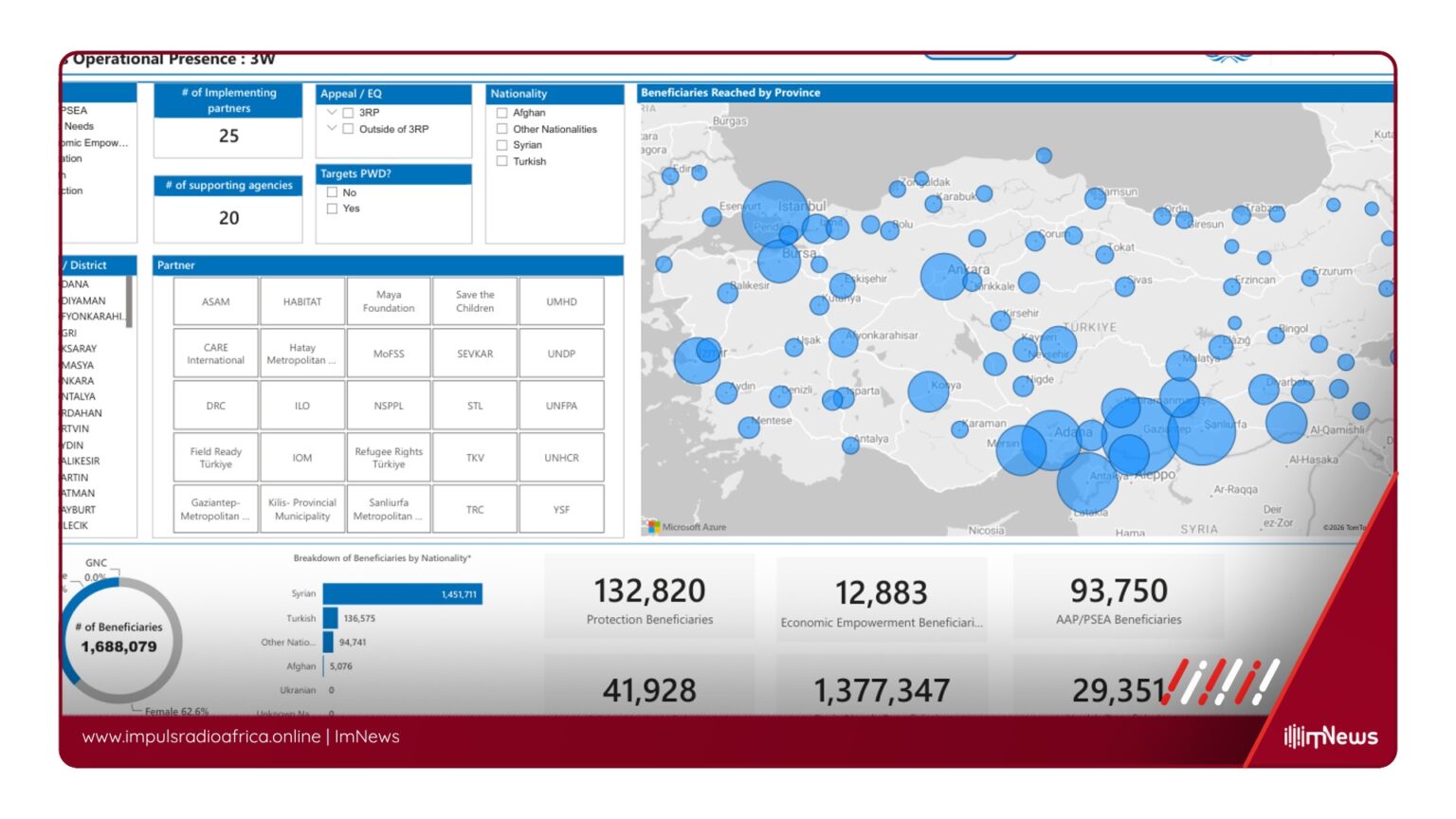
ANKARA, Türkiye – The Türkiye Inter-Sector Response Dashboard, a comprehensive overview of the ongoing humanitarian response to the devastating earthquake that struck Türkiye in February 2023, reveals ongoing challenges and the evolving needs of the affected population.
The dashboard, published by UNHCR, indicates that the situation remains complex, with the most affected areas continuing to require sustained support. Developed by OCHA on behalf of the Inter-Sector Coordination Group and humanitarian partners, the Humanitarian Transition Overview (HTO) outlines the continuity of humanitarian support in Türkiye following the earthquake.
Notably, the HTO does not include figures for people to be targeted nor financial requirements, suggesting that these details are not yet finalized or are considered sensitive.
Since the earthquake, Türkiye has faced significant challenges in providing shelter and aid to those in need.
According to ReliefWeb, over 9 million individuals were affected, with more than 3.
6 million left without safe homes.
The Inter — Sector Response Dashboard highlights the importance of coordinated efforts from various sectors and international organizations to ensure a comprehensive and effective response.
In April 2026, UNHCR published an infographic on the inter-sector response in Southeast Türkiye, focusing on protection and human rights issues.
The infographic revealed that, despite progress, many displaced individuals still lack adequate shelter and face challenges in accessing basic services such as healthcare and education. Another infographic published by UNHCR on ReliefWeb in April 2026 focused on coordination and recovery and reconstruction efforts. It showed that while some progress has been made, there is still much work to be done in terms of reconstruction and recovery.
The HTO emphasizes the need for continuity of humanitarian support, indicating that the situation is ongoing and requires sustained attention. Officials confirmed that the lack of inclusion of figures for people to be targeted and financial requirements in the HTO suggests that these details are not yet finalized or are considered sensitive.
The Türkiye earthquake response has drawn attention to the importance of disaster preparedness and response in the region.
A survey conducted by the İstanbul Planning Agency found that earthquakes are the biggest concern for residents of İstanbul, while financial hardship remains the main obstacle preventing people from leaving unsafe buildings.
The response to the Türkiye earthquake highlights the critical role of international cooperation in addressing large-scale disasters.
As the situation continues to evolve, the focus remains on providing necessary support to those affected and ensuring a sustainable recovery and reconstruction process.
The Türkiye Inter-Sector Response Dashboard provides a valuable tool for tracking the progress and challenges of the humanitarian response to the earthquake.
As the situation continues to unfold, it will be essential for stakeholders to remain vigilant and proactive in their efforts to support the affected population.
*Additional reporting by ImNews | Sources consulted: 5*
—
This original article was produced by the ImNews editorial team
Source: reliefweb
Source: UN High Commissioner for Refugees