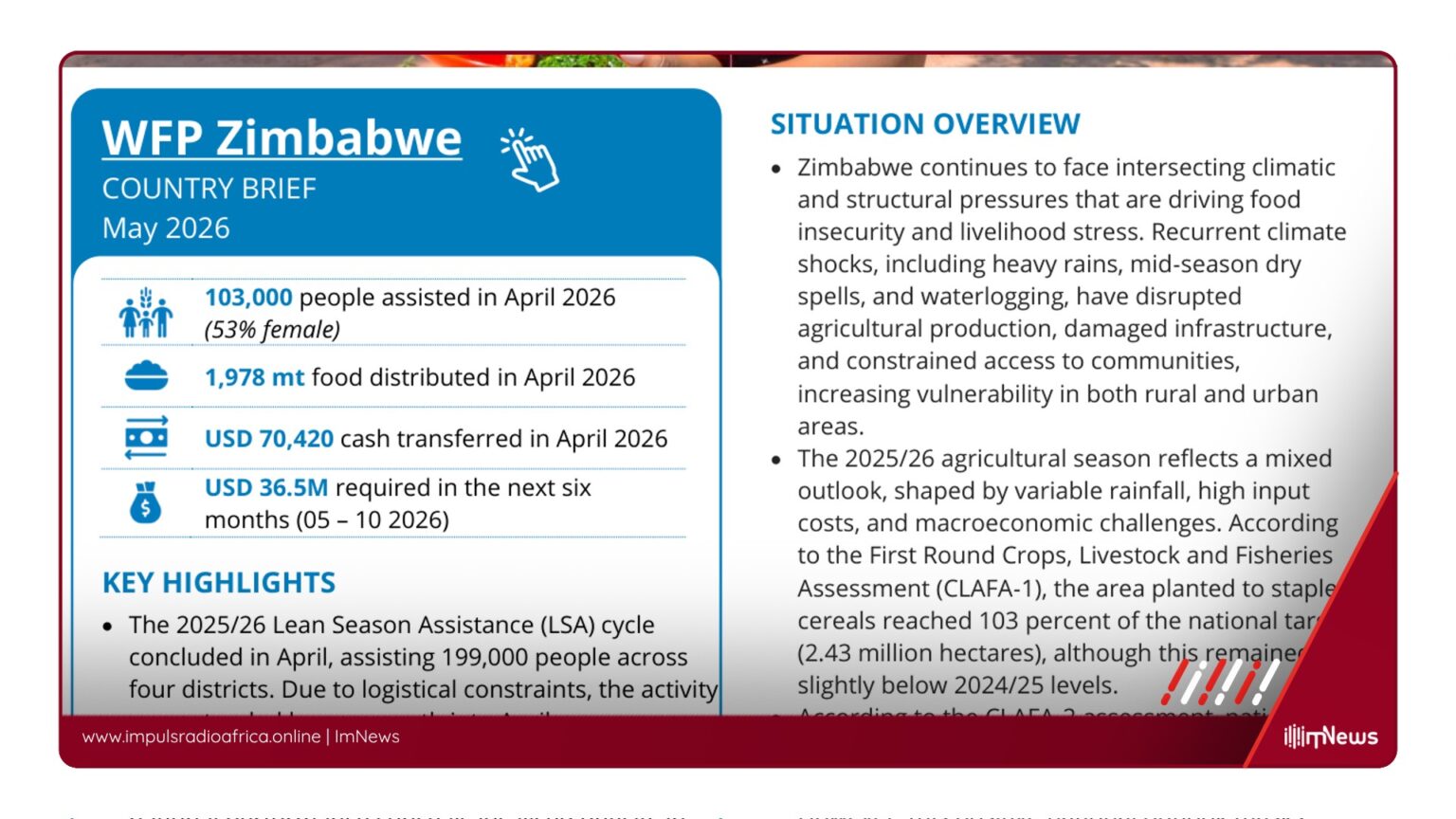
Zimbabwe’s Food Security Struggles Amidst Political and Natural Crises DATELINE: Harare, Zimbabwe – June 19, 2026 Harare, Zimbabwe – The World Food Programme (WFP) has reported that Zimbabwe is facing a severe food security crisis, with the 2025/26 Lean Season Assistance (LSA) cycle concluding in April 2026, assisting 199,000 people across four districts. This comes amidst a backdrop of multifaceted crises, including political instability, economic difficulties, and natural disasters such as severe flooding.
The WFP’s 2026 Zimbabwe Country Report indicates that over the past two years, Zimbabwe has grappled with a range of challenges that have largely remained unaddressed.
The 2023 elections fell short of international standards, contributing to the ongoing political and economic impasse.
Additionally, the country has been addressing issues of governance, political transformation, and economic performance, as highlighted in various reports.
In December 2025, the WFP assisted 36,362 people through in-kind food and cash transfers, distributing USD 400,480 in cash-based transfers.
The 2025/26 rainfall season resulted in a severe flood emergency in Zimbabwe, with heavy rains and storm events across the country, exacerbating the food security situation.
The WFP’s Zimbabwe Country Brief, December 2025, reveals that the Lean Season Assistance programme commenced with partner engagement and training, with distributions scheduled to run from January to March 2026. Initially planned to support 1.
5 million people, current available resources enabled the WFP to reach only 200,000 people across four districts: Bulilima, Kariba, Mberengwa, and Mwenezi.
The BTI Atlas provides an overview of Zimbabwe’s governance, political transformation, and economic performance, indicating the ongoing multifaceted crisis and the need for sustainable development.
The BTI Atlas highlights the country’s governance index at 2.
94 out of 10, political transformation at 3. 85 out of 10, and economic transformation at 2.
93 out of 10, reflecting the challenges faced by the nation.
The ongoing political and economic impasse in Zimbabwe has had a significant impact on the distribution of food assistance.
The country’s infrastructure, particularly in relation to flood management and waterborne diseases, has been identified as a critical area requiring attention.
The WFP has been working closely with the government to address these challenges, but the scale of the crisis remains daunting.
The WFP’s Zimbabwe Country Strategic Plan (2022–2026) outlines an ambitious framework for collective action aimed at achieving sustainable development, including by ending poverty and hunger.
The plan utilizes the planning horizon of the 2030 Agenda for Sustainable Development and the related Sustainable Development Goals, reflecting the government’s commitment to addressing the country’s challenges.
As Zimbabwe continues to grapple with food security issues, the international community remains vigilant.
The WFP and other organizations are working tirelessly to provide assistance to those in need, but the challenges ahead are significant.
The government and international partners must collaborate to ensure that the needs of the population are met and that sustainable solutions are found to the country’s multifaceted crises.
*Additional reporting by ImNews | Sources consulted: 5*
—
This original article was produced by the ImNews editorial team
Source: reliefweb
Source: World Food Programme