Niger’s Role as a Transit Hub: The Complexities of Nigerian Refugee and Migrant Movements BODY: Lagos, Nigeria – Niger, a West African nation, finds itself at a critical juncture as a transit hub for refugees and migrants, with a significant number of Nigerians originating from Borno and Kano regions.
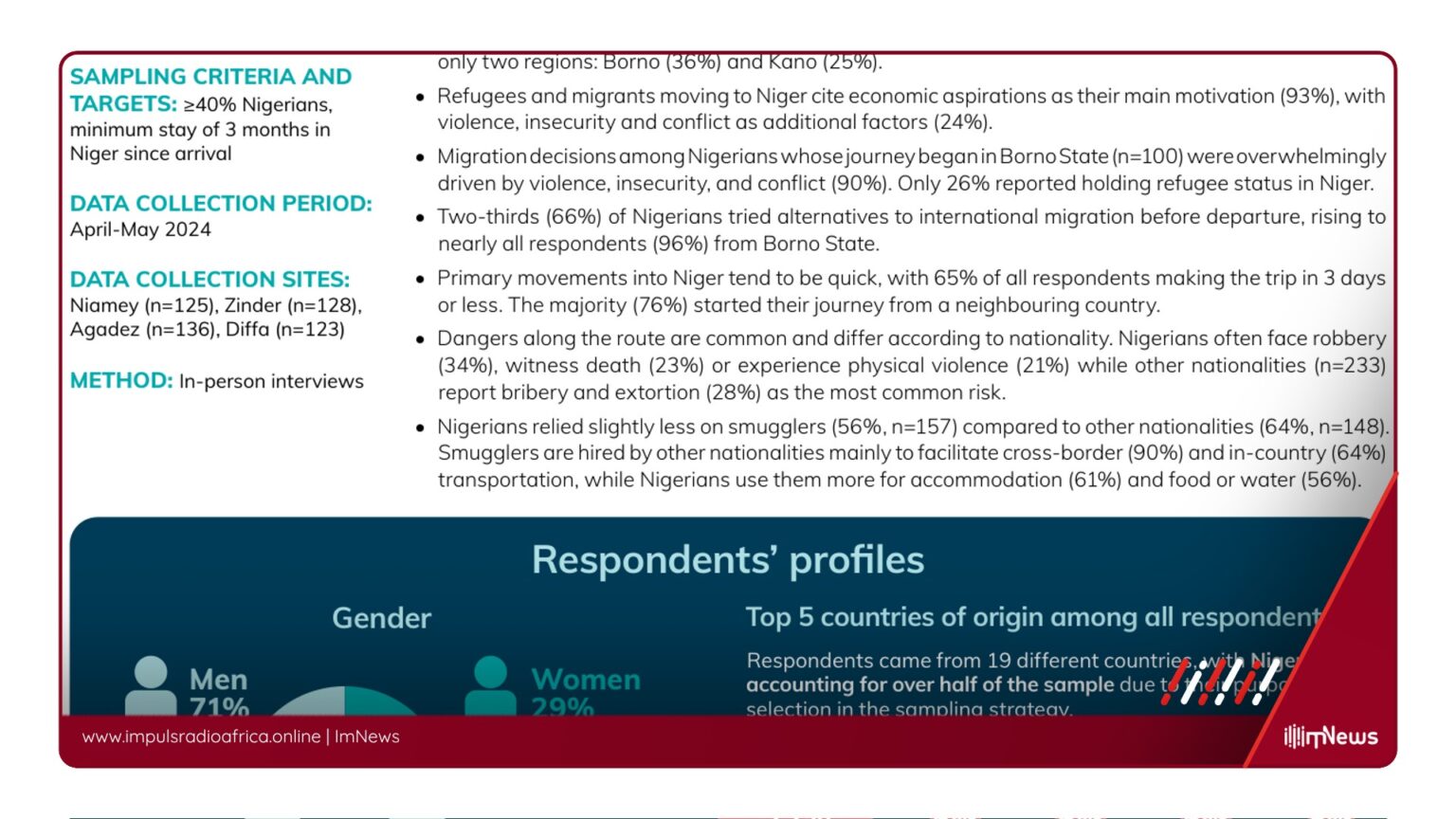
The Mixed Migration Centre’s research reveals that economic aspirations are the primary motivation for migration, with 93% of Nigerians moving to Niger for this reason.
However, violence, insecurity, and conflict are also contributing factors, particularly for those from Borno State.
The journey to Niger is often quick, with 65% of respondents making the trip in three days or less, and the majority starting their journey from a neighboring country. Nigerians face specific dangers along the route, including robbery, witnessing death, and experiencing physical violence, while other nationalities report bribery and extortion as the most common risks. Despite relying slightly less on smugglers than other nationalities, Nigerians use them more often for accommodation and food or water.
Two — thirds of Nigerians tried alternatives to international migration before departure, with nearly all respondents from Borno State doing so.
The influx of refugees and migrants into Niger is not only influenced by regional dynamics but also by global trends.
The country’s strategic location at the crossroads of migratory routes in West and Central Africa has made it a focal point for international attention.
The African Union and other regional bodies are monitoring the situation closely, recognizing the potential for the migration crisis to impact regional stability and security.
The humanitarian situation in Niger is further complicated by the country’s own challenges, including political instability and environmental stressors. These factors exacerbate rural poverty and place additional strain on public infrastructure, making it more difficult for the government to address the needs of the displaced population.
The Mixed Migration Centre’s research underscores the need for a comprehensive approach to addressing the migration crisis in Niger, including providing essential services to refugees and migrants, addressing the root causes of displacement, and promoting sustainable solutions.
As Niger navigates these challenges, the international community’s support will be crucial in ensuring the rights and well-being of all individuals affected.
*Additional reporting by ImNews | Sources consulted: 5*
—
This original article was produced by the ImNews editorial team
Source: reliefweb
Source: Mixed Migration Centre