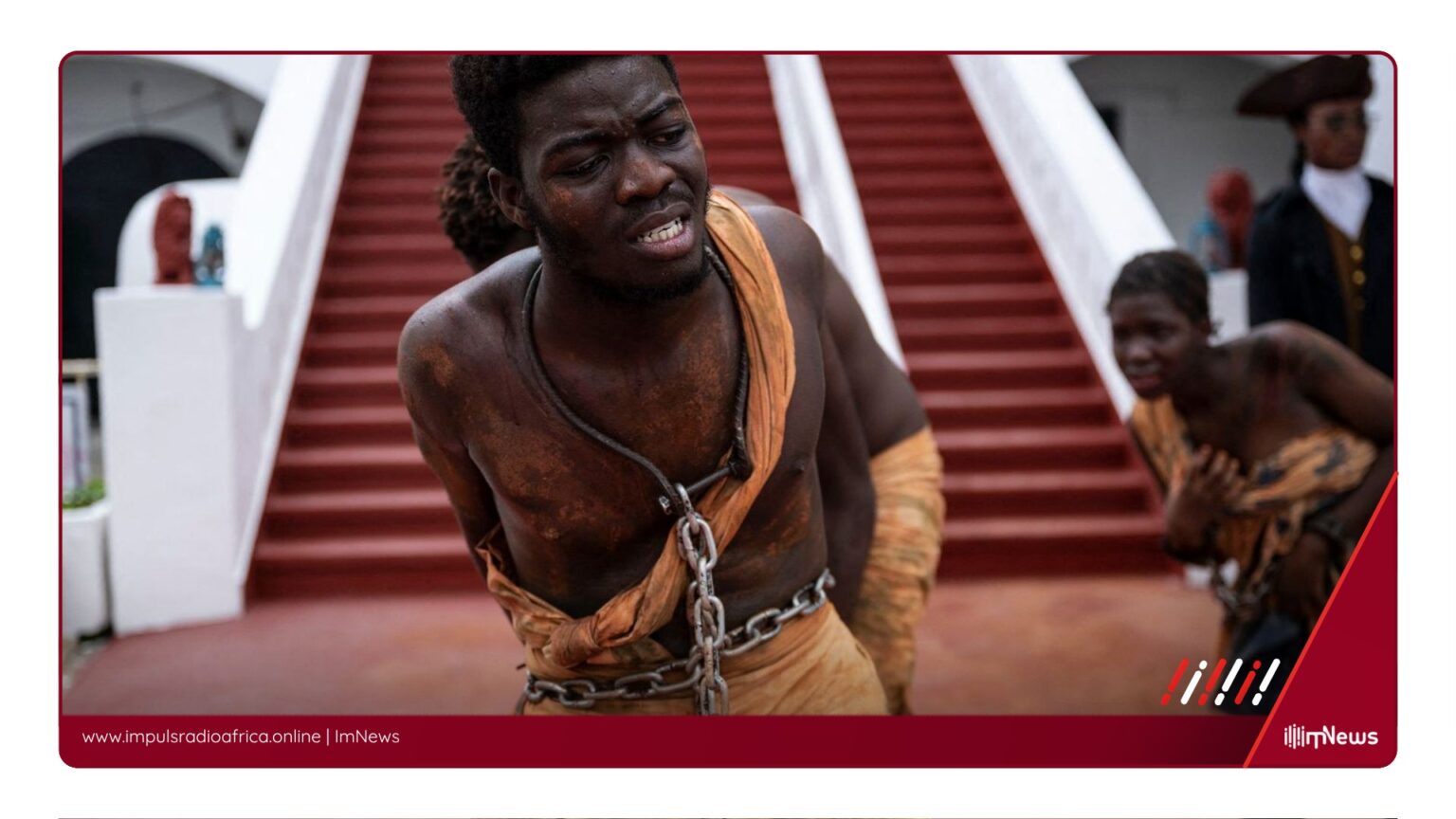
Accra, Ghana — A solemn and historic reenactment of the transatlantic slave trade unfolded in Accra on Juneteenth, June 19, 2026, as leaders from across Africa and the Caribbean demanded reparations and apologies from former slave-trading nations.
The event, which coincided with the anniversary of the ending of slavery in the United States, served as a powerful reminder of the enduring legacy of the slave trade and the urgent need for justice and reconciliation.
The Ghanaian government and the African Union Champion on Advancing the Cause of Justice and payment of Reparations, President John Dramani Mahama, led calls for reparatory justice during the conference held at Christiansborg Castle in Accra.
The castle, which once served as a hub for transporting slaves, was the site of a wreath — laying ceremony to honor the victims of the transatlantic slave trade.
The UN General Assembly had previously adopted resolution A/RES/80/250 on March 25, 2026, declaring slavery the “gravest crime against humanity. “This landmark resolution marked the first time in the UN’s 80-year history that a resolution was dedicated exclusively to slavery.
Mahama emphasized the importance of pursuing reparatory justice through determination and unity, stating, “Reparatory justice will not be handed to us.
Like political independence, it must be asserted, pursued, and secured through determination and unity. “
The reenactment of the slave trade, which included a dramatic depiction of enslaved Africans being transported across the Atlantic, aimed to raise awareness and spur action from former slave — trading nations.
African and Caribbean leaders, including Barbados Prime Minister Mia Amor Mottley, joined the call for reparations, highlighting the ongoing impact of the slave trade on the continent and its descendants.
The conference in Ghana is part of a broader global movement to address the enduring legacy of enslavement and racial injustice.
The reenactment and the subsequent discussions underscored the need for a collective effort to confront the historical wrongs and seek healing and justice for those affected by the transatlantic slave trade.
The event also served as a reminder of the interconnectedness of the African diaspora and the importance of recognizing the shared history and experiences of people of African descent worldwide.
As the conversation around reparations continues, the reenactment in Accra has brought the issue of reparations to the forefront, emphasizing the urgency for former slave — trading nations to take concrete steps towards accountability and reconciliation.
The call for reparations is not just a historical demand but also a contemporary struggle for justice and equality.
As the world commemorates Juneteenth and reflects on the history of the slave trade, the conference in Accra has underscored the ongoing need for reparatory justice and the collective responsibility to address the legacy of slavery.
*Additional reporting by ImNews | Sources consulted: 5*
—
This original article was produced by the ImNews editorial team
Source: aljazeera