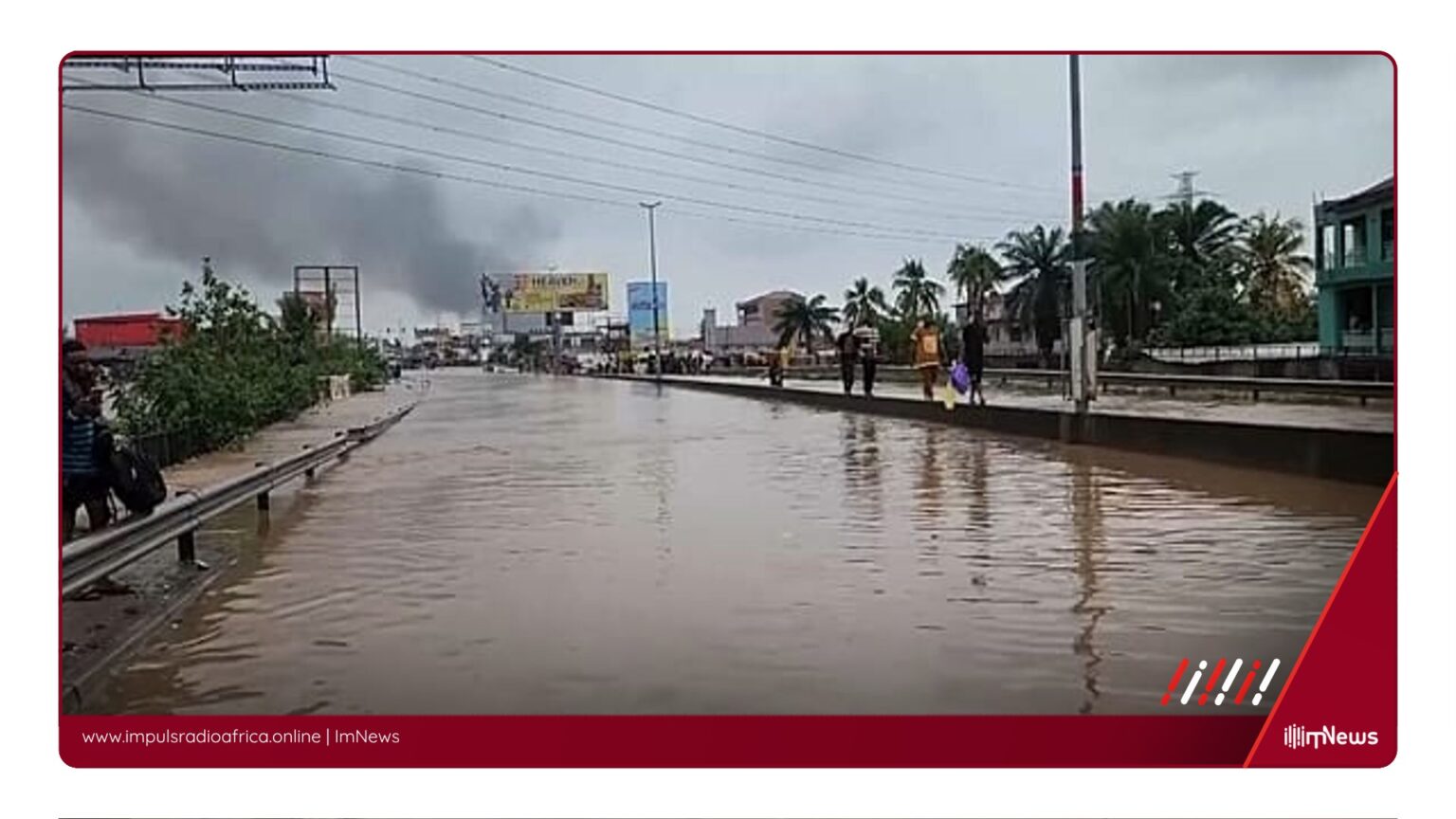
In Accra, the Capital of Ghana, a Catastrophic Flood Has Led to at Least 12 Confirmed Deaths.
The Ghana National Fire Service (GNFS) reports that over 470 individuals have been rescued from the surging waters. Emergency response teams have been dispatched by the interior ministry to assist in relief and recovery efforts.
The GNFS, a key agency in the disaster response, has been actively involved in the rescue operations, confirming that the number of deaths is likely to rise as the full extent of the flood damage becomes apparent.
The interior ministry has mobilized the police, fire service, military, and the National Disaster Management Organisation to support the ongoing efforts. Accra, with its low-lying areas, is particularly vulnerable to flooding, especially during the heavy rains of the rainy season. Urbanization and inadequate infrastructure to manage heavy rainfall have exacerbated this vulnerability.
The BBC reports that the government has issued warnings for residents to stay indoors or move to higher ground, as another storm is expected to bring further rain from the east. Reuters has provided specific details on the victims, reporting that among the deceased are three women, eight men, and a child.
The impact of the flood has been widespread, with submerged homes, vehicles, and destroyed buildings visible in videos circulating on social media.
As the floodwaters recede, the focus shifts to long — term plans for mitigating the impact of flooding in Accra.
The community affected by the floods is in dire need of support. Comprehensive support services are essential to ensure that flood-affected individuals and families can rebuild their lives. Efforts to provide this support are underway, but the scale of the disaster demands a coordinated and sustained response.
The devastating floods in Accra have highlighted the need for improved infrastructure and emergency response systems.
The loss of life and widespread damage to property underscore the urgency of addressing these issues.
As the Ghanaian government and its agencies manage the immediate aftermath of the flood, it is also essential to consider the long — term implications and the steps needed to prevent future disasters of this magnitude.
*Additional reporting by ImNews | Sources consulted: 5*
—
This original article was produced by the ImNews editorial team
Source: Africanews
Source: Rédaction Africanews