CITY, Mauritania — The ongoing insecurity in northern and central Mali has led to a significant rise in cross-border displacement into southeastern Mauritania, where the country is now hosting the largest number of Malian refugees in West Africa.
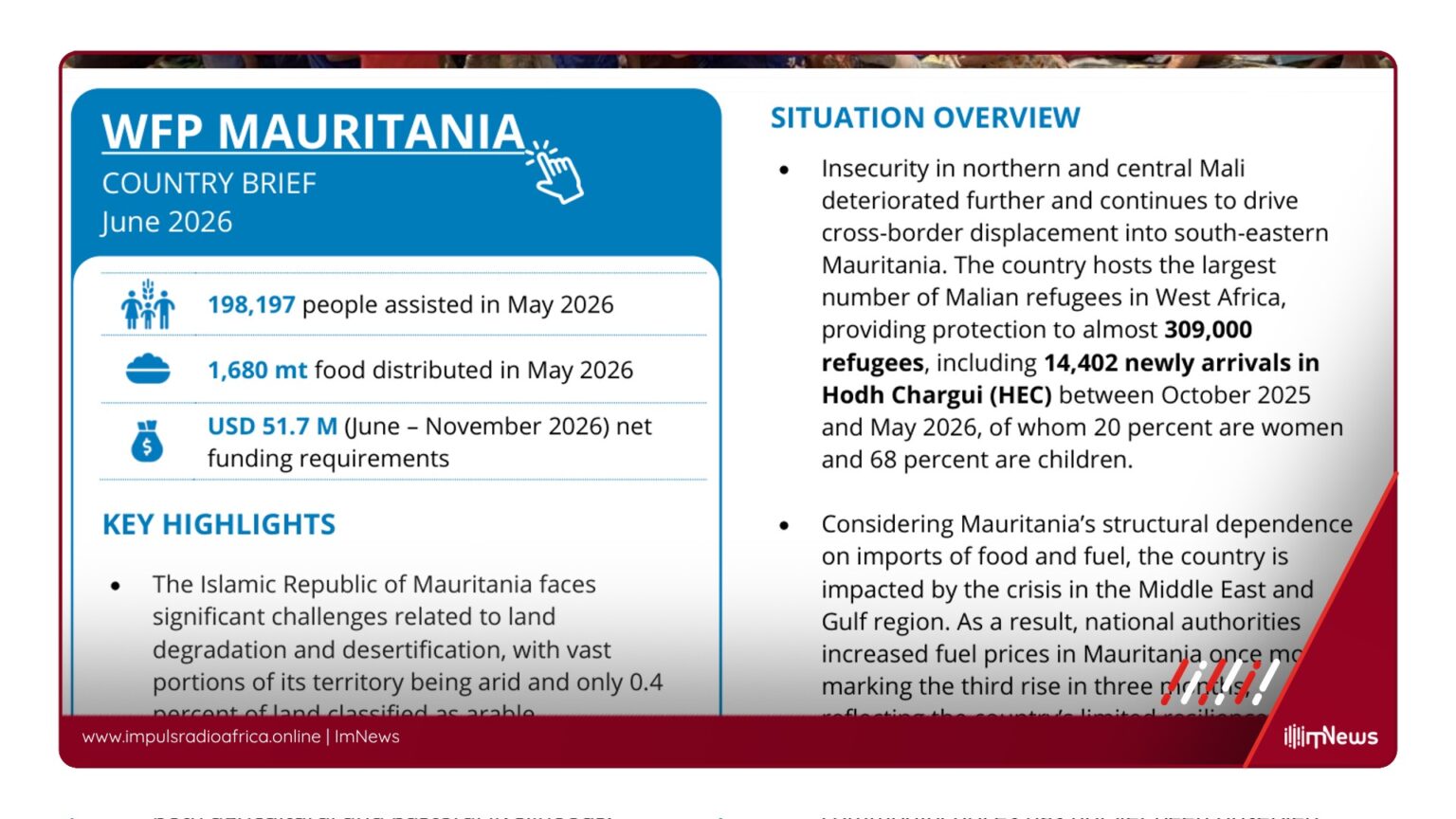
According to the United Nations World Food Programme (WFP), Mauritania shelters nearly 309,000 refugees, including 14,402 new arrivals in Hodh Chargui (HEC) between October 2025 and May 2026, with the majority being children and women.
The presence of these refugees has added a layer of complexity to Mauritania’s already fragile food security situation. With a structural dependence on imported food and fuel, the country has been impacted by the global crisis in the Middle East and Gulf region, leading to a third fuel price increase in three months. This highlights the country’s limited resilience to global price fluctuations and international trade pressures.
While a widespread rise in food and basic commodity prices has not yet been observed, the WFP is monitoring the potential implications for operational costs and market dynamics. Mauritania’s agricultural landscape, with only 0. 4% of its land suitable for agriculture, and recurrent droughts and floods exacerbate the food insecurity and malnutrition issues.
The country’s challenges are compounded by desertification and land degradation, which negatively impact both agricultural and pastoral livelihoods.
The WFP’s operations in Mauritania are multifaceted, addressing the basic food and nutrition needs of targeted vulnerable populations while ensuring the continuity of resilience programs.
As the upcoming lean season looms, the WFP is working to provide humanitarian air transport services to hard — to-reach regions and aims to ensure the continuation of its resilience programs. Despite these efforts, questions remain about the specific measures being taken to address the projected crisis-levels of food insecurity.
The international community will be watching how Mauritania, with support from organizations like the WFP, can address its food security crisis and support its growing refugee population.
As the situation evolves, the world will be keen to see the outcome of this challenge and the future of food security in the region.
*Additional reporting by ImNews | Sources consulted: 4*
—
This original article was produced by the ImNews editorial team
Source: reliefweb
Source: World Food Programme