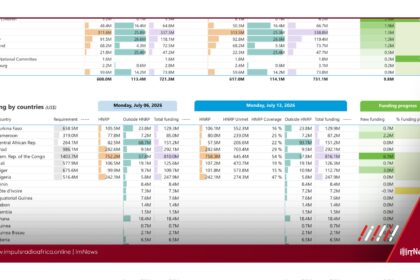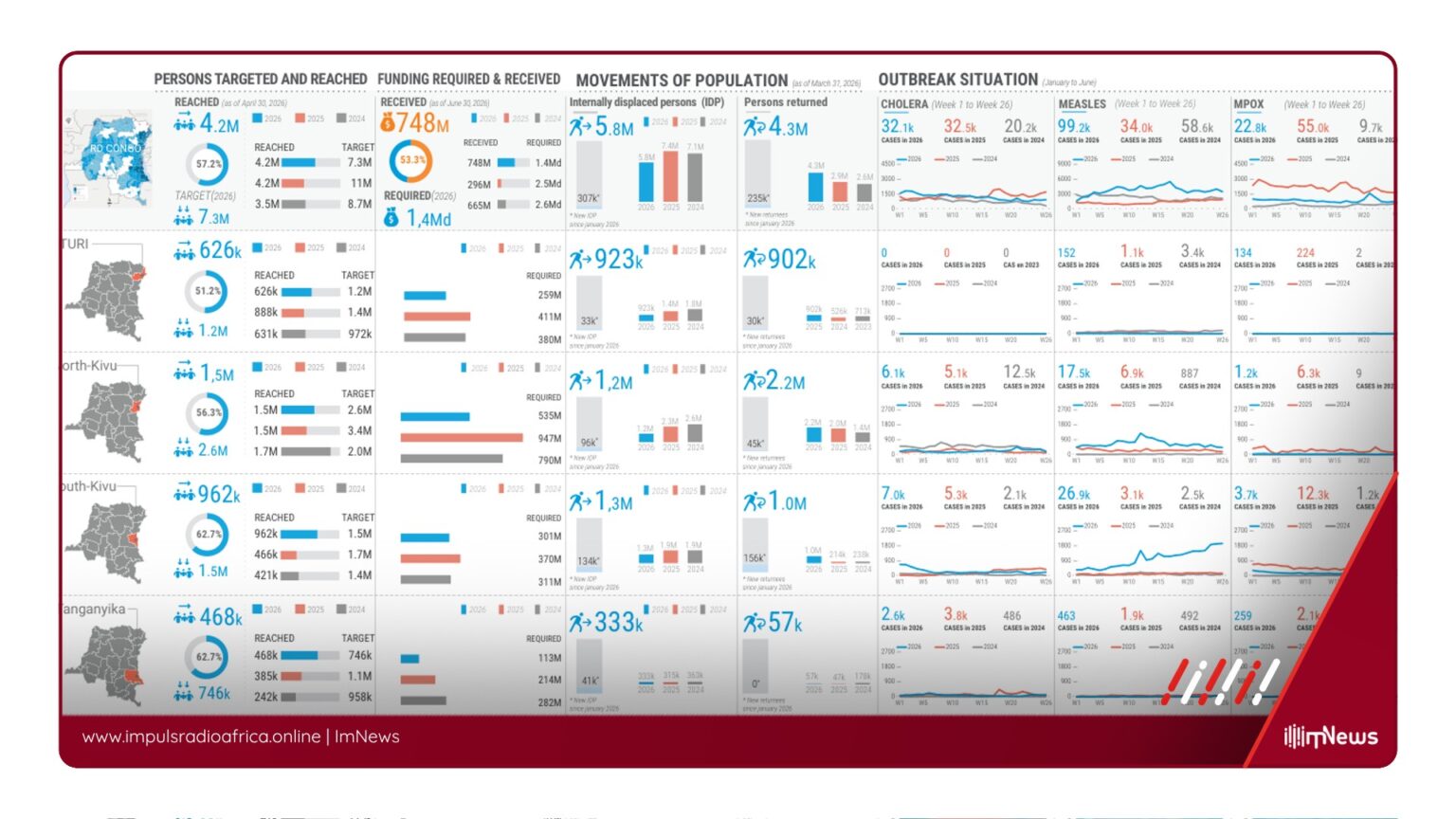
Kinshasa, DRC — The Democratic Republic of the Congo (DRC) faces an escalating humanitarian crisis as of July 2026, with over 14. 9 million people in need of assistance.
According to the Global Humanitarian Overview 2026, approximately 7.
3 million individuals are targeted for aid, necessitating a funding requirement of $1. 40 billion to address these urgent needs.
The UN Office for the Coordination of Humanitarian Affairs (OCHA) reports that the DRC’s ongoing humanitarian situation is exacerbated by a multitude of factors, including armed conflicts, massive displacement, climate shocks, and recurrent epidemics.
These challenges have collectively pushed the country’s population to the brink of crisis, with many facing acute food insecurity and the threat of disease outbreaks. One of the most pressing concerns is the recent Ebola virus disease (EVD) outbreak, caused by the Bundibugyo virus.
As of July 2026, the outbreak has resulted in 1,792 confirmed cases, including 625 deaths, across 37 health zones in Ituri province.
This marks the 17th Ebola outbreak in the DRC and highlights the ongoing struggle to contain and treat the disease.
The humanitarian situation is further complicated by the ongoing armed conflict, which has expanded across several provinces, leading to massive displacement and heightened protection risks for civilians.
The Global Humanitarian Overview 2026 emphasizes that the primary driver of humanitarian needs in the DRC is the ongoing armed conflict, which has caused significant new displacement and increased protection risks.
The UNHCR’s Global Appeal 2026 indicates that the humanitarian situation is expected to remain critical, with a significant number of people acutely food insecure and a cholera epidemic contributing to the challenges.
The report also highlights that the DRC’s eastern region, which has been most affected by the conflict, is home to 10. 3 million people acutely food insecure.
Despite these daunting challenges, efforts are being made to address the nutritional needs of the population in conflict — affected areas.
For instance, the NGO Alliance for International Medical Action, with support from the DRC Humanitarian Fund, has trained community members in malnutrition screening techniques in South Kivu province. This initiative underscores the urgency of addressing the nutritional needs of the population in conflict-affected areas.
The international community is coordinating its response to the Ebola outbreak in the DRC, with healthcare workers across Ituri, North Kivu, and South Kivu provinces working tirelessly to contain the virus’s spread.
However, the success of these efforts will depend on continued funding and support from the global community.
The DRC government has also been responding to the ongoing humanitarian crisis, implementing policies and programs aimed at addressing the needs of the affected population.
However, the effectiveness of these measures will require sustained international support and cooperation.
As the humanitarian situation in the DRC continues to deteriorate, the international community must remain vigilant and committed to providing the necessary assistance to mitigate the suffering of millions of people.
The urgency of the situation calls for a coordinated and comprehensive approach to address the complex challenges facing the DRC and its population.
*Additional reporting by ImNews | Sources consulted: 5*
—
This original article was produced by the ImNews editorial team
Source: reliefweb
Source: UN Office for the Coordination of Humanitarian Affairs