CITY, Country — The Famine Early Warning System Network has released a Global Weather Hazards Summary for the period of July 16 to 22, 2026, highlighting the presence of El Niño and the associated risks across various regions, particularly in Africa and Asia. El Niño, characterized by warmer-than-average sea surface temperatures in the equatorial Pacific, has led to an increased flood risk in Central Africa, northern and eastern Central Asia, areas of Central America, and parts of Northern South America.
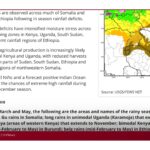
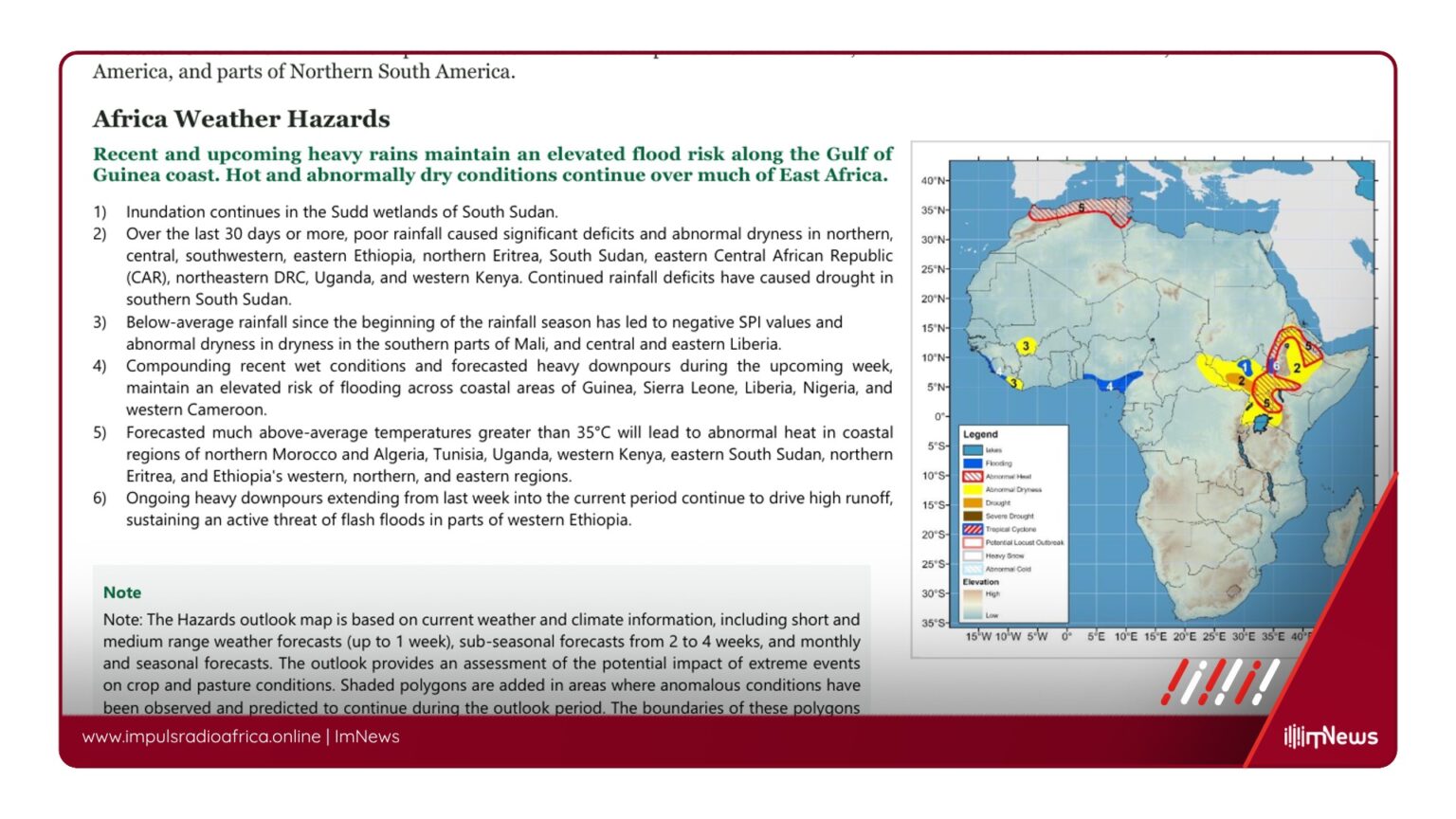
The report also notes ongoing heavy rains in the Sudd wetlands of South Sudan, which have led to inundation, as well as prolonged periods of poor rainfall causing significant dryness in parts of East Africa, the Horn of Africa, and the Sahel region.
In East Africa, the situation is particularly dire with below — average rainfall recorded in northern, central, southwestern, eastern Ethiopia, northern Eritrea, South Sudan, eastern Central African Republic (CAR), northeastern DRC, Uganda, and western Kenya. This has resulted in drought conditions in southern South Sudan and negative SPI values in the southern parts of Mali and central and eastern Liberia.
The summary also points to an elevated risk of flooding across coastal areas of Guinea, Sierra Leone, Liberia, Nigeria, and western Cameroon due to forecasted heavy downpours.
Additionally, much above — average temperatures greater than 35°C are expected in coastal regions of northern Morocco and Algeria, Tunisia, Uganda, western Kenya, eastern South Sudan, northern Eritrea, and Ethiopia’s western, northern, and eastern regions.
As Africa grapples with these challenges, the need for robust climate adaptation and disaster risk reduction strategies is underscored.
The World Meteorological Organisation (WMO) has emphasized the importance of early warning systems and the role of national meteorological services in disaster management, confirming that these systems are crucial for mitigating the impacts of extreme weather events. ImNews will continue to provide updates and analysis on the evolving weather conditions and their implications for Africa.
*Additional reporting by ImNews | Sources consulted: 5*
—
This original article was produced by the ImNews editorial team
Source: reliefweb
Source: Famine Early Warning System Network