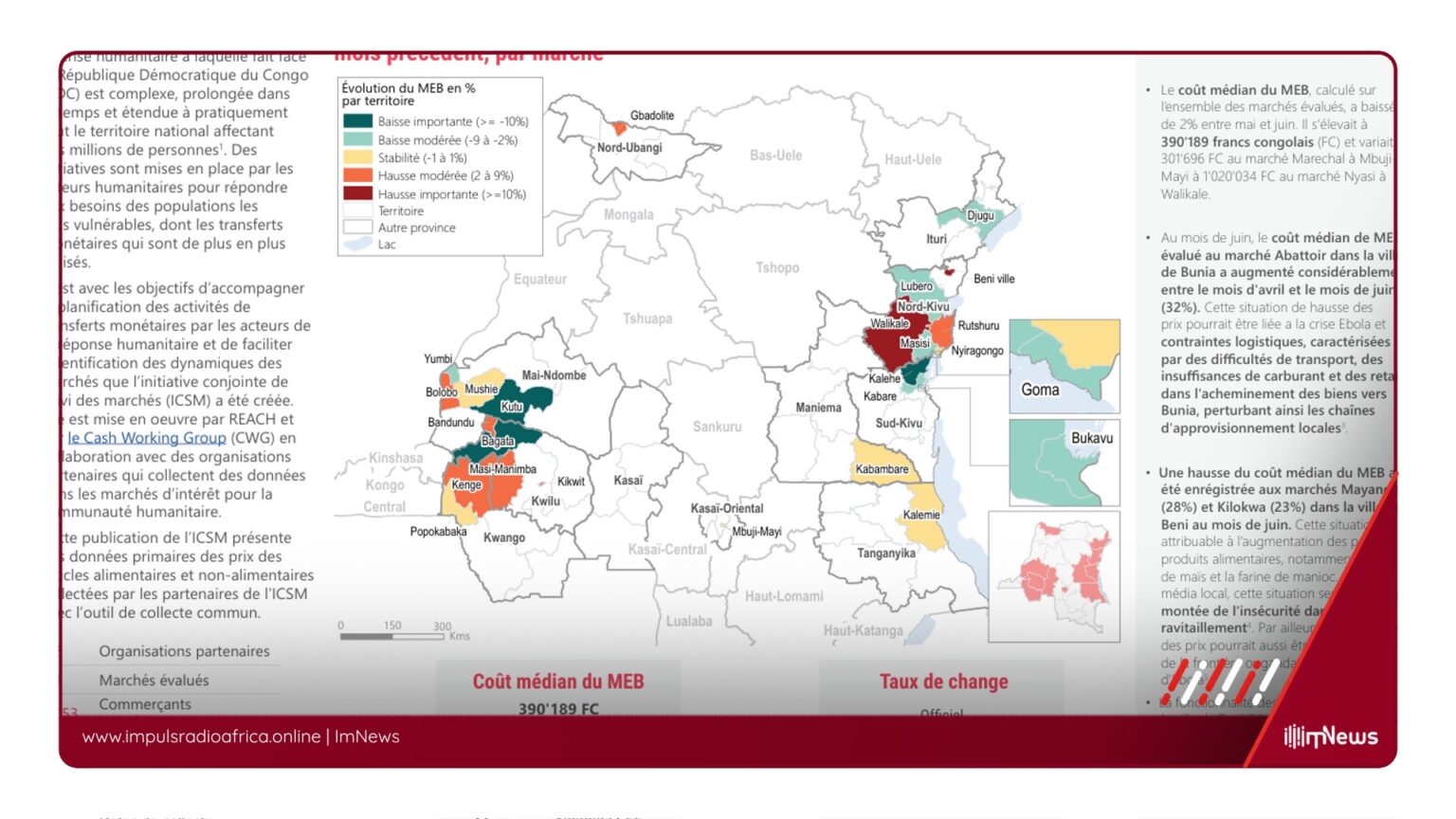
DR Congo: Rising MEB Costs in Bunia Amid Ebola Outbreak and Economic Struggles BODY: Kampala, Uganda – In the Democratic Republic of Congo (DRC), the median cost of the Minimum Essential Basket (MEB) has seen a 2% decrease across evaluated markets between May and June 2026. Yet, in Bunia, the situation is starkly different, with the MEB cost at the Abattoir market skyrocketing by 32% during the same period. This significant increase is thought to be linked to the ongoing Ebola outbreak, which has strained the region’s logistical capabilities.
The crisis has disrupted supply chains, leading to transportation challenges, fuel shortages, and delays in the delivery of goods. These issues have compounded the cost of living in Bunia, with the local population feeling the brunt of these economic pressures.
Additionally, the rise in the MEB cost at the Mayangose and Kilokwa markets in Beni, also in the DRC, by 28% and 23% respectively, can be attributed to the escalating prices of food items, such as maize and cassava flour. Local media suggests that this is due to increased insecurity in supply zones, as well as the closure of the Ugandan border at Kasindi due to the Ebola outbreak.
The overall functionality of markets in Bunia has also suffered, with affordability and security of access to products cited as major concerns.
The International Organization for Migration (IOM) is working alongside the DRC authorities and partners to strengthen public health systems and provide multi-sectoral humanitarian assistance to affected populations.
The World Health Organization (WHO) has emphasized the importance of community engagement in managing and controlling the Ebola outbreak.
As the situation unfolds, it is crucial for the DRC government and humanitarian organizations to address these economic and health challenges to ensure the well — being of the population and stabilize the region’s economy.
*Additional reporting by ImNews | Sources consulted: 5*
—
This original article was produced by the ImNews editorial team
Source: reliefweb
Source: REACH Initiative