
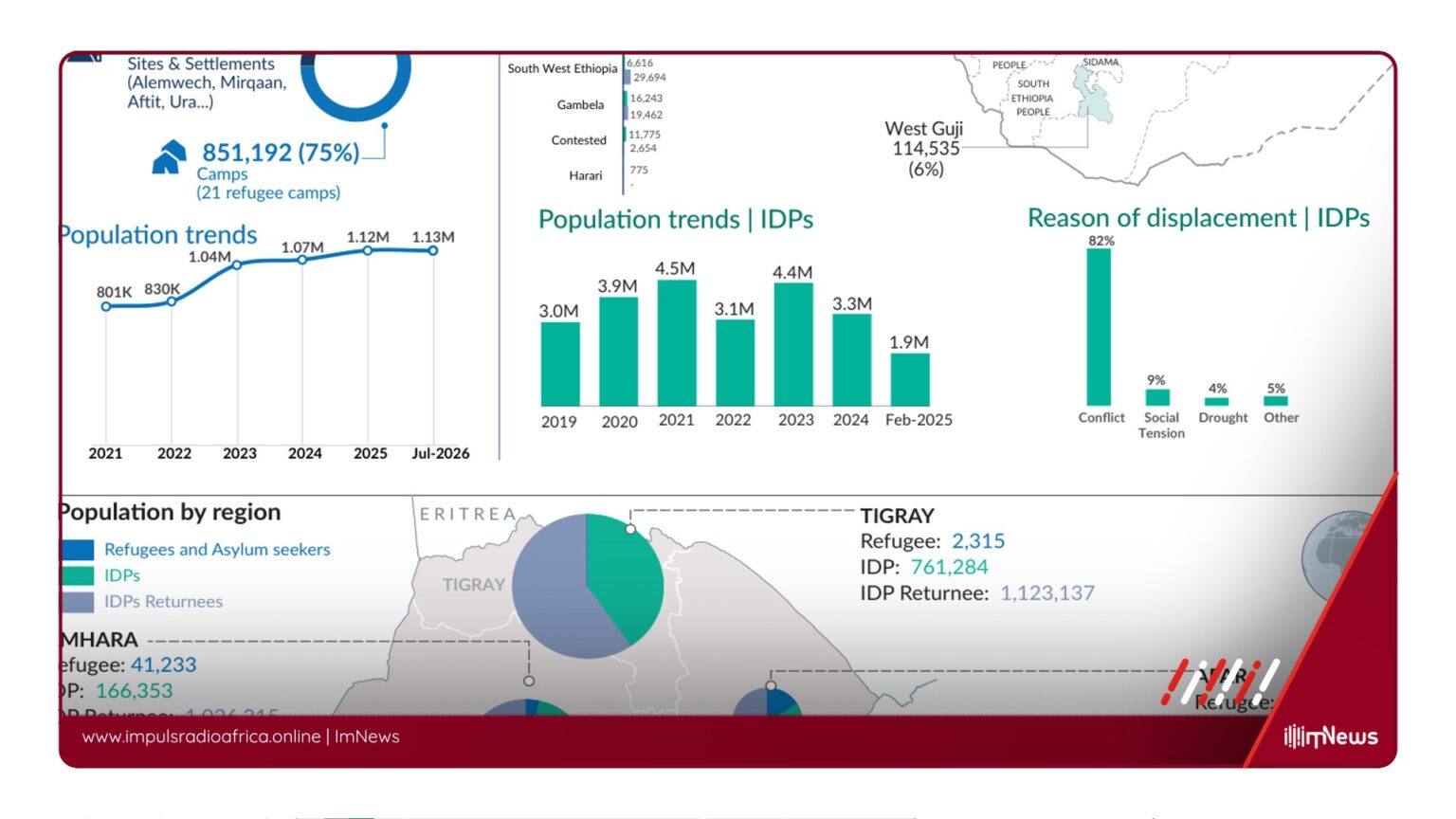
Addis Ababa, Ethiopia — As of July 31, 2026, Ethiopia hosts a significant number of refugees and asylum seekers, with the total reaching 1,127,629, according to the United Nations High Commissioner for Refugees (UNHCR). This figure underscores the country’s role as a key destination for those fleeing conflict and persecution.
The Gambela region is the epicenter of this displacement, accounting for 39.
5% of the total with 445,970 individuals.
The Somali region follows closely, hosting 361,901 refugees and asylum seekers, reflecting the region’s ongoing instability and humanitarian crises.
The capital, Addis Ababa, has also seen an influx, with 71,253 refugees and asylum seekers, representing 6.
3% of the national total. Ethiopia’s history of hosting large numbers of refugees and internally displaced persons (IDPs) can be attributed to its strategic location at the crossroads of the African continent, its role in regional political and security dynamics, and its own internal conflicts and political instability.
The country’s welcoming stance towards refugees has been a reflection of its commitment to international humanitarian law and its desire to contribute to global peace and security.
The UNHCR, as the primary source of data, provides an official account of the refugee and IDP situation in Ethiopia.
However, the complexity of the issues on the ground may not be fully captured by these statistics.
The Ethiopian government’s perspective on the matter is not explicitly provided in the sources, suggesting a lack of direct government input into these statistics.
The data reveals a stark distribution across the country, with certain regions bearing the brunt of the displacement. This geographic distribution highlights the need for targeted and region-specific responses to ensure the effective delivery of aid and services to those in need.
As Ethiopia continues to grapple with internal conflicts and regional instability, the challenge of providing adequate protection and assistance to refugees and IDPs remains a critical concern.
The UNHCR’s statistics underscore the urgency of addressing the humanitarian needs of this vulnerable population, while also considering the long-term sustainability of solutions that allow for durable solutions such as repatriation, local integration, or resettlement to a third country.
The UNHCR’s figures serve as a call to action for the international community to support Ethiopia’s efforts in providing refuge and assistance to those fleeing violence and persecution.
The complexity of the situation requires a multifaceted approach, involving not only immediate humanitarian responses but also efforts to address the root causes of displacement and to foster conditions for peaceful coexistence and stability within the region.
What remains to be seen is how these latest figures will influence the international response and the Ethiopian government’s policies towards refugees and IDPs.
As the situation evolves, it is crucial that the needs of the displaced population remain at the forefront of discussions and decision — making processes.
*Additional reporting by ImNews | Sources consulted: 5*
—
This original article was produced by the ImNews editorial team
Source: reliefweb
Source: UN High Commissioner for Refugees