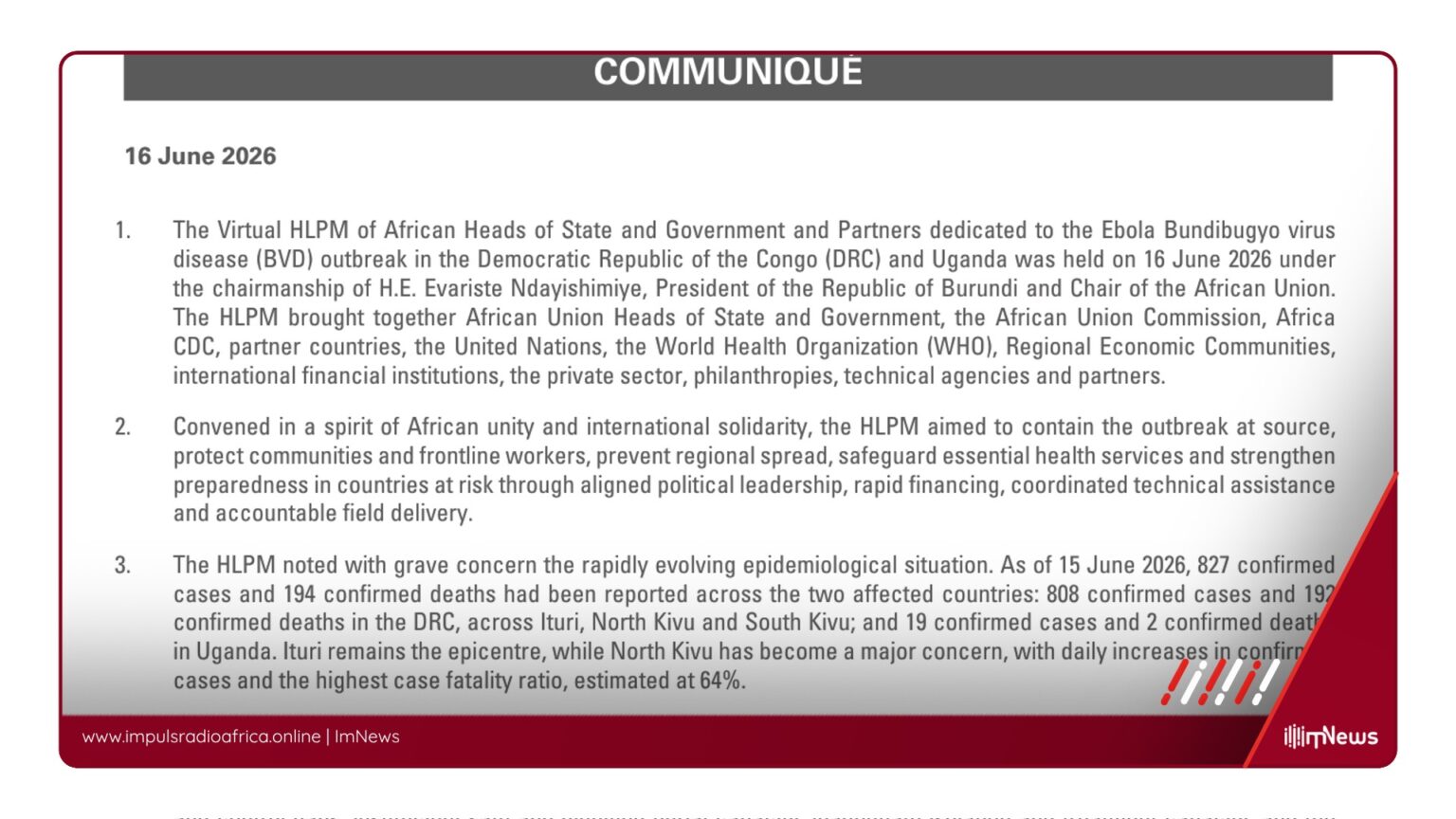
The Summit Was Presided Over by H. E. Evariste Ndayishimiye, President of Burundi and Chair of the African Union.
Participants included African Union Heads of State and Government, the African Union Commission, Africa CDC, partner countries, the United Nations, WHO, Regional Economic Communities, international financial institutions, and private and philanthropic sectors.
The meeting, convened with a spirit of unity and international solidarity, aimed to contain the outbreak at its source, protect communities, prevent regional spread, safeguard essential health services, and strengthen preparedness in at — risk countries.
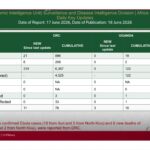
As of June 15, 2026, there were 827 confirmed cases and 194 confirmed deaths in the DRC and 19 confirmed cases and 2 confirmed deaths in Uganda. Ituri remains the epicentre, while North Kivu has seen significant increases in cases and a high case fatality ratio. Recognizing the critical operational situation, the HLPM called for the urgent establishment of humanitarian access and response corridors, including corridors of peace, to ensure safe access for authorities, Africa CDC, WHO, UN OCHA, and partners to deliver supplies, support treatment, and maintain essential health services.
A seven — day operational surge was proposed to bolster case investigation, data management, contact tracing, treatment and isolation capacity, and laboratory services.
The Governments of the DRC and Uganda were commended for their leadership and initial financing of national response plans. Contributions of USD 50 million from the DRC and USD 5 million from Uganda were noted.
Africa CDC, WHO, and partner support were welcomed, including the Incident Management Support Team and cross — border coordination efforts.
The HLPM endorsed a June — December 2026 joint response and preparedness plan with an estimated envelope of USD 518 million. Pledges totaling USD 910 million, including USD 80 million from African Member States, were welcomed, with an appeal for these pledges to be converted into rapidly disbursable resources. Enhanced cross-border coordination among affected and at-risk Member States, with support from Africa CDC, WHO, and UN OCHA, was also emphasized.
*Additional reporting by ImNews | Sources consulted: 5*
—
This original article was produced by the ImNews editorial team
Source: reliefweb
Source: Africa Centres for Disease Control and Prevention