Kampala, Uganda — The Democratic Republic of the Congo (DRC) and Uganda are addressing a severe outbreak of Bundibugyo virus disease (BVD), a species of Ebola virus, prompting the World Health Organization (WHO) to declare it a Public Health Emergency of International Concern (PHEIC) on May 17, 2026.
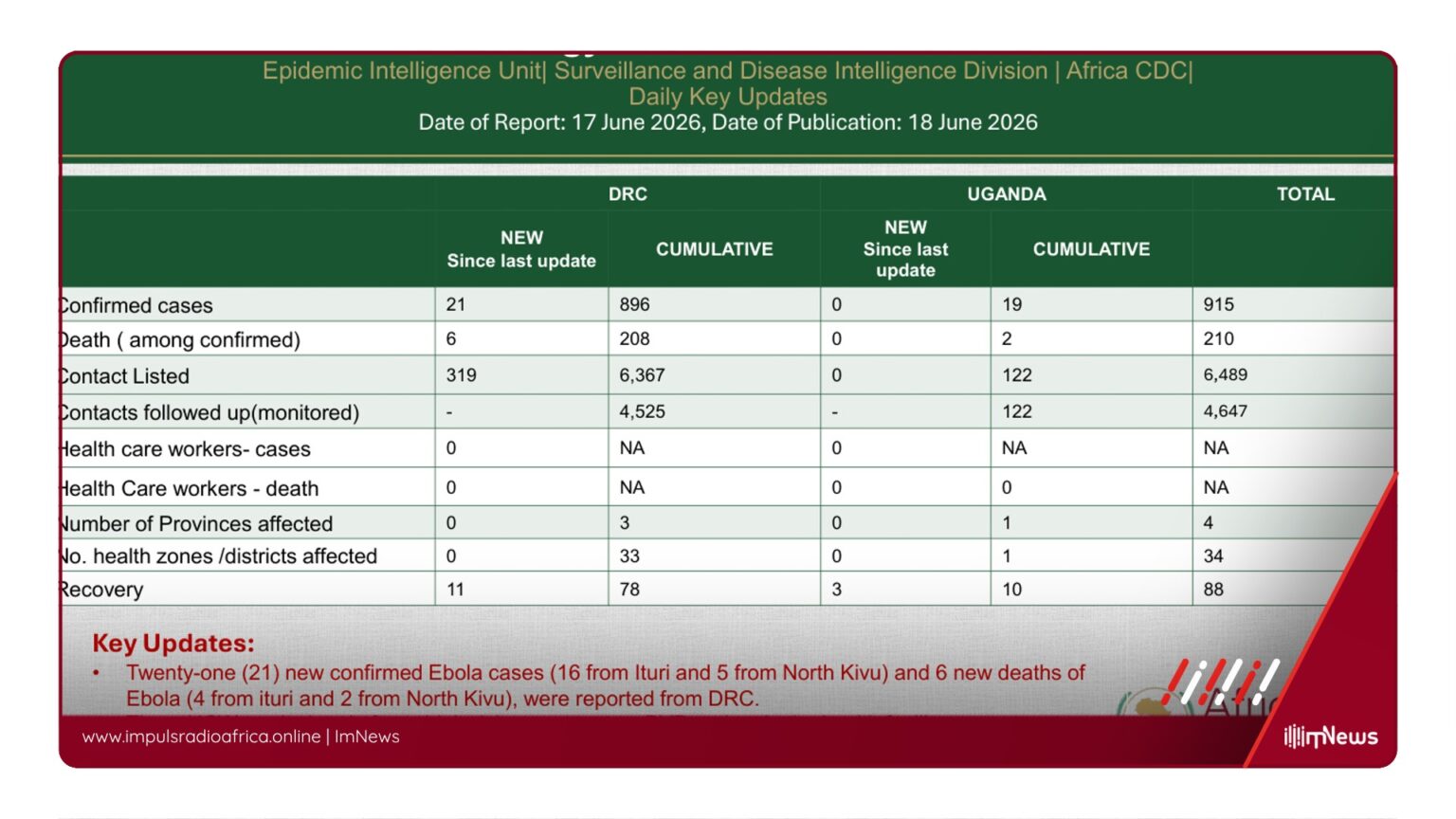
As of June 17, 2026, the DRC reported 896 confirmed cases of BVD, including 232 deaths, while Uganda has reported 19 confirmed cases with two deaths.
The outbreak in the DRC, which is the country’s 17th Ebola outbreak since the virus was first identified in 1976, has presented significant challenges due to the region’s insecurity, mobile populations, and large refugee communities.
These factors have complicated response efforts and made it difficult to contain the spread of the virus.
The Institut national de recherche biomédicale (INRB) Kinshasa confirmed the presence of Bundibugyo virus in eight of the 13 blood samples analyzed from Rwampara Health Zone, Ituri Province, on May 15, 2026.
The PHEIC declaration underscores the gravity of the situation and calls for international coordination and cooperation to combat the outbreak.
The lack of a licensed vaccine or specific treatment for BVD highlights the urgent need for research and development initiatives. Unlike Ebola virus disease, which has vaccines and treatments, BVD remains without approved countermeasures, relying on early supportive care for those infected.
The WHO’s determination of the PHEIC status is a critical step in mobilizing international resources to address the outbreak.
The agency’s support, along with that of regional partners, will be crucial in implementing comprehensive response measures, including surveillance, contact tracing, and community engagement.
In Uganda, where the outbreak remains epidemiologically linked to transmission originating in the DRC, authorities have reported no new cases since June 5, 2026, indicating a potential decrease in transmission.
However, the situation remains fluid, and ongoing vigilance is necessary to prevent further spread.
The BVD outbreak serves as a stark reminder of the ongoing threats posed by Ebola and other hemorrhagic fever viruses in the region. It also underscores the importance of investing in research and development for vaccines and treatments against these diseases, particularly in areas where outbreaks can have devastating consequences for public health and the economy.
As the response to the BVD outbreak continues, it is essential for international health organizations, governments, and local communities to work together to ensure that the necessary resources and expertise are in place to control the outbreak and protect vulnerable populations.
*Additional reporting by ImNews | Sources consulted: 5*
—
This original article was produced by the ImNews editorial team
Source: reliefweb
Source: Africa Centres for Disease Control and Prevention