Ebola Outbreak Intensifies in Eastern DR Congo, Challenges Mount BODY: DATELINE: Bunia, Democratic Republic of the Congo The Ebola outbreak in eastern DR Congo, particularly in the Ituri region, is intensifying, according to a report from the Danish Refugee Council.
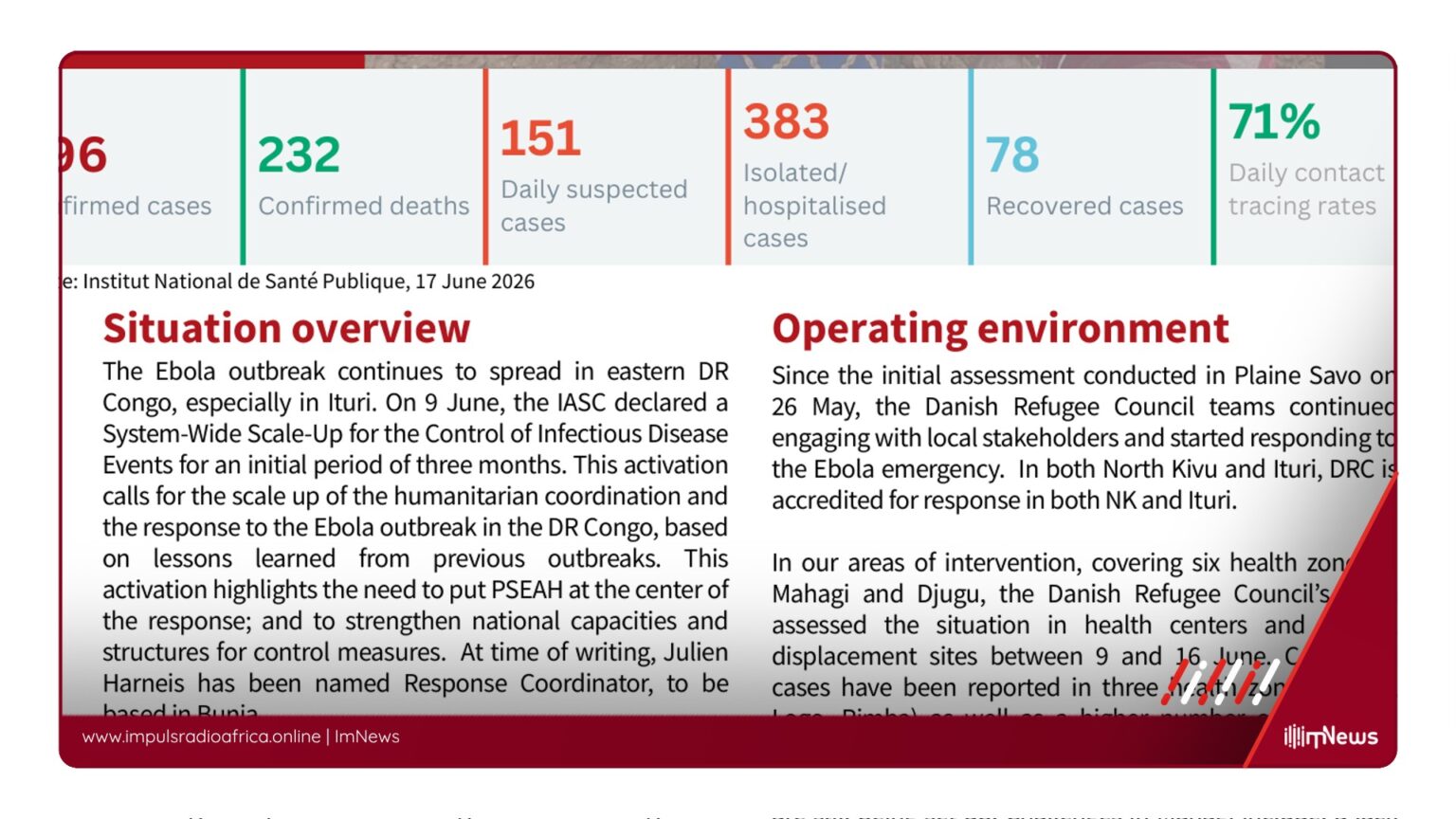
The International Association of Refugee Agencies (IASC) has declared a System-Wide Scale-Up for the Control of Infectious Disease Events, effective for an initial period of three months, to address the escalating situation.
The response to the outbreak is facing significant challenges, including delays in seeking medical attention by the sick, inadequate case management capacity, shortages of personal protective equipment (PPE), lack of transportation, and insufficient resources for surveillance and contact tracing.
The Danish Refugee Council has also reported underreporting of alerts, community resistance, and a lack of capacity for infection prevention and control (IPC) interventions, such as decontamination and safe burials. Community engagement is a key priority, but resistance remains high due to mistrust and misinformation, which has been a recurring issue in previous Ebola outbreaks.
The acceptance of safe and secure burials is a crucial aspect of outbreak control that continues to be challenged. Since the initial assessment in Plaine Savo on May 26, the Danish Refugee Council has been engaging with local stakeholders and responding to the Ebola emergency in North Kivu and Ituri.
The council’s team has conducted assessments in health centers and displacement sites, reporting confirmed cases in three health zones and a higher number of suspected cases. Efforts are focused on preventing further transmission, although treatment centers and isolation wards are still being established. Challenges in Mahagi include a lack of training capacity, equipment, and supplies, as well as the absence of printed material in local languages and capacity for safe and dignified burials.
The transportation of samples to Bunia has been refused by transporters, and delays in obtaining test results remain despite expanded testing capacity.
In areas with confirmed cases, around 180,000 internally displaced persons (IDPs) are hosting in overcrowded camps, many of which are living in dire conditions.
The WASH (Water, Sanitation, and Hygiene) conditions in the Plaine Savo camp are particularly concerning, with less than a third of latrines functional and water access inadequate, as well as a lack of solid waste management infrastructure.
*Additional reporting by ImNews | Sources consulted: 5*
—
This original article was produced by the ImNews editorial team
Source: reliefweb
Source: Danish Refugee Council