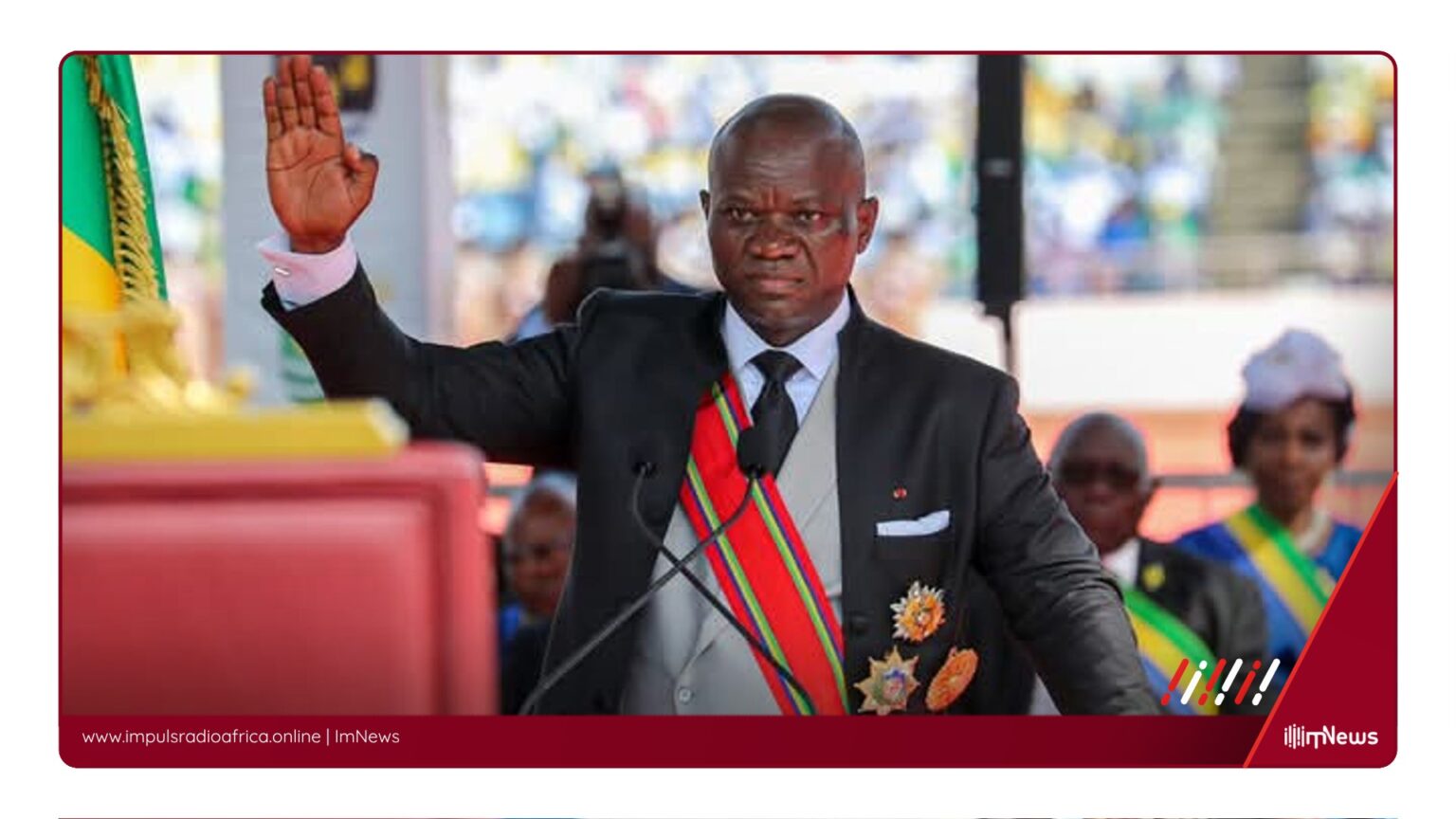
Gabon’s President Oligui Nguema’s First Year: Institutional Reforms and State Consolidation Efforts Unveiled. Libreville, Gabon – LEAD: President Brice Clotaire Oligui Nguema of Gabon has marked his first year in office with a series of significant institutional reforms and a push for state consolidation, aiming to reshape the nation’s political and economic landscape. NUT GRAF: Under Oligui Nguema’s administration, a new constitution has been adopted, the Prime Minister position eliminated, and the presidential term limited to seven years renewable once.
The Union Démocratique des Bâtisseurs (UDB), the President’s party, has secured a strong legislative majority. Concurrently, the government has embarked on a national growth and development plan focused on infrastructure modernization and economic diversification.
The adoption of a new constitution in November 2024 was a pivotal point, establishing a strong presidential regime and consolidating power under the UDB, which now holds 101 of 145 seats in parliament. This strategic shift has been supported by a national growth and development plan (2026-2030) targeting sectors like mining, agriculture, and services, with a goal of job creation and poverty reduction. While the government emphasizes achievements in institutional reforms and economic development, critics argue that tangible improvements in the cost of living and unemployment are lacking, and further social reforms are needed.
Concerns have been raised about the balance between state consolidation and the protection of civil liberties and freedom of the press.
The Mining Minister, Sosthène Nguema Nguema, has been tasked with prioritizing high-growth mining opportunities, reflecting the government’s commitment to economic diversification away from oil dependency. Political reforms include consultations with political parties and civil society organizations, aiming to foster a more inclusive political environment.
However, there are concerns about the pace and depth of these reforms, especially in the context of state consolidation efforts. Internationally, the situation in Gabon is closely monitored. While some countries support the government’s reform efforts, others have expressed concerns about the pace and direction of these changes.
In conclusion, Oligui Nguema’s first year in office has been characterized by ambitious institutional reforms and state consolidation.
The future of Gabon’s political and economic landscape will depend on the success of these efforts and how the government balances reform with social stability and democratic governance. KICKER: As Gabon navigates its political and economic transition, the international community awaits to see how the government navigates these challenges.
*Additional reporting by ImNews | Sources consulted: 5*
—
This original article was produced by the ImNews editorial team
Source: Agpgabon
Source: Redaction