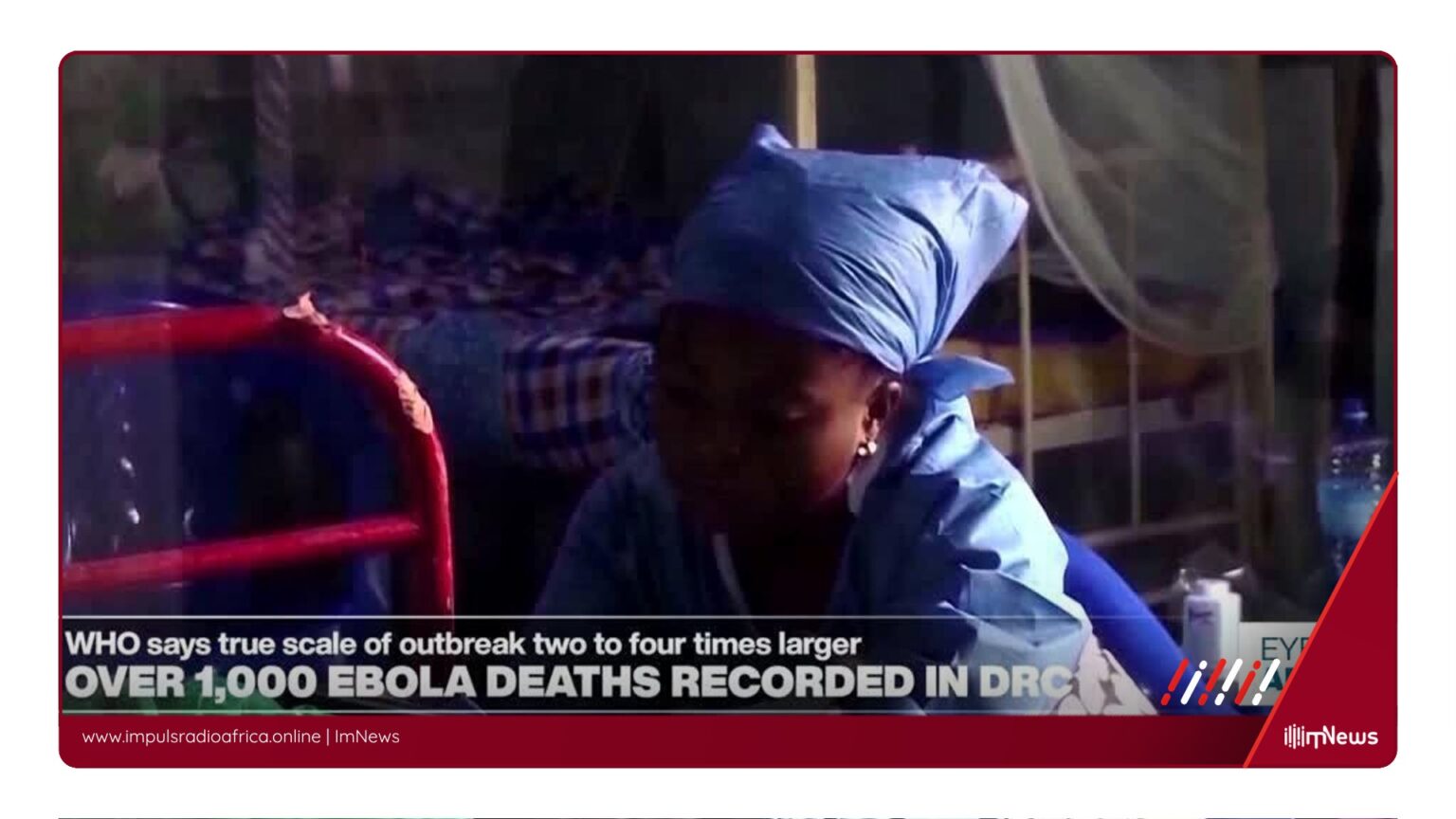
Over 1,000 Lives Lost in DRC’s Fastest-Ever Ebola Outbreak BODY: Nairobi, Kenya – A devastating Ebola outbreak in the Democratic Republic of the Congo (DRC) has claimed over 1,000 lives, making it the fastest in the history of the disease.
The Bundibugyo species of Ebola, for which there is no vaccine or specific treatment, is at the heart of this crisis.
The World Health Organization (WHO) has intensified its support to the DRC and neighboring Uganda, focusing on surveillance, contact tracing, clinical preparedness, and community engagement to combat the outbreak.
The DRC’s health ministry has reported that as of July 22, 2026, there have been 2,473 confirmed cases, with 1,031 deaths attributed to the outbreak.
The situation is particularly dire in the northeastern province of Ituri, where the majority of cases are concentrated.
The rapid spread of the virus has been exacerbated by conflict, community resistance, and an uneven response from local and international health authorities.
Dr. Jean Kaseya, the director-general of the Africa Centres for Disease Control and Prevention, highlighted the lack of vaccines, medicine, and funding as contributing factors to the high death toll. “
These are people dying.
Health workers disinfect a coffin of an Ebola victim at Ebola Treatment Center at Bunia General Hospital in Ituri, Congo, Wednesday, July 22, 2026, “he said emphasizing the urgency of addressing the crisis.
The WHO’s strategic approach to controlling the outbreak includes a focus on community engagement and cross-border preparedness.
The organization recognizes the importance of community trust and regional cooperation in bringing the virus under control. “.
Community engagement will be key. It is only when communities are engaged in the response that such outbreaks are brought under control, “a WHO spokesperson stated.
The DRC’s Ebola outbreak has not only affected the country but also neighboring Uganda, where two deaths have been reported.
The rapid spread of the virus across borders underscores the need for a coordinated regional response to contain the outbreak.
As the crisis continues to unfold, the international community remains vigilant, with ongoing efforts to develop treatments and vaccines for the Bundibugyo species of Ebola.
The rapid and unprecedented nature of this outbreak underscores the need for improved preparedness and response mechanisms to combat future Ebola outbreaks in Africa and beyond.
*Additional reporting by ImNews | Sources consulted: 5*
—
This original article was produced by the ImNews editorial team
Source: france24 – Africa
Source: Clarisse FORTUNÉ