
Chad’s Lac Province: A Deep Dive into the Humanitarian Crisis and Displacement DATELINE: N’Djamena, Chad – June 2, 2026 LEAD The Lac Province in Chad has been addressing a severe humanitarian crisis, marked by a surge in internal displacement following a series of security incidents.
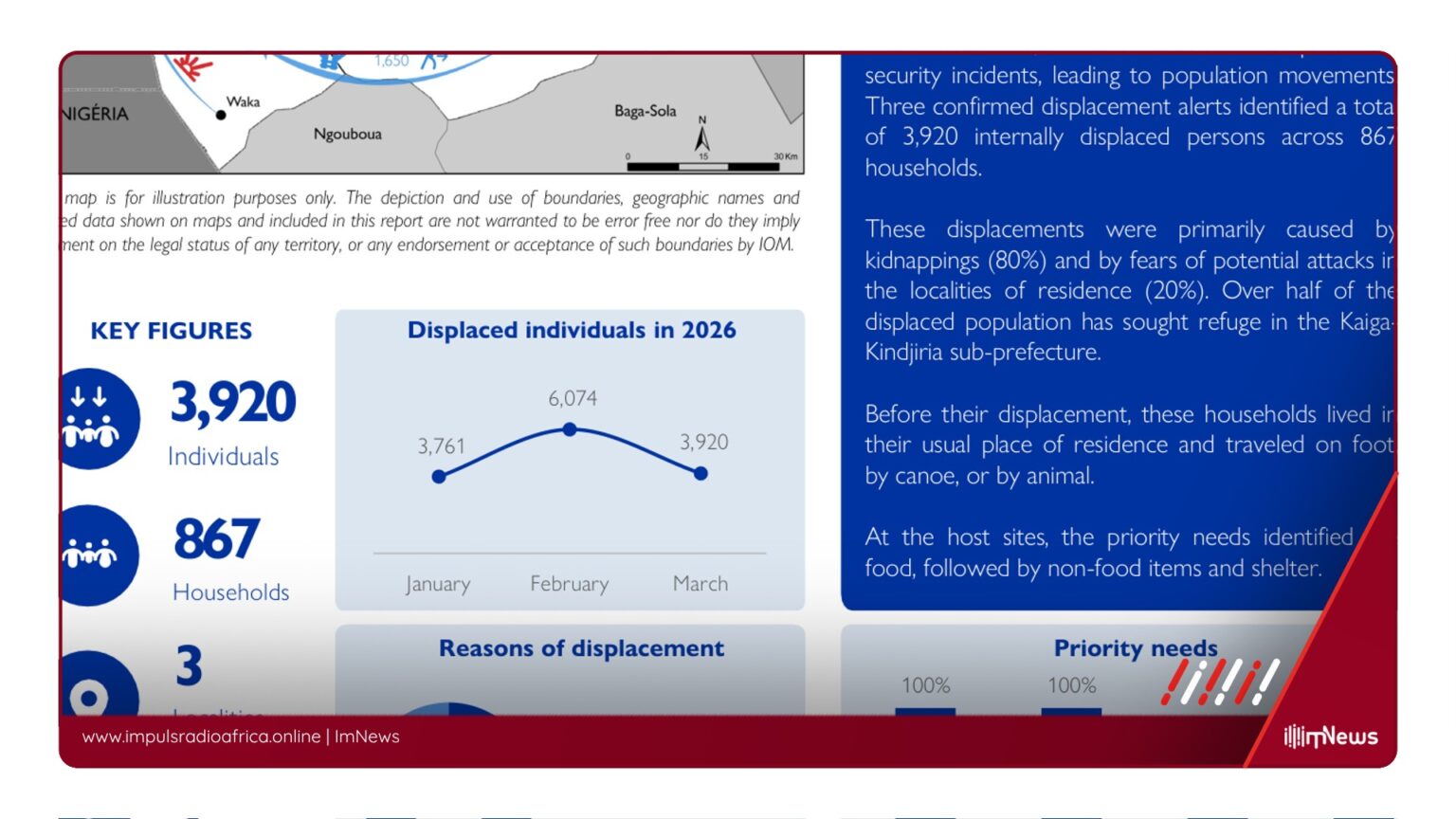
According to the International Organization for Migration (IOM), between March 2 and 13, 2026, 3,920 internally displaced persons (IDPs) were confirmed across 867 households in the province. NUT GRAF: The displacement in the Lac Province, a region already prone to conflicts and natural disasters, has been primarily triggered by security incidents, as detailed in the IOM’s Emergency Tracking Tool (ETT) report #222.
This report, which covers the period from July 3 to 6, 2025, as well as the events in March 2026, indicates a continuous monitoring of the displacement situation in the region.
The IOM’s data collection for the ETT report was conducted through key informant interviews and direct observations, providing a comprehensive view of the displacement dynamics.
The report highlights the challenges faced by the local population, which has been affected by both security issues and climate — related emergencies, such as droughts and floods.
The region’s vulnerability to such crises is not new. Since 2013, when armed groups linked to Boko Haram became active in the area, the security situation has become increasingly precarious. Despite the efforts of the Chadian defense and security forces, certain areas, particularly in the sub-prefectures of Ngouboua, Kaiga Kindjiria, Liwa, Kangalam, and Bol, have seen a deterioration in security conditions.
The IOM’s reports provide a detailed overview of displacement events, focusing on the number of IDPs and the causes of displacement. This perspective is crucial for humanitarian organizations to assess the scale and nature of emergencies.
However, the lack of specific details on the security incidents and the long — term impact of the displacement on the affected population limits the completeness of the information.
The humanitarian situation in the Lac Province is further complicated by the region’s exposure to climate-related emergencies. Droughts and floods exacerbate the humanitarian situation, leading to increased vulnerability among the local population.
The IOM’s methodology for data collection adds to the credibility of the report.
However, the lack of specific details on the security incidents and the long — term impact of the displacement on the affected population limits the completeness of the information.
The displacement crisis in the Lac Province of Chad underscores the broader challenges faced by the country in addressing both security and humanitarian concerns.
As the situation continues to evolve, the need for a coordinated and comprehensive response from the international community becomes increasingly apparent.
KICKER: The IOM’s ETT report #222 serves as a crucial tool for understanding the displacement dynamics in the Lac Province.
As the situation unfolds, it is essential for humanitarian agencies and the international community to remain vigilant and responsive to the needs of the affected population.
*Additional reporting by ImNews | Sources consulted: 5*
—
This original article was produced by the ImNews editorial team
Source: reliefweb
Source: International Organization for Migration