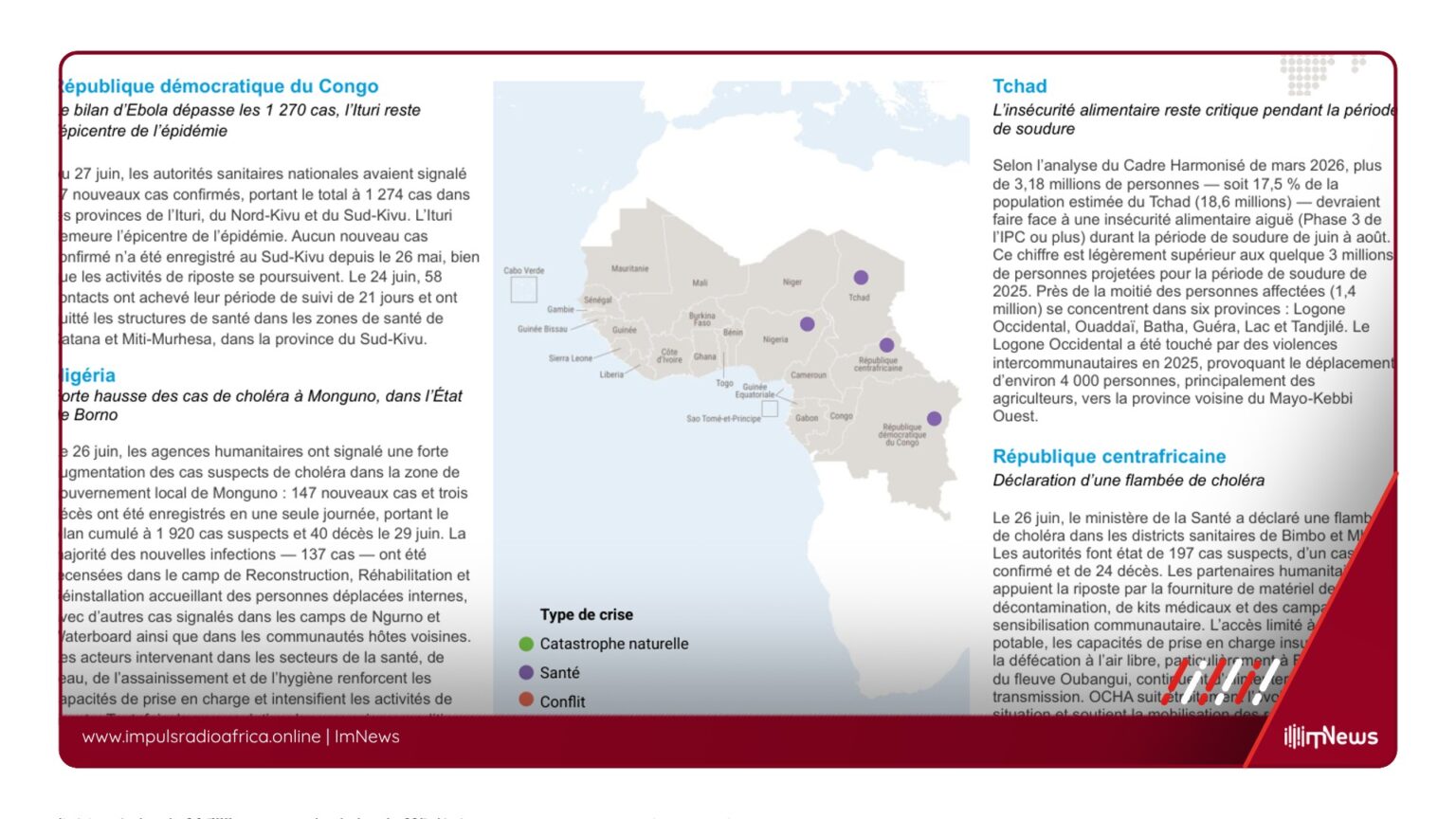
Humanitarian Crisis Intensifies in DR Congo and West Africa Lagos, Nigeria — A severe humanitarian crisis is intensifying in the Democratic Republic of Congo (DRC) and West Africa, marked by a cholera epidemic, a surge in displacement, and critical shortages of food, water, and medical services.
The cholera outbreak in the DRC has reached alarming proportions, with 679 suspected cases and 62 deaths reported since July 2025.
The mortality rate stands at a concerning 9.
4%, with the most affected areas being the islands of Mbamou, Talangaï, and Mossaka-Loukolela.
The UN Office for the Coordination of Humanitarian Affairs (OCHA) warns that the risk of the epidemic spreading is high, particularly in remote rural areas where access is limited, suggesting that the actual number of cases may be far higher.
In Mauritania, the arrival of over 1,000 Malian refugees in the southeast has brought the total number of arrivals since late October to approximately 7,300.
The majority of the new arrivals are women and children, with an increasing number of elderly individuals coming from the region of Tombouctou in Mali.
The situation is further complicated by the fact that these figures are likely underestimates. Save the Children has issued a dire warning regarding the plight of displaced populations in the DRC.
The organization reports that these populations are lacking sufficient food, health services, clean water, and hygiene materials.
The situation is exacerbated by violence that is increasingly cutting off access to these essential services.
The African Union (AU) has been closely monitoring the situation and has called for international assistance to address the crises.
The AU’s involvement could provide a broader perspective on the challenges faced by the region and the need for coordinated efforts to alleviate the suffering.
The humanitarian crises in the DRC and West Africa are a stark reminder of the challenges that African countries continue to face, including political instability, conflict, and natural disasters.
The need for sustainable solutions and long — term investments in infrastructure, health, and education is more pressing than ever.
As the situation unfolds, the international community must remain vigilant and proactive in providing the necessary support to affected populations.
The stakes are high, and the need for effective and compassionate responses is urgent.
The ongoing crises in the DRC and West Africa underscore the importance of regional integration and cooperation.
The African Union’s Agenda 2063, which aims to promote peace, security, and development across the continent, offers a framework for addressing these challenges collectively.
The challenges in the DRC and West Africa are complex and multifaceted, requiring a comprehensive approach that addresses the root causes of the crises.
As the situation evolves, it is crucial that the international community remains engaged and committed to finding sustainable solutions.
In conclusion, the humanitarian crises in the DRC and West Africa are a matter of grave concern.
The need for immediate action and long — term commitment to address the challenges faced by affected populations cannot be overstated.
*Additional reporting by ImNews | Sources consulted: 5*
—
This original article was produced by the ImNews editorial team
Source: reliefweb
Source: UN Office for the Coordination of Humanitarian Affairs