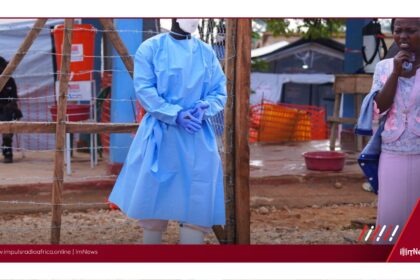
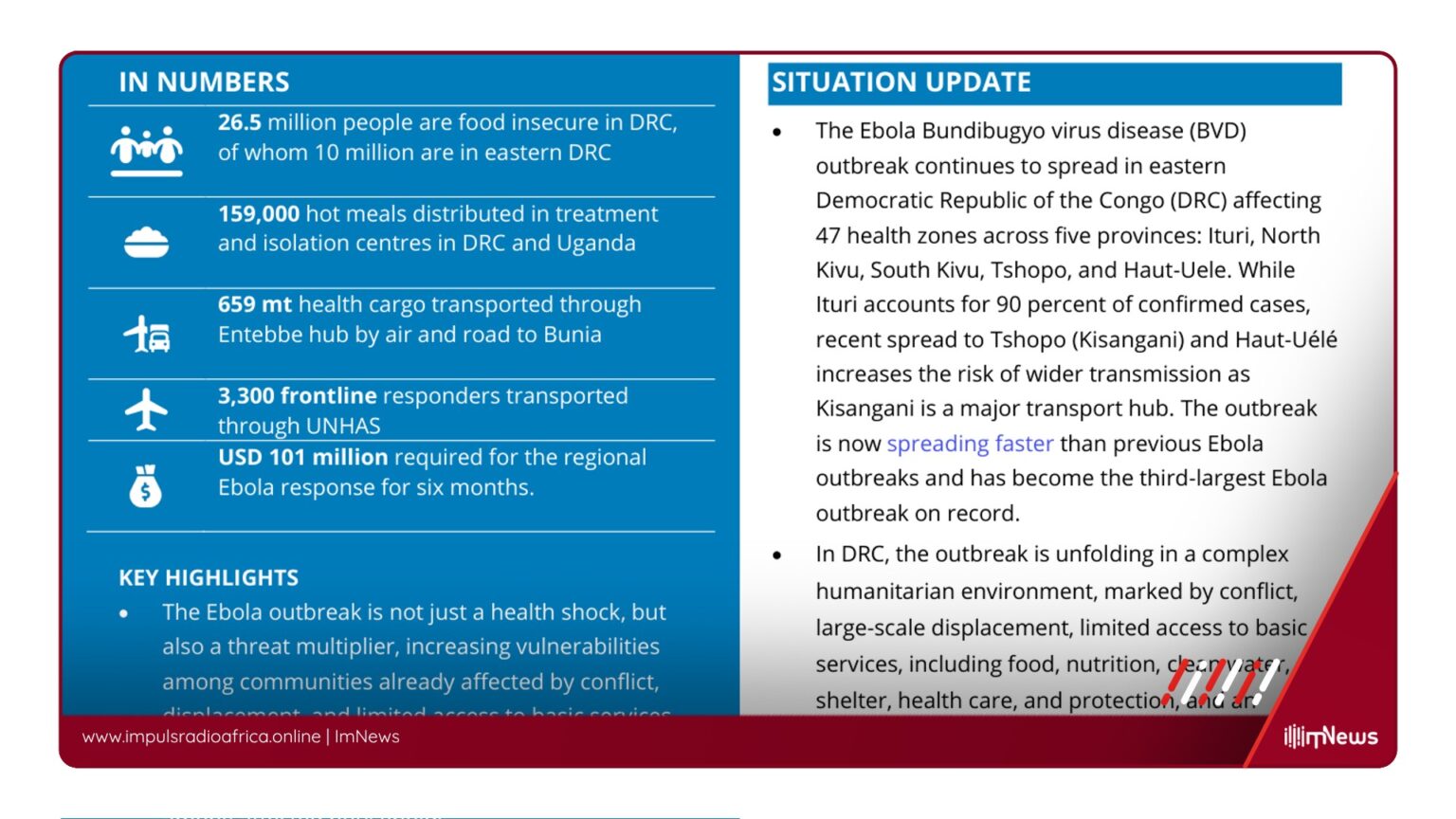
CITY, DRC — The Ebola Bundibugyo virus disease (BVD) outbreak in the Democratic Republic of the Congo (DRC) is escalating rapidly, with the virus now affecting 47 health zones across five provinces.
The Ituri province accounts for the majority of confirmed cases, but the spread to Tshopo (Kisangani) and Haut-Uele poses a significant risk of wider transmission due to Kisangani’s role as a major transport hub.
The World Food Programme (WFP) is actively engaged in response efforts, working closely with the DRC government, the World Health Organization (WHO), and other partners to contain the outbreak and prevent it from becoming a broader humanitarian crisis.
The outbreak’s complexity is heightened by ongoing conflict, large-scale displacement, limited access to basic services, and a health workers strike.
As of July 2026, nearly 27 million people in the DRC face acute food insecurity, with nearly 10 million in crisis or emergency levels in the eastern regions.
The Africa Centres for Disease Control and Prevention (Africa CDC) and the WHO have initiated a joint continental preparedness and response plan, which includes a $518 million budget aimed at supporting African countries and partners in their efforts to prepare for, detect, and respond to the outbreak.
The PARTNERS clinical trial, sponsored by the WHO, is underway in the DRC to evaluate potential treatments for the Bundibugyo virus disease.
The trial is assessing the effectiveness of two antiviral therapies — a monoclonal antibody (MBP134) and remdesivir—in improving survival rates among patients diagnosed with the disease. Community engagement is a cornerstone of the response strategy, with the WHO emphasizing the importance of involving local communities in efforts to control outbreaks.
The Africa CDC and the WHO are also working to strengthen outbreak response measures, including emergency coordination, disease surveillance, laboratory testing, infection prevention and control, clinical care, and support for essential health services.
The WFP and its partners are tirelessly working to ensure food, livelihoods, and access to healthcare are protected, aiming to contain the outbreak and support those affected by the crisis.
As the situation evolves, the response efforts continue to adapt to the complex and challenging context of the DRC.
*Additional reporting by ImNews | Sources consulted: 5*
—
This original article was produced by the ImNews editorial team
Source: reliefweb
Source: World Food Programme