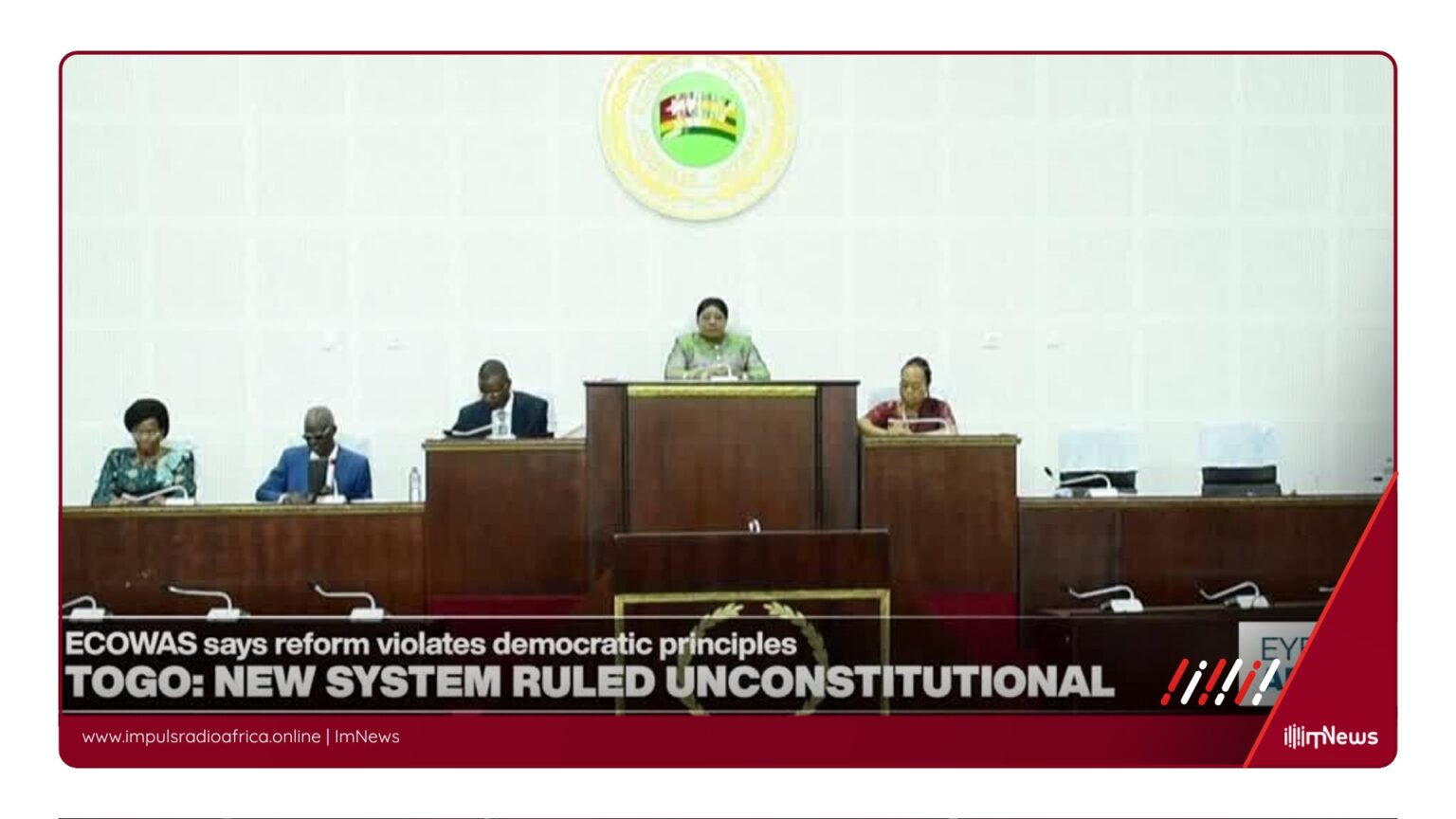
Togo’s Unconstitutional Reforms: ECOWAS Court Ruling Stirs Political Turmoil BODY: Addis Ababa, Ethiopia – Togo’s recent constitutional reforms, which were aimed at establishing a parliamentary system, have been declared unconstitutional by the ECOWAS Court of Justice.
The ruling, announced in June 2026, has reignited political tensions in the West African nation, where President Faure Gnassingbé’s administration has faced mounting criticism for its authoritarian inclinations and lack of political pluralism.
In May 2026, President Gnassingbé stepped down from his post but retained power as president of the Council of Ministers, a new body created after a constitutional amendment.
The ECOWAS Court of Justice ruled that the reforms establishing a parliamentary system were unconstitutional, stating that the changes were passed by a parliament whose mandate had expired.
The opposition and civil rights activists in Togo have described the constitutional amendment as a ‘constitutional coup,’arguing that it allows Gnassingbé to rule indefinitely without facing direct elections.
The constitutional amendment, which was supported by a parliamentary majority, changed the method of electing the president from universal suffrage to being elected by lawmakers for a single 6-year term.
Critics and opposition groups argue that the constitutional reforms are a power grab that allows Gnassingbé to remain in office indefinitely, disregarding democratic principles.
The Togolese government and Gnassingbé’s party, the Union for the Republic (UNIR), argue that the reforms are necessary for strengthening the country’s institutions and improving governance.
The ECOWAS Court’s ruling has been welcomed by political parties and rights organizations that brought the case before the Court.
The decision is not legally binding but provides new legal arguments for opponents.
The ruling has also raised concerns about the potential for other leaders in the region to change the constitution in order to maintain themselves in power. Togo has been under the rule of the Gnassingbé family for over 50 years.
President Faure Gnassingbé has been in power since 2005.
The country has faced criticism for its authoritarian inclinations and lack of political pluralism.
The recent constitutional reforms have been met with significant opposition and protests, leading to a period of acute political strain in the country.
The ECOWAS Court’s decision comes at a time when the Togolese opposition is consolidating its opposition to Gnassingbé’s two-decade rule.
The ruling provides the opposition with a significant legal and political argument against Faure Gnassingbé’s continued hold on the executive.
As the political situation in Togo remains tense, the country’s future and its commitment to democratic principles are under scrutiny.
*Additional reporting by ImNews | Sources consulted: 5*
—
This original article was produced by the ImNews editorial team
Source: france24 – Africa
Source: Clarisse FORTUNÉ