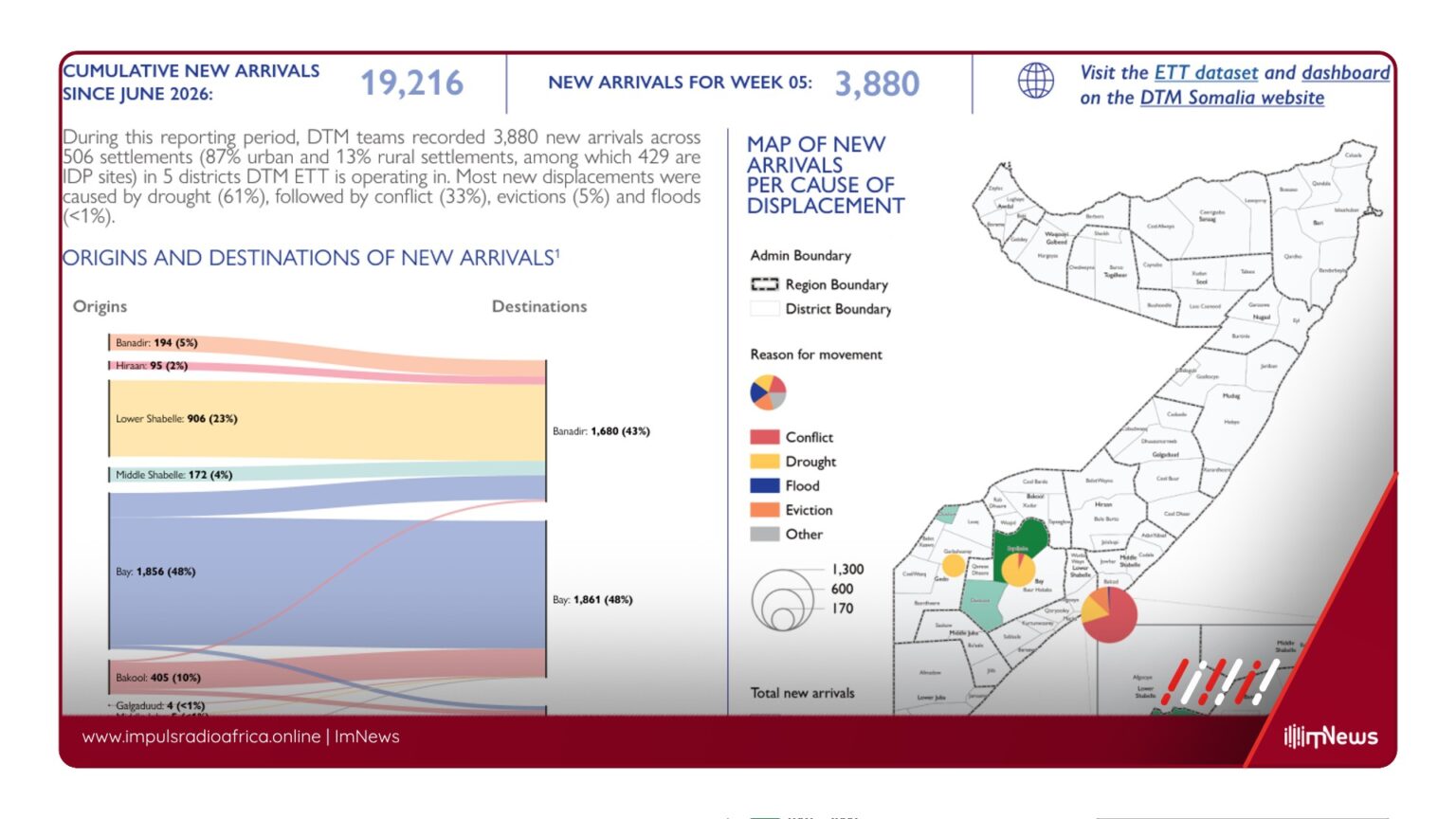
Mogadishu, Somalia — The International Organization for Migration (IOM) has released a new Emergency Trends Tracking (ETT) report, revealing a worsening displacement crisis in Somalia amidst growing concerns over a potential severe hunger crisis.
The report, initiated on June 14, 2026, focuses on displacement driven by conflict and the climatic impacts of the El Niño phenomenon. Data collection for the report took place in five districts across Somalia, including Baidoa, Dayniile, Diinsoor, Doolow, and Kahda.
The ETT is a crucial tool for monitoring sudden displacement and supporting rapid humanitarian assistance.
The report underscores the challenges faced by the Somali population, with concerns about food insecurity and the potential for widespread famine in regions such as Bay and Bakool.
The IOM’s DTM Somalia ETT Tracker has covered 25 districts across the country since February 2025, reflecting the scale of the humanitarian crisis. Humanitarian organizations are working to deliver aid in the face of ongoing conflict and insecurity, which have made access to affected areas difficult. Despite these challenges, the ETT report serves as a call to action for the international community to provide support and resources to mitigate the impact of the crisis.
As the situation in Somalia continues to deteriorate, immediate action is needed to prevent a further escalation of the humanitarian crisis.
The IOM’s report serves as a stark reminder of the need for a coordinated and comprehensive response to the combined effects of conflict, drought, and climatic conditions affecting the Somali people.
*Additional reporting by ImNews | Sources consulted: 5*
—
This original article was produced by the ImNews editorial team
Source: reliefweb
Source: International Organization for Migration