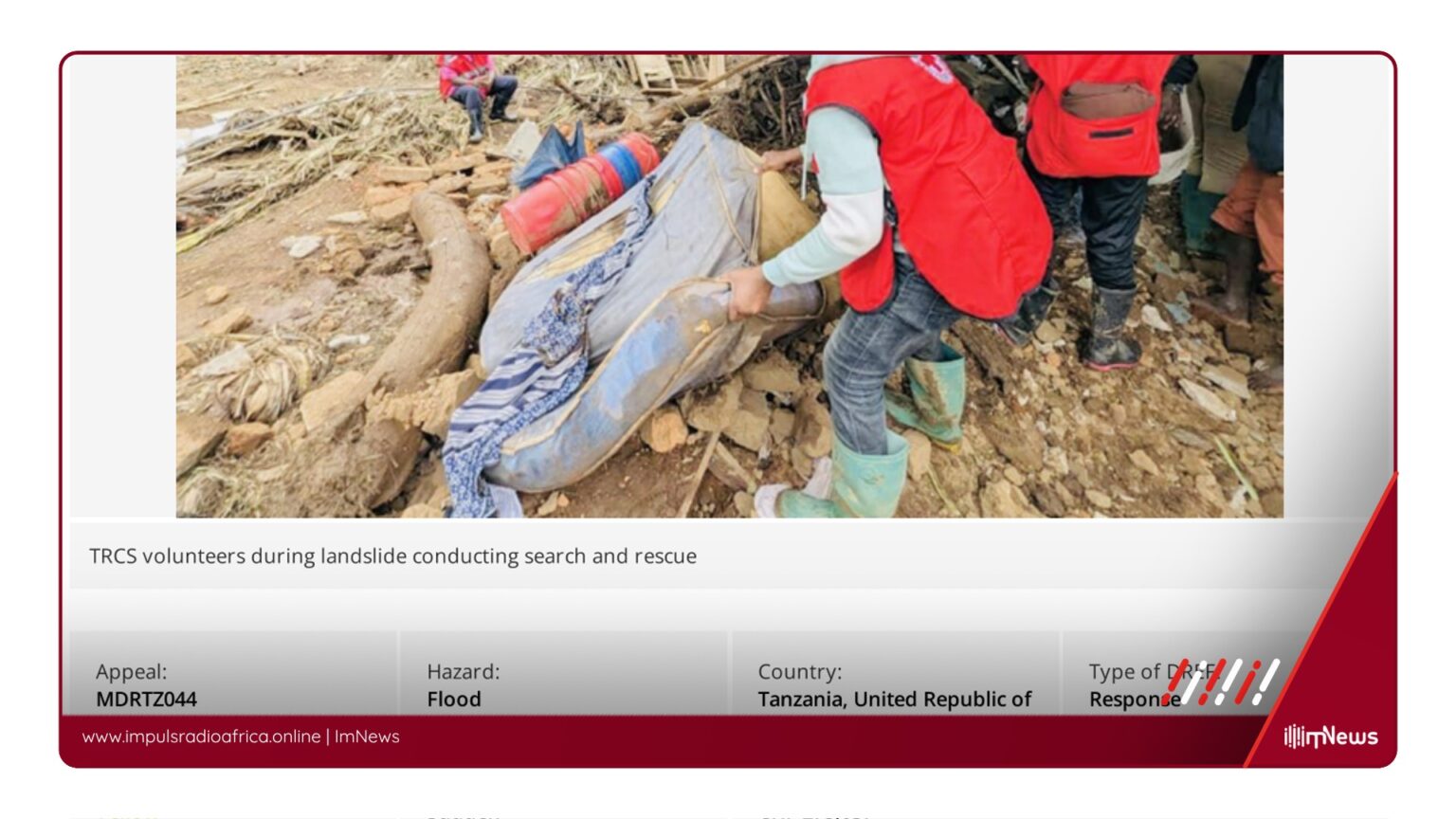
The Mbeya Region in Tanzania’s Southern Highlands faced a catastrophic event on 25-26 March 2026, as relentless rainfall during the March–May rainy season triggered severe flooding and landslides. The Rungwe District, situated in the heart of the Mbeya Region, bore the brunt of the disaster, with Nkunga, Lupepo, Kawetele, and Ikuti among the worst-affected wards.
The heavy rains, which continued for several consecutive hours, saturated the soil to the point of instability, leading to multiple landslides and flash floods. These natural calamities were exacerbated by strong winds, which further destabilized the ground and increased surface runoff. The disaster unfolded between the evening of 25 March and the early hours of 26 March, with the affected communities witnessing the destruction of homes predominantly built with mud bricks and corrugated iron sheets.
As of 27 March, official reports indicated a loss of at least 20 lives, with the majority being children, and several others sustaining injuries. The ongoing search and rescue operations were hampered by the continued rainfall, raising concerns about the potential for secondary landslides and further flooding. The floods and landslides not only caused loss of lives but also destroyed homes, displaced families, and disrupted the livelihoods of many, particularly farming households.
Emergency response efforts were complicated by the damaged roads and unstable terrain in some affected areas, limiting access and complicating the delivery of aid. In response to the disaster, local government authorities, in collaboration with the Tanzania Red Cross Society, initiated immediate response actions, which included search and rescue, first aid provision, and rapid needs assessments to address the urgent needs of the affected populations.
Source: reliefweb
Original author: International Federation of Red Cross and Red Crescent Societies