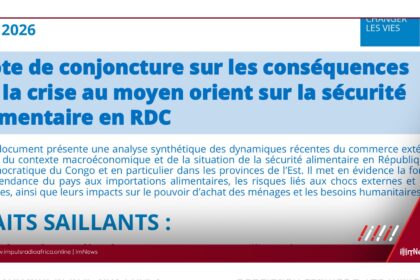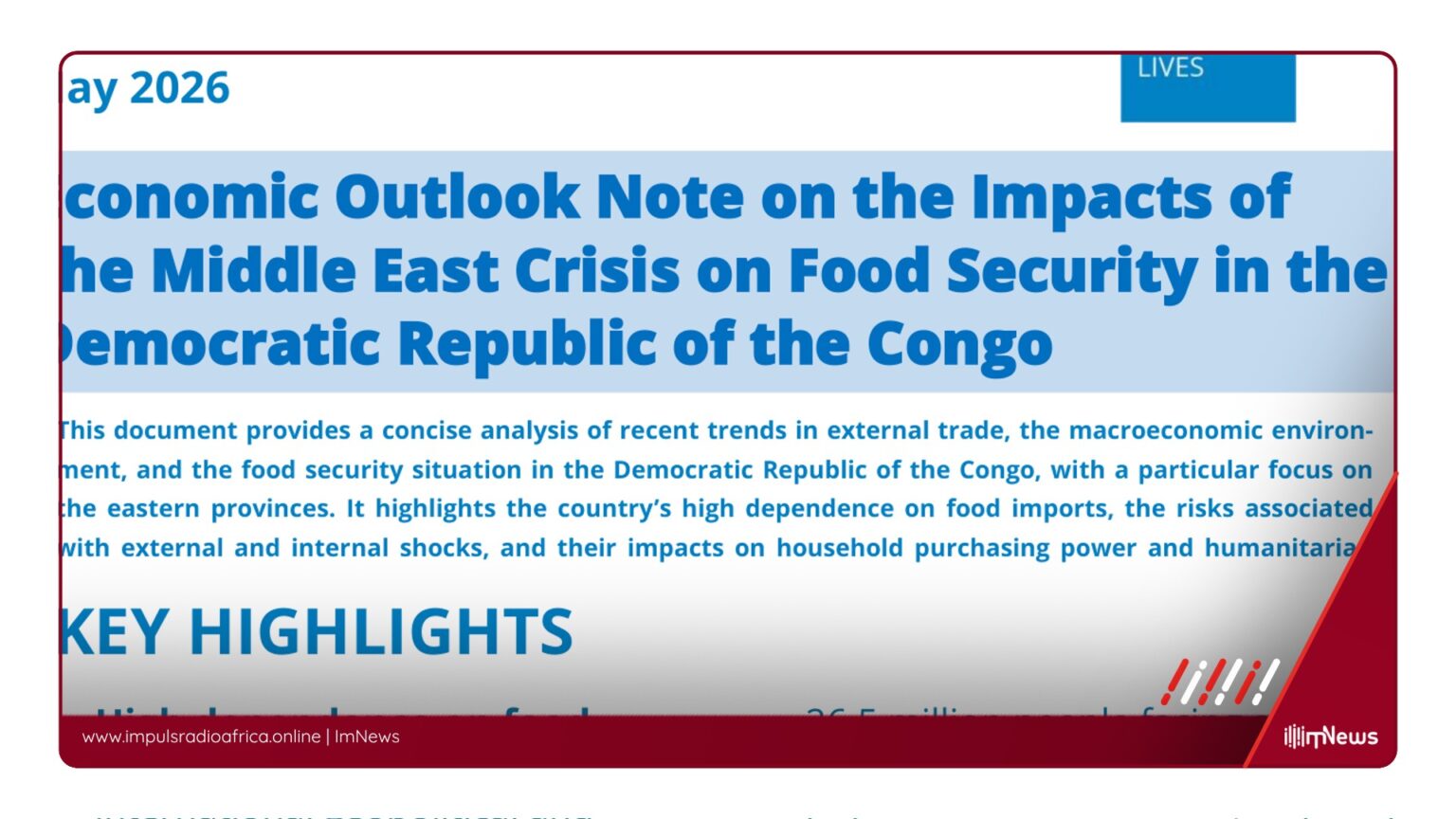
KINSHASA, DEMOCRATIC REPUBLIC OF CONGO — The escalating crisis in the Middle East has triggered a domino effect on the global economy, casting a shadow over the food security landscape in the Democratic Republic of Congo (DRC), according to recent assessments by international bodies.
The United Nations reports that the Middle East conflict has derailed global economic momentum, forecasting a modest 2. 5% GDP growth in 2026, a stark contrast to pre-pandemic projections. This downturn is compounded by the closure of the Strait of Hormuz and the damage to energy infrastructure in the region, leading to a slowdown in growth, down from 4.
0% in 2025 to 1. 8% in 2026, as indicated by the World Bank. While the African Development Bank projects the DRC’s growth to remain stable at 5.
3% in 2025 and 5. 0% in 2026, the country’s resilience amidst global economic upheaval is uncertain.
The International Monetary Fund’s (IMF) April 2026 Regional Economic Outlook Update for Sub-Saharan Africa noted that economic activity was on the upswing and inflation was easing prior to the conflict’s outbreak on February 28, 2026.
However, the Middle East war has since introduced new complexities.
The UN underscores the cascading effects of energy sector disruptions, a pivotal shock to the global economy that is affecting supply chains and spiking production costs globally.
The World Bank calls for interventions to bolster resilience and job creation in the Middle East, North Africa, Afghanistan, and Pakistan (MENAAP) region, addressing low productivity growth and a subdued private sector.
In the DRC, the Middle East crisis poses a severe threat to food security.
The nation’s heavy reliance on imported foodstuffs makes it vulnerable to disruptions in global supply chains, which could lead to dire consequences for its food security situation. Despite the African Development Bank’s projection of steady growth, the DRC must implement targeted interventions to support its most vulnerable populations, including measures to bolster food production, enhance supply chain resilience, and fortify social safety nets.
As the global economy grapples with the Middle East crisis, the DRC’s ability to maintain economic stability and ensure food security is a testament to its resilience. Success hinges on the country’s policies and strategies, as well as the broader global response to the ongoing crisis.
*Additional reporting by ImNews | Sources consulted: 5*
—
This original article was produced by the ImNews editorial team
Source: reliefweb
Source: World Food Programme