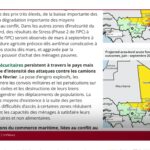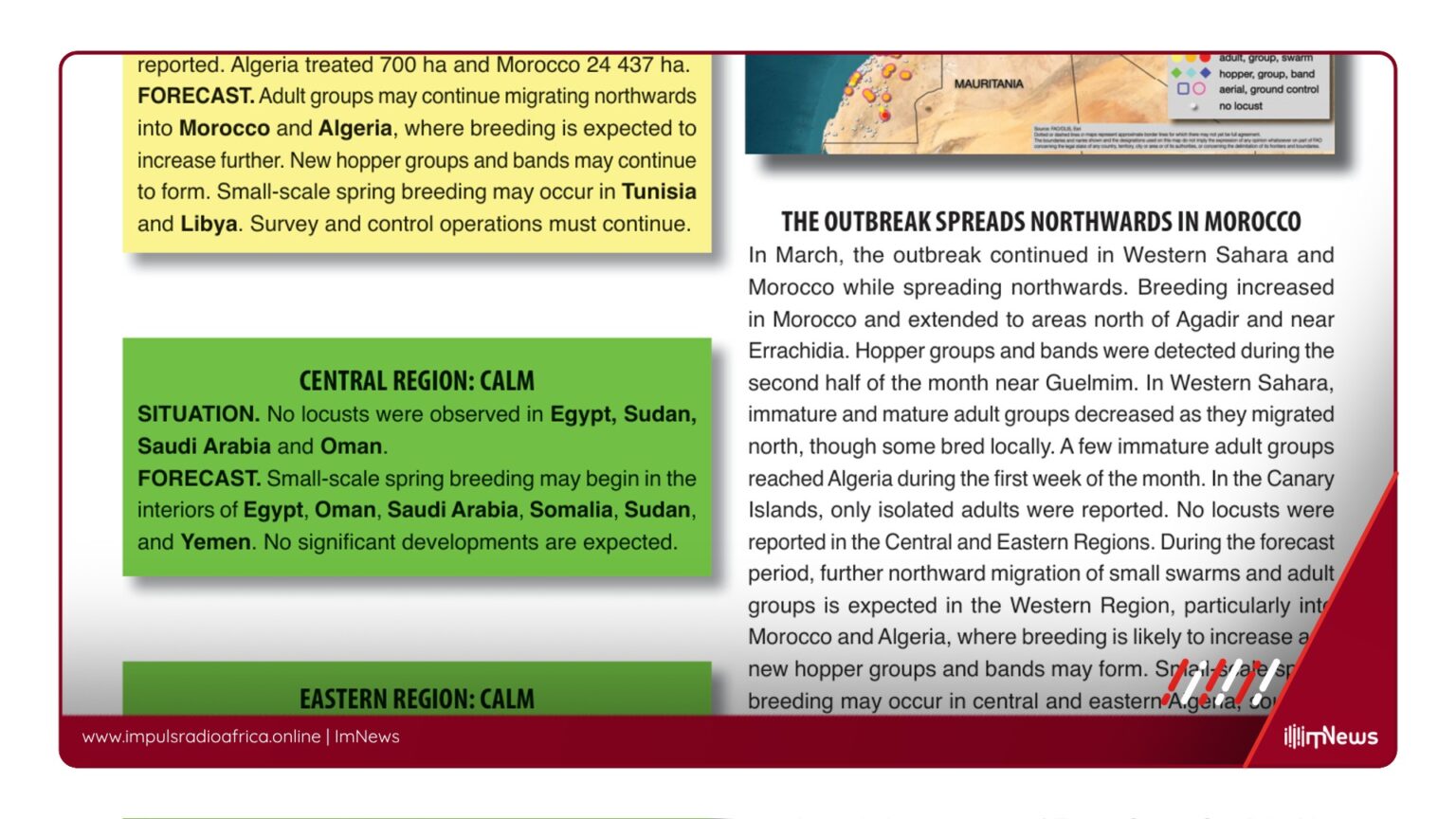
The situation regarding the desert locust crisis in North Africa has taken a turn for the worse, with the pest continuing its relentless march northwards. In March, the outbreak persisted in Western Sahara and Morocco, with the locusts spreading further into new areas. In Morocco, breeding intensified, expanding into regions north of Agadir and Errachidia. During the second half of the month, hopper groups and bands were detected near Guelmim, indicating a significant spread of the infestation.
In Western Sahara, while immature and mature adult groups saw a decrease as they migrated north, some locusts did breed locally. The first week of March saw a few immature adult groups reach Algeria, underscoring the urgency of the situation. In the Canary Islands, only isolated adult locusts were reported, suggesting that the islands remain relatively unaffected. However, no locusts were reported in the Central and Eastern Regions, which is a concern given the potential for the pests to migrate further.
Looking ahead, the forecast period predicts further northward migration of small swarms and adult groups in the Western Region, particularly into Morocco and Algeria. Breeding is anticipated to increase in these areas, with the potential for new hopper groups and bands to form. Small-scale spring breeding is also expected in central and eastern Algeria, southern Tunisia, and western Libya.
To combat the escalating crisis, continued surveys and sustained control operations are deemed essential to prevent new infestations. In the Central and Eastern Regions, there is a possibility of small-scale spring breeding beginning in interior areas of Egypt, Oman, Saudi Arabia, Somalia, Sudan, and Yemen. Additionally, southern Iran and southwestern Pakistan may see similar breeding patterns. However, as of now, no significant developments are expected in these regions, although the situation remains fluid and subject to change.
Source: reliefweb