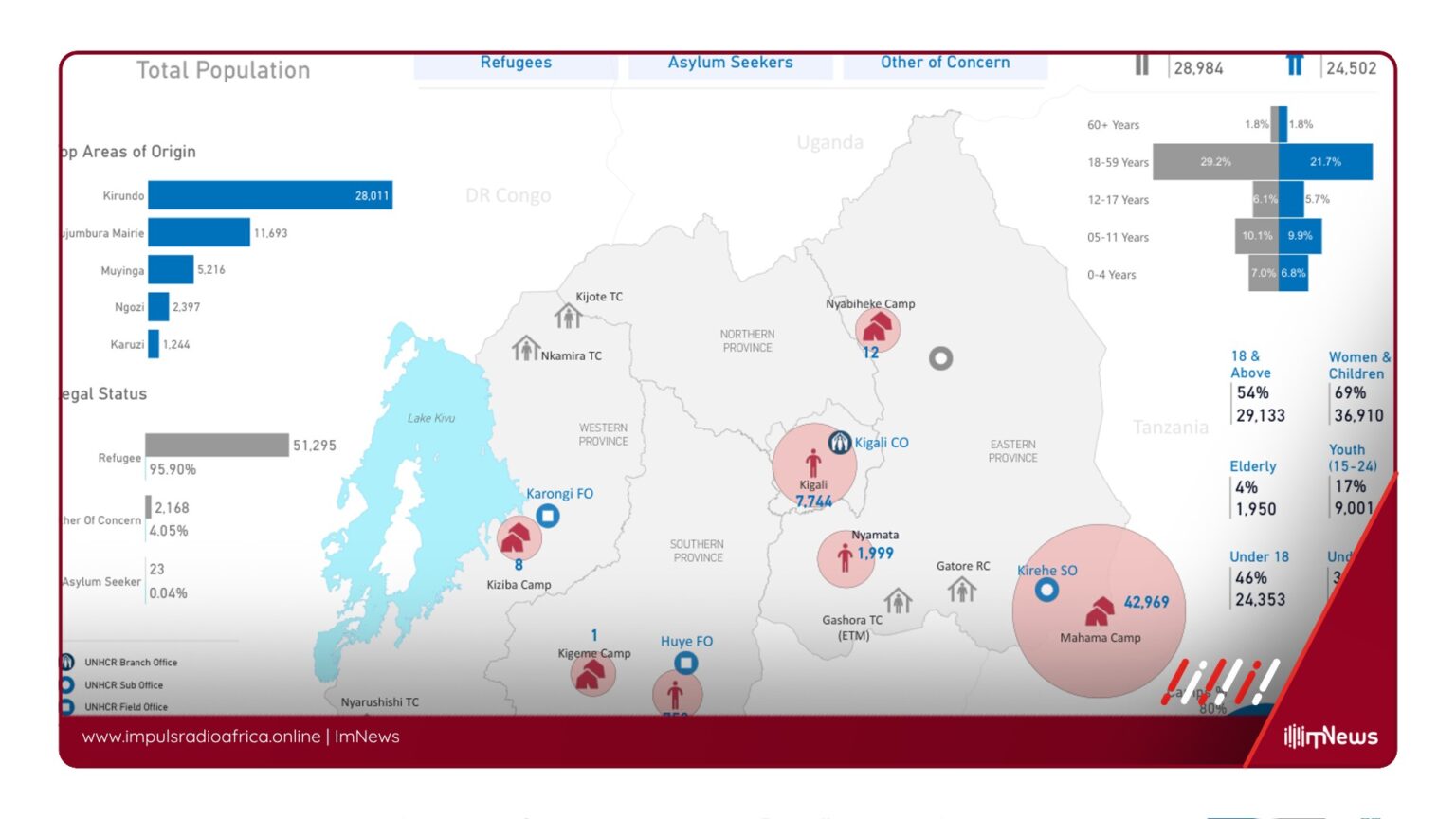
Rwanda Hosts Over 139,000 Displaced Persons, with Burundian Refugees Forming Significant Majority BODY: Kigali, Rwanda – As of June 30, 2026, Rwanda is hosting a total of 139,452 forcibly displaced persons, according to data from the Government, MINEMA, and the United Nations High Commissioner for Refugees (UNHCR). Among these, 38. 4% are from Burundi, reflecting the ongoing displacement caused by the conflict in the neighboring country.
The Burundian refugees, who have been fleeing since April 2015, are part of a larger population that includes 37,000 individuals who sought asylum in the region prior to that date. This figure, as reported by UNHCR, stands at a total of 188,348 refugees from Burundi, encompassing those who fled since April 2015 and those who sought asylum earlier.
The forcibly displaced population in Rwanda also includes 6,437 Others of Concern, with the Democratic Republic of the Congo being the primary country of origin for this group, accounting for 60.
6%.
The presence of a significant number of Burundian refugees in Rwanda underscores the ongoing challenges faced by the region in addressing the displacement crisis. While the data from UNHCR indicates that the majority of forcibly displaced persons in Rwanda are from the Democratic Republic of the Congo, the presence of Burundian refugees suggests a different context or reasons for displacement.
The reasons for displacement among Burundian refugees are not detailed in the UNHCR data, leaving room for speculation about the specific circumstances that led to their displacement. This lack of detail highlights the need for further research and analysis to understand the complexities of the situation.
The UNHCR’s role in providing assistance and support to these displaced persons is crucial.
The organization’s commitment to maintaining accurate records and providing regular updates on the situation is commendable.
However, the need for more detailed information on the reasons for displacement and the specific challenges faced by different groups of displaced persons remains a concern.
As Rwanda continues to host a significant number of forcibly displaced persons, the government and international organizations must work together to address the underlying causes of displacement and provide sustainable solutions.
This includes ensuring the safety and well — being of all displaced persons, as well as promoting their integration into the host community.
The situation in Rwanda serves as a reminder of the ongoing displacement crises in various parts of the world. It underscores the need for a coordinated and comprehensive approach to address the challenges faced by displaced persons and to promote peace and stability in affected regions.
As the situation evolves, it is crucial for the international community to remain vigilant and supportive of efforts to address the displacement crisis. This includes providing adequate resources and support to host countries like Rwanda, as well as working towards long-term solutions that address the root causes of displacement.
In conclusion, the presence of over 139,000 forcibly displaced persons in Rwanda, with a significant number of Burundian refugees, highlights the ongoing challenges of the displacement crisis.
It calls for a coordinated and comprehensive approach to address the situation and promote peace and stability in the region.
*Additional reporting by ImNews | Sources consulted: 5*
—
This original article was produced by the ImNews editorial team
Source: reliefweb
Source: UN High Commissioner for Refugees