
Accra, Ghana — In a significant development, Ghana and Russia have announced a strategic partnership aimed at addressing the contentious issue of Africa’s stolen cultural heritage.
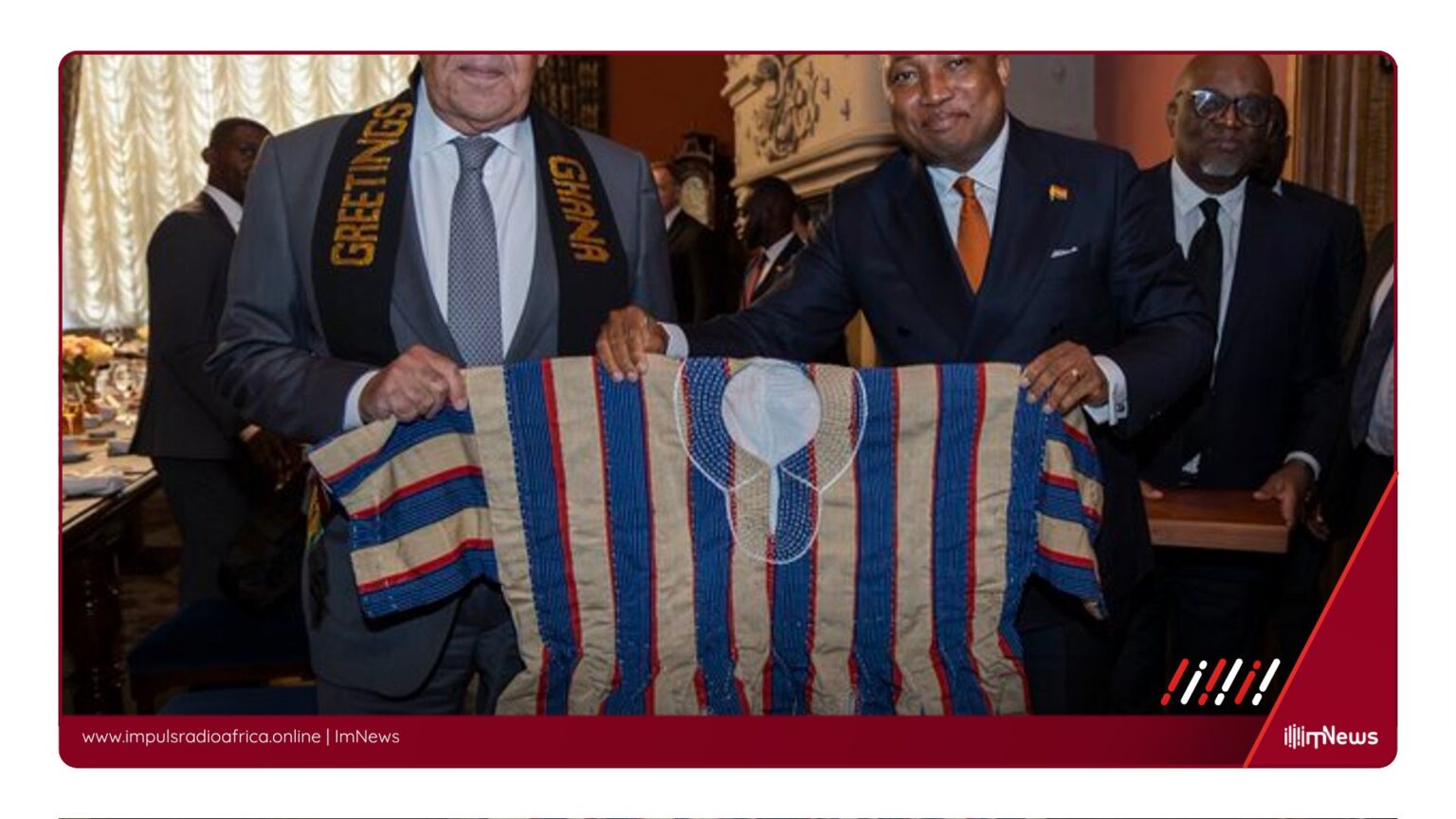
The collaboration was discussed during a bilateral meeting in Moscow, where Ghana’s Foreign Minister, Samuel Okudzeto Ablakwa, and Russian Foreign Minister Sergey Lavrov engaged in talks that covered various aspects of trade, investment, and the restitution of African artifacts.
The meeting marked a pivotal moment in the ongoing efforts to repatriate cultural heritage items that were seized during colonial periods. Ablakwa highlighted Russia’s support for Ghana’s reparations initiative, which includes the return of African cultural heritage.
In response, Ghana revealed plans to organize an international summit on the restitution of African artifacts, with Russia confirming its support for the initiative. Scheduled to coincide with the 81st session of the United Nations General Assembly in New York, the summit is poised to provide a global platform for discussions on cultural property restitution. This partnership between Ghana and Russia is considered a significant stride in the pursuit of justice and the restoration of Africa’s cultural heritage.
Ghana’s approach to the issue emphasizes the repatriation of African cultural heritage, seeking support from Russia and other international partners.
The meeting in Moscow also touched upon other areas of bilateral relations, including trade and the recruitment of citizens for the Ukraine War, indicating a broader scope of cooperation beyond the reparations issue.
The initiative to return Africa’s stolen treasures has gained momentum in recent years, with European nations beginning to return looted treasures and acknowledging centuries of colonial exploitation. This global reckoning with Africa’s plundered heritage is reshaping global museums and cultural institutions, fueling calls for more than the return of artifacts—they seek justice.
The upcoming summit in New York is anticipated to gather leaders, experts, and institutions to discuss progress, challenges, and the legal framework for cultural property restitution.
The event is co — organized by the African Union Commission and UNESCO, with France advancing a law that eases the returns of stolen artifacts, while the UK maintains a legal block.
As UNESCO advances new types of cooperation and agreements to support the return and restitution of African cultural heritage, stakeholders across the continent are shaping what this new era looks like in practice.
The movement for reparations and the return of stolen artifacts is gaining traction, with Ghana and Russia’s collaboration exemplifying the power of international cooperation in addressing historical injustices.
The future of African art and cultural sovereignty will be shaped by the actions taken in the coming months and years.
*Additional reporting by ImNews | Sources consulted: 5*
—
This original article was produced by the ImNews editorial team
Source: Africa.businessinsider
Source: Chinedu Okafor