Navigating Tunisia’s Migration Labyrinth: Economic Push, Social Pull, and the Human Toll City, Country — Tunisia’s role in the complex tapestry of Mediterranean mixed migration is under scrutiny as economic drivers, political instability, and social influences converge to shape the journeys of thousands.
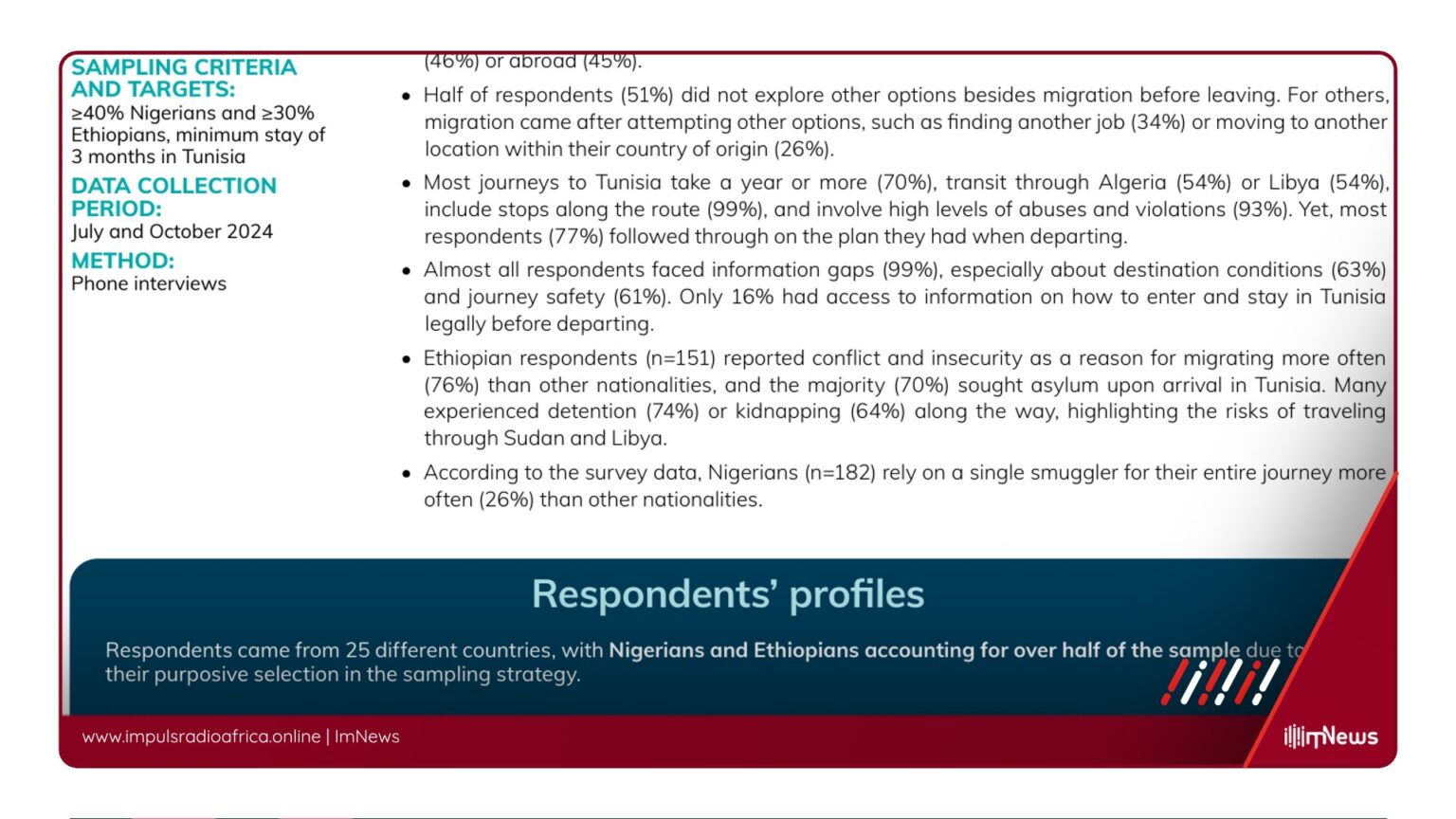
A study by the Mixed Migration Centre reveals a harrowing reality: most respondents (76%) are propelled by economic necessity, while 62% cite conflict or insecurity, and 46% attribute their departure to social factors.
The path to Tunisia is often perilous, with most journeys taking a year or more, many transiting through Algeria or Libya, where 93% of respondents report abuses and violations. Despite the risks, 77% of respondents persevered with their original plans. Ethiopian and Nigerian respondents faced additional challenges, with conflict and insecurity as primary drivers, and many seeking asylum upon arrival in Tunisia.
The infographic from the Mixed Migration Centre illustrates the journey’s arduousness, including stops along the route and the pervasive nature of information gaps, with 99% of respondents lacking essential information on destination conditions and journey safety. This migration phenomenon is not just a Tunisian issue; it’s a regional and global concern, with the country hosting over 15,500 refugees and asylum seekers, primarily from Sudan.
As the world watches, it is crucial to understand the root causes and human stories behind the statistics.
The path to Tunisia is a complex journey, but recognizing the human dimension of migration is a first step towards sustainable solutions that ensure the safety and dignity of all those on the move.
*Additional reporting by ImNews | Sources consulted: 5*
—
This original article was produced by the ImNews editorial team
Source: reliefweb
Source: Mixed Migration Centre