WFP Assists Over 400,000 in Burkina Faso Amidst Ongoing Humanitarian Crisis DATELINE: Ouagadougou, Burkina Faso – July 14, 2026 LEAD The World Food Programme (WFP) has been instrumental in providing relief to over 400,000 people in Burkina Faso, amidst a severe humanitarian crisis that has been exacerbated by conflict, displacement, and poverty.
The situation has seen a slight decrease in the number of people assisted in April 2026, but the scale of the crisis remains significant.
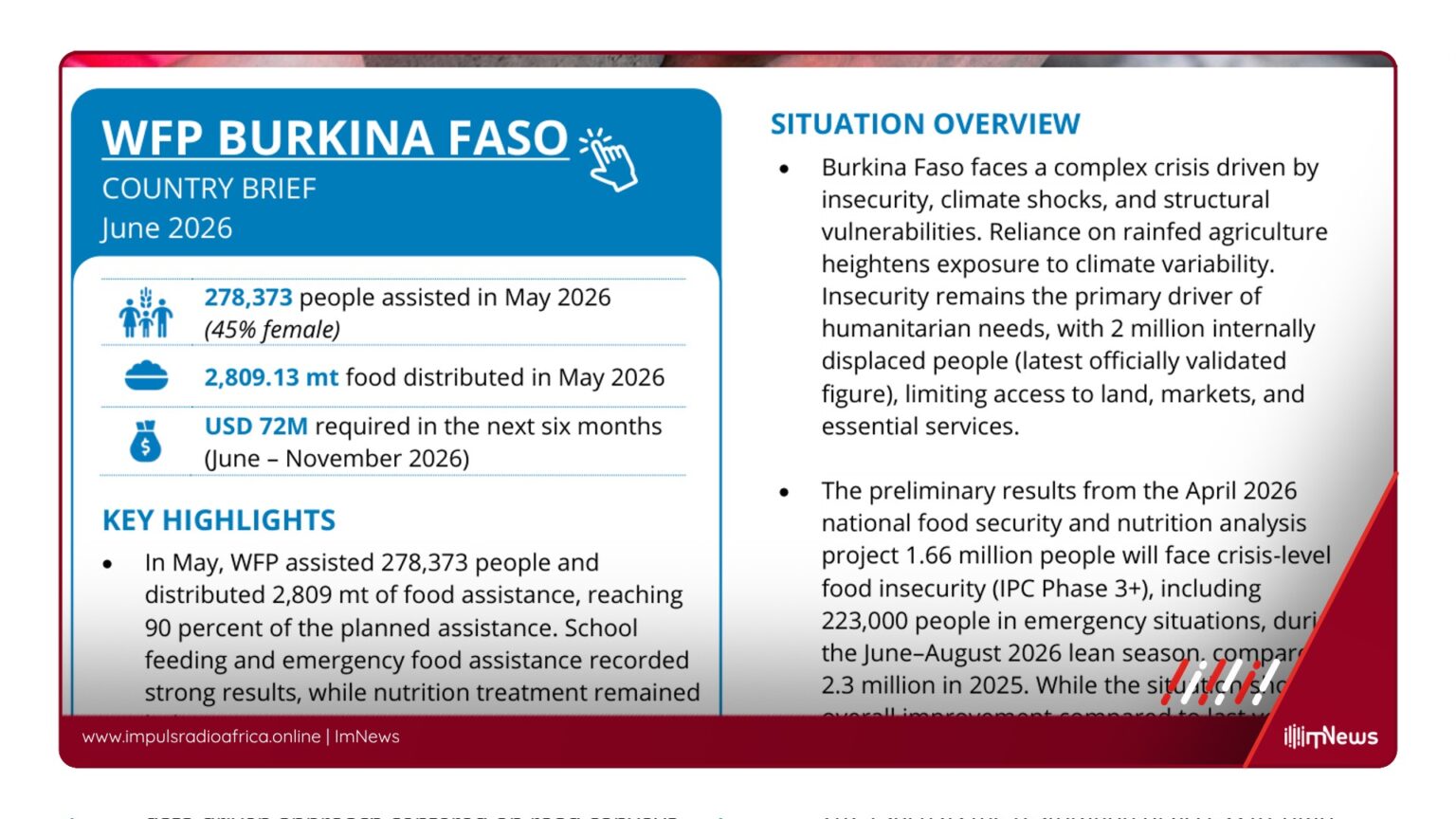
The WFP Burkina Faso Country Brief for June 2026 reveals that as of that month, 2.
3 million people suffer from acute hunger, 2. 1 million are displaced by conflict, and 40 percent of the population, or approximately 9 million people, live below the national poverty line.
This paints a dire picture of the living conditions in the West African nation, which has seen a sharp deterioration since 2019 due to escalating conflict.
In April 2026, the WFP delivered 3,590 metric tons of food to assist 415,351 people, reflecting a slight decrease compared to March. This decrease is attributed to operational constraints, but the organization has been working tirelessly to reach vulnerable populations across the country.
In May 2026, the WFP demobilized its airlift fleet, including the Chinook helicopter, and shifted to a more cost-efficient approach centered on road convoys and negotiated access.
This shift was aimed at enhancing the reach and efficiency of their operations while ensuring the safety of aid workers and the effectiveness of food distribution in conflict — affected areas.
The WFP’s integrated response strategy includes food assistance, nutrition, school meals, and resilience-building activities.
The organization launched the rainy season resilience package in June 2026, which supports vulnerable communities with activities aimed at strengthening livelihoods and enhancing climate adaptation.
Despite the challenges, the WFP has seen successes in its operations.
In March 2026, the organization significantly scaled up its operations, assisting 579,555 people and delivering 5,606 metric tons of food. This was achieved through escorted convoys and targeted airlifts to hard-to-reach locations.
However, the WFP faces unanswered questions regarding the impact of its shift to a cost — efficient approach. How is this change affecting the reach and efficiency of their operations? What specific measures are being taken to ensure the safety of aid workers and the effectiveness of food distribution in conflict-affected areas?
The long — term sustainability of the resilience activities initiated by the WFP in Burkina Faso is also a matter of concern. How will these activities ensure that vulnerable communities are better equipped to withstand future shocks?
The humanitarian crisis in Burkina Faso is a complex issue with no easy solutions.
The WFP’s efforts to provide relief and build resilience are commendable, but the scale of the crisis requires a coordinated and sustained response from the international community. KICKER: As the situation in Burkina Faso continues to evolve, the WFP and its partners will need to adapt their strategies to meet the changing needs of the population.
The next few months will be critical in determining the effectiveness of the WFP’s approach and the overall trajectory of the humanitarian crisis in the country.
*Additional reporting by ImNews | Sources consulted: 4*
—
This original article was produced by the ImNews editorial team
Source: reliefweb
Source: World Food Programme