
Burkina Faso: A Humanitarian Crisis Amplified by Insecurity and Climate Challenges Ouagadougou, Burkina Faso – In Burkina Faso, the landscape of suffering has expanded dramatically in recent years, with the country’s humanitarian situation reaching critical proportions.
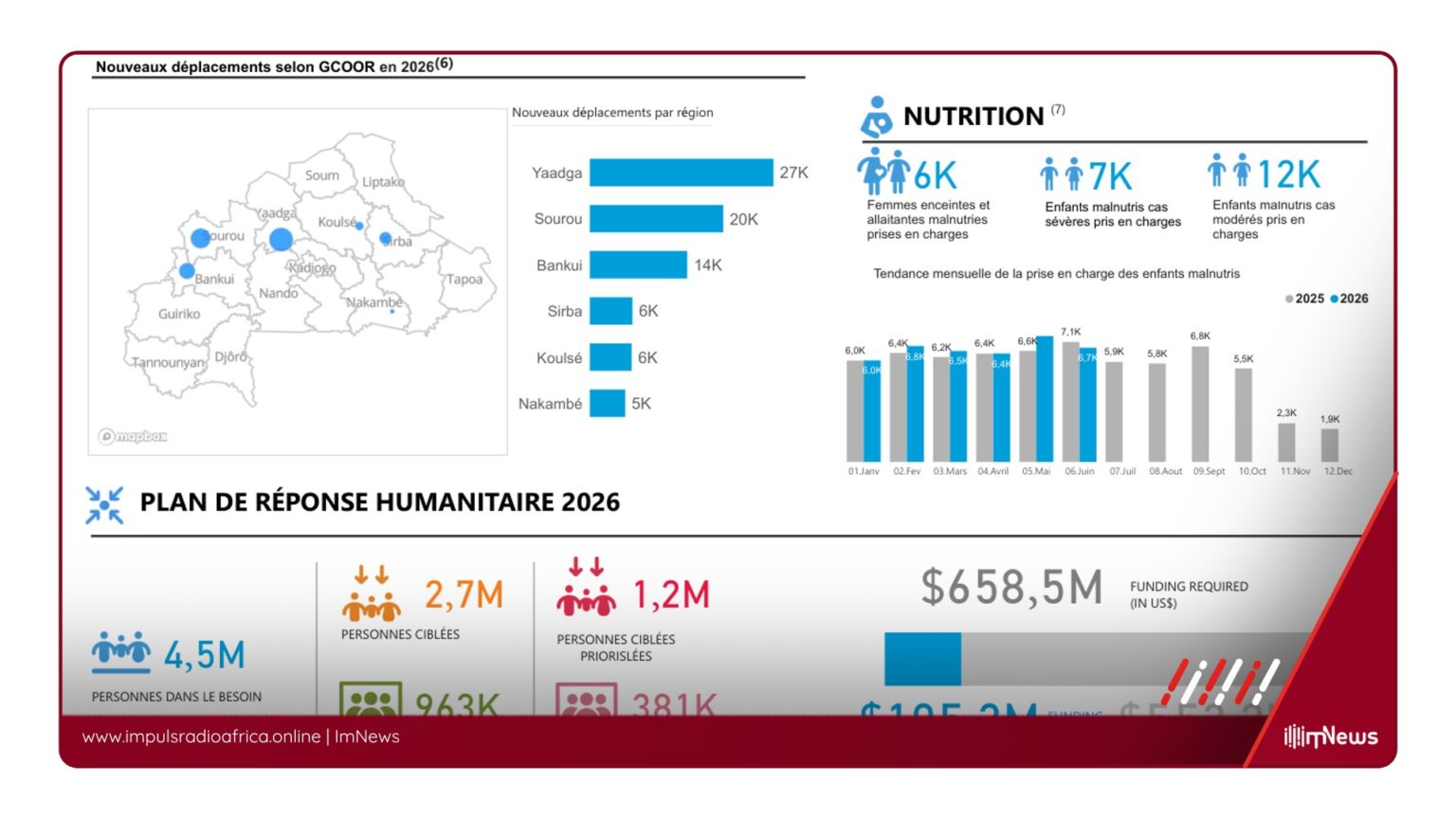
As of May 2026, the nation hosts a staggering 2. 1 million internally displaced persons (IDPs), contributing to the region’s total of 2.
8 million IDPs, according to the World Bank.
This figure is a testament to the severe impact of ongoing insecurity and adverse climatic conditions on the country’s population.
The Central Sahel region, including Burkina Faso, Mali, and western Niger, has witnessed 2,083 security incidents leading to the killing of 2,460 people between January and May 2026.
The United Nations Office for the Coordination of Humanitarian Affairs (OCHA) underscores the severity of the situation, with 4. 5 million people in Burkina Faso requiring humanitarian assistance in 2026. This figure underscores the scale of the crisis, as millions of people are pushed to the brink of survival due to limited resources and the relentless cycle of violence.
The political transformation score of Burkina Faso stands at a mere 2. 82 out of 10 on the BTI Atlas scale, reflecting significant governance and stability challenges.
The country’s political landscape has been tumultuous since 2023, marked by military rule, evolving security challenges, and economic restructuring.
The World Bank notes that Burkina Faso’s economy showed resilience in 2025, with real GDP growth estimated at 5. 3%, but this growth has not been enough to alleviate the severe humanitarian crisis.
The International Monetary Fund (IMF) has discussed the economic developments and policies underpinning the country’s Extended Credit Facility and Resilience and Sustainability Facility arrangements.
These facilities are intended to support the government’s efforts to address the economic impact of the crisis.
However, the effectiveness of these arrangements remains to be seen in the face of such a complex and multifaceted crisis.
The International Organization for Migration (IOM) has highlighted the role of migration in the Sahel region, emphasizing the need for community-driven interventions that harness migration as a force for stability and opportunity.
These interventions aim to improve living conditions and self — reliance in crisis-affected areas, thereby contributing to resilience and sustainable development.
In the midst of these challenges, the United Nations Children’s Fund (UNICEF) has been providing displaced children in Burkina Faso with access to education through radio-based learning. This initiative, funded by the Regional Humanitarian Fund, offers an alternative path to schooling for those who have been forced to flee their homes.
The Sahel region, known for its cultural richness and socioeconomic potential, faces one of the most severe humanitarian crises, fueled by conflict, violence, recurrent climate shocks, and political instability.
The Central Sahel, which includes Burkina Faso, Mali, and western Niger, is experiencing a highly volatile environment, with millions of people left extremely vulnerable.
As the humanitarian situation in Burkina Faso continues to worsen, the international community is called to act with urgency.
The need for coordinated and comprehensive responses from humanitarian organizations, governments, and regional bodies is more pressing than ever.
The world must not turn a blind eye to the suffering in Burkina Faso, as the crisis has the potential to spiral further out of control. What happens next remains uncertain, but the immediate need for humanitarian assistance and a sustainable solution to the crisis is clear.
The international community must come together to provide the support necessary to alleviate the suffering of the people of Burkina Faso and to lay the groundwork for a more stable and prosperous future.
*Additional reporting by ImNews | Sources consulted: 5*
—
This original article was produced by the ImNews editorial team
Source: reliefweb
Source: UN Office for the Coordination of Humanitarian Affairs