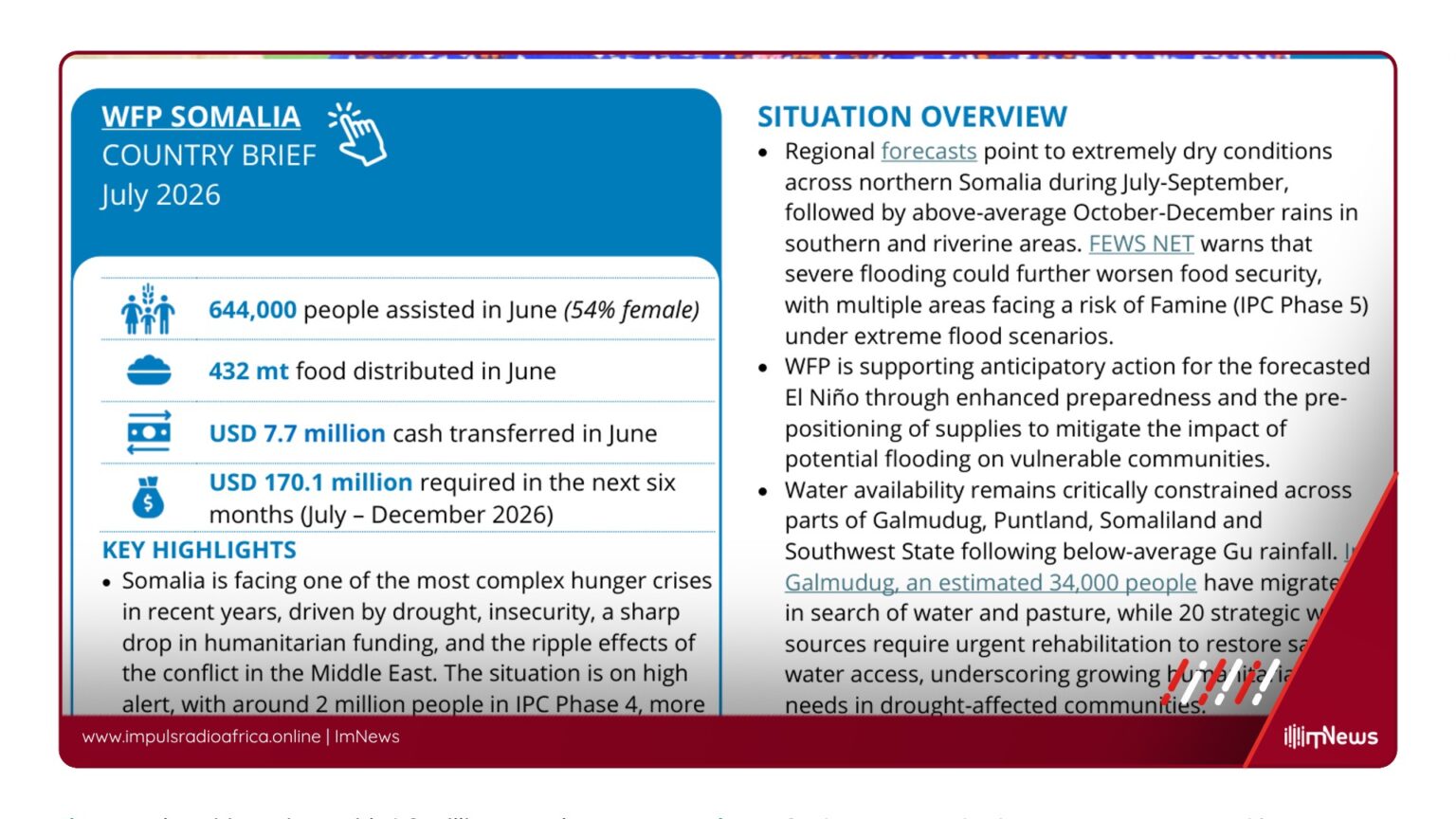
Mogadishu, Somalia — The World Food Programme (WFP) has issued a dire warning, flagging Somalia as being on the brink of a severe famine.
The crisis is exacerbated by prolonged drought, escalating insecurity, a dramatic reduction in humanitarian funding, and the reverberations of the Middle East conflict.
The situation is critical, with the Integrated Security Phase Classification (IPC) reporting that approximately 2 million Somalis are in IPC Phase 4, indicating an acute hunger level, more than double the number from the previous year.
An impending El Niño event is also raising the risk of flooding, forecasting an even sharper increase in the severity of the crisis. Somalia is addressing one of the most severe malnutrition crises in the world, with 1. 9 million children under five acutely malnourished.
In Burhakaba, the IPC analysis indicates a famine risk, with nearly 40 percent of children under five suffering from acute malnutrition or worse. Despite being the backbone of Somalia’s humanitarian response, WFP’s reach is being curtailed by funding shortfalls.
As of August, food assistance has reached only 644,000 people, accounting for just 34 percent of the IPC Phase 4 population. Immediate funding is crucial to prevent further deterioration of the situation.
The WFP has approved a Country Strategic Plan (2026–2030) for Somalia, which outlines a framework for addressing food security, nutrition, and resilience.
The plan reflects the nation’s evolving challenges, including persistent conflict, recurrent climate-related shocks, and a historic decline in donor resources.
The humanitarian crisis in Somalia is a multifaceted challenge that requires a coordinated international response. With the risk of a famine looming, the world must unite to provide the necessary support to the Somali people and address the root causes of this food insecurity.
*Additional reporting by ImNews | Sources consulted: 5*
—
This original article was produced by the ImNews editorial team
Source: reliefweb
Source: World Food Programme